Industries
Get direct access to our extensive portfolio of optical products and specialist technical expertise.
Wholesale buyers looking for the 2026 Best ABS LED Camping Light need more than a bright product photo. They need a model that performs consistently, packs efficiently, and suits the conditions their customers actually face. A Led Camping Light Abs design can offer a practical balance of low weight and a durable housing, but ABS is not indestructible. That distinction matters.
Check the details. Compare brightness, beam spread, battery capacity, charging options, and runtime under stated test conditions. A high lumen figure alone may not tell buyers how long useful light lasts. Look for clear operating instructions, a stable base or hanging hook, and switches that are easy to use with cold hands. If the lamp will be sold for outdoor use, review its documented water-resistance rating rather than relying on vague claims. Test a sample first.
For wholesale orders, assess more than unit price. Confirm minimum order quantities, packaging dimensions, available colors, lead times, and the supplier’s process for handling defects. Ask for product specifications and relevant test documents, then verify that they match the exact model being quoted. Requirements can vary by destination and product configuration, so avoid assuming one document covers every market. Small issues, such as a loose battery cover or confusing instructions, can become costly at scale. This guide will help buyers compare practical features, supplier reliability, and value before choosing a camping light for 2026.
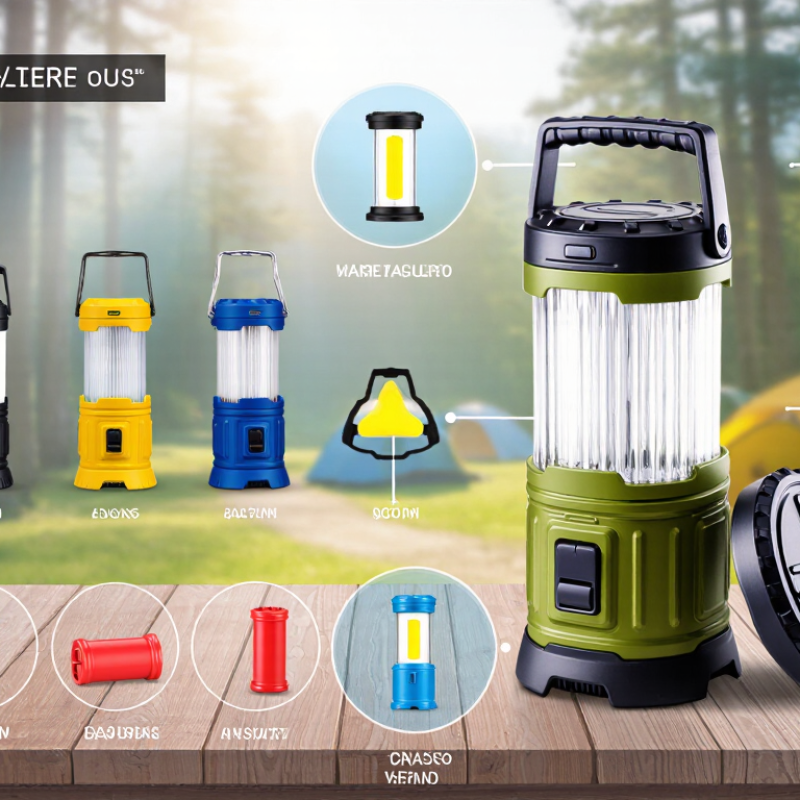
An ABS LED camping light uses a housing made from acrylonitrile butadiene styrene, a tough, lightweight plastic. The housing protects the lamp’s internal parts from everyday knocks around a campsite. It is durable, but not unbreakable; a hard drop onto rock can still cause damage. Inside, a battery supplies power to a small circuit, and a switch controls the LEDs.
When switched on, the circuit sends current through the LEDs, which produce light with relatively little wasted heat. A clear or frosted cover spreads that light across a tent, picnic table, or nearby path. Some models offer several brightness settings. Actual runtime depends on battery capacity, brightness, and temperature, so a light’s advertised duration may not match every trip. It is easy to overlook how much a cold night can affect battery performance.
Tips: Check the battery type, charging method, and stated runtime before buying in bulk. Look for a secure battery cover and a stable base. “ABS” alone does not confirm water resistance, so check the product’s specific protection rating if rain is likely.
An ABS LED camping light uses an LED to convert electrical energy into light; its ABS housing provides a lightweight enclosure. The chart estimates runtime at a constant 5 W LED load for different battery capacities, assuming a 3.7 V battery and 85% usable energy after conversion losses. Actual runtime varies by product and settings.
ABS housing helps a camping light withstand the knocks of everyday outdoor use. A lamp may shift around in a gear box, bump against a tent pole, or land on packed soil. A well-designed shell can help protect the LED assembly and internal components from these ordinary impacts. It is also lighter than many metal housings, which matters when campers are counting every item in a backpack. Small detail. Less weight can make a difference.
Durability depends on more than the material name. Wall thickness, molded joints, lens fit, and the quality of the battery-cover seal all affect how a light performs. A snug cover can help keep out dust and splashes, but ABS alone does not make a product waterproof. In cold weather, some plastics may become less tolerant of sharp impacts; prolonged direct sun can also affect plastic over time. That caveat is easy to overlook. A rugged-looking casing is not proof of rugged performance.
For wholesale buyers, inspect samples for loose seams, flexing around the handle, and covers that are difficult to close with cold hands. Check the supplier’s stated impact and water-resistance test results rather than relying on appearance. Ask how the housing holds up after repeated drops and temperature changes. No casing is indestructible, and test conditions may not match a real campsite exactly. That uncertainty deserves attention when comparing products.
2026 Best ABS LED Camping Light for Wholesale?
Key LED Features to Compare for Outdoor Use
For wholesale buyers, a camping light’s outdoor usefulness depends on more than its maximum lumen rating. Compare brightness levels and beam shape: a wide flood helps around a tent, while a focused beam reaches along a trail. Numbers can mislead. Check whether the stated output matches a practical operating mode, not just a brief boost.
Color temperature affects comfort after dark; warmer light can feel less harsh at a campsite. A high color-rendering index can also make food, maps, and gear easier to distinguish. Check dimming steps, switch placement, and whether controls remain simple with cold fingers. Battery runtime should be listed for different brightness settings. One trade-off is easy to miss: powerful LEDs may run hot or drain the battery quickly. Review heat management, charging options, and the stated water-resistance rating. ABS housing can keep weight manageable, but it does not replace a clear durability specification.
Tips: Test a sample outdoors before placing a large order. Compare beam coverage on a table and around a tent, then record runtime at the brightness customers will actually use. Ask for test conditions; vague claims deserve a second look.
When evaluating ABS LED camping lights for wholesale, inspect the housing before comparing prices. ABS should feel firm, with no sharp seams, loose joints, or visible sink marks. Check how the lens sits against the body; uneven gaps can let dust or moisture in. Small details matter. Ask suppliers for material specifications and a consistent inspection process for samples and production units.
Test each light at full brightness and lower settings, noting output changes and control response. Measure runtime under repeatable conditions, since battery capacity, temperature, and brightness affect results. A stated runtime alone proves little. Review the battery type, charging method, and protection features, then verify the details in product documents. Look for stable LEDs without flicker, excessive heat, or a hot-plastic smell during extended use. One sample cannot reveal every issue.
For wholesale orders, assess packaging, carton strength, labeling accuracy, and how units hold up in a basic drop test. Confirm lead time, spare-part availability, defect handling, and written quality criteria before deciding on order quantity. Compare landed cost, not just unit price. A low quote can hide weak packaging or inconsistent assembly. That trade-off deserves another look.
For a wholesale ABS LED camping light, supplier quality starts with repeatable evidence, not a bright sample. The U.S. Department of Energy’s 2020 U.S. Lighting Market Characterization estimated LEDs accounted for about 48% of installed lighting. That wide adoption makes clear performance claims important, but it does not prove a particular lantern is reliable. Ask for photometric test results showing measured output and runtime, including test conditions. Check that reports identify the same model, battery, and housing you plan to order. Paper is not proof.
Inspect ABS housing samples for sharp seams, loose battery doors, and distortion around the lens. Ask how the supplier checks heat buildup during extended operation and verifies performance after drop testing. Request component traceability and recent production inspection records, not only a one-time sample report. I still treat a very bright showroom sample as a weak test. It may hide short runtime or inconsistent assembly.
Compliance depends on the destination market and product design. Request applicable safety and restricted-substance documentation, such as relevant IEC 60598 test evidence and material declarations, then confirm scope with a qualified testing body. Check that certificates and reports match the exact model and factory. A certificate for a similar light is not enough. Compare serial or batch records against purchase samples, and arrange independent inspection before shipment when order volume justifies it. Good suppliers should explain failed tests plainly, too. That conversation can reveal more than a polished brochure.
| Check Area | What to Verify | Practical Buyer Check | Evidence to Request |
|---|---|---|---|
| ABS housing and construction | Confirm the housing material, wall consistency, assembly quality, and resistance to cracking around screws, hooks, and handles. | Inspect production samples for sharp edges, loose joints, sink marks, and stress whitening. Define any drop or impact test conditions in the purchase specification. | Material specification, component list, approved sample, and documented inspection results. |
| Light output and beam | Check measured luminous flux, beam distribution, color appearance, and mode consistency; do not assess brightness from LED count alone. | Set a minimum lumen target for each mode and compare samples using the same test method and battery condition. Treat lumen targets as product-specific, not a universal camping-light standard. | Photometric test report identifying the model, test conditions, and measured output. |
| Battery capacity and runtime | Verify battery chemistry, rated voltage, capacity, protection circuitry, and runtime at each operating mode. | Compare measured runtime with the advertised claim. As a planning example, a 3.7 V, 5,000 mAh battery stores about 18.5 Wh nominally; actual usable energy and runtime will be lower due to conversion losses and operating conditions. | Battery datasheet, runtime test method and results, and applicable cell or battery safety reports. |
| Charging and electrical safety | Check charging input, overcharge and short-circuit protection, connector durability, and behavior during charging. | Confirm the supplied charger and cable match the product specification. Where a mains adapter is supplied, assess that adapter separately for the destination market. | Electrical safety assessment, charger documentation, and test records for the final product configuration. |
| Ingress protection | If the product is advertised as water-resistant or dust-protected, verify the exact IP rating and the tested configuration. | Request a test to IEC 60529 for the claimed rating. A test result for a different enclosure, port cover, or product revision does not automatically apply. | IP test report identifying the model, sample configuration, and test conditions. |
| Portable-luminaire requirements | Check whether the product and its intended use fall within relevant luminaire safety requirements. | Ask the supplier to assess applicable parts of IEC 60598, including IEC 60598-1 and, where relevant, IEC 60598-2-4 for portable general-purpose luminaires. Applicability depends on product design and market. | Test report or documented standards assessment for the finished product. |
| Battery transport | For lithium batteries, verify transport-test status and shipping documentation. | Request evidence of successful UN Manual of Tests and Criteria, subsection 38.3 testing, and the applicable UN 38.3 test summary. Confirm shipment classification and packaging with the freight provider. | UN 38.3 test summary and battery shipping information for the actual battery type. |
| EU chemical and product obligations | For EU sales, assess applicable substance restrictions and general consumer-product safety obligations. | Review RoHS Directive 2011/65/EU as amended, applicable REACH requirements, and the EU General Product Safety Regulation (EU) 2023/988 where applicable. Obligations depend on the product and supply-chain role. | Material declarations, relevant test reports, risk assessment, traceability details, and required product information. |
| Market-specific conformity | Identify requirements for each destination and the exact product configuration being sold. | For EU sales, determine applicable CE legislation and supporting documentation; a CE mark is a manufacturer’s conformity declaration, not a universal third-party quality certificate. For the United States, check applicable FCC requirements for electronic emissions and any buyer-required safety evaluation. | Applicable declarations, technical documentation, market-specific test reports, and correctly marked product and packaging. |
| Factory quality control | Review incoming-material checks, in-process controls, final inspection, and handling of defects. | Agree written acceptance criteria, sampling method, defect classifications, and corrective-action deadlines before production. Verify that inspected samples match the approved specification. | Quality-control plan, recent inspection records, defect and corrective-action logs, and pre-shipment inspection report. |
| Labels, instructions, and traceability | Check model identification, electrical ratings, battery information, warnings, instructions, and destination-language requirements. | Ensure carton, product, and manual details are consistent. Include batch or lot identification sufficient to support traceability and complaint investigation. | Final artwork, user manual, label specification, and sample batch records. |
| Wholesale order readiness | Confirm the approved bill of materials, production lead time, packaging, spare parts, and change-control process. | Record agreed tolerances and require approval before changes to LEDs, battery cells, plastics, chargers, or factories. Test samples from the production run, not only development samples. | Signed specification, approved golden sample, production schedule, packaging details, and written change-control terms. |