Industries
Get direct access to our extensive portfolio of optical products and specialist technical expertise.
Choosing the best Air Condition Pump in 2026 requires more than comparing prices or cooling capacity. Global buyers face different climates, building designs, electricity systems, and maintenance conditions. A model that performs well in Dubai may struggle in Stockholm. Context matters.
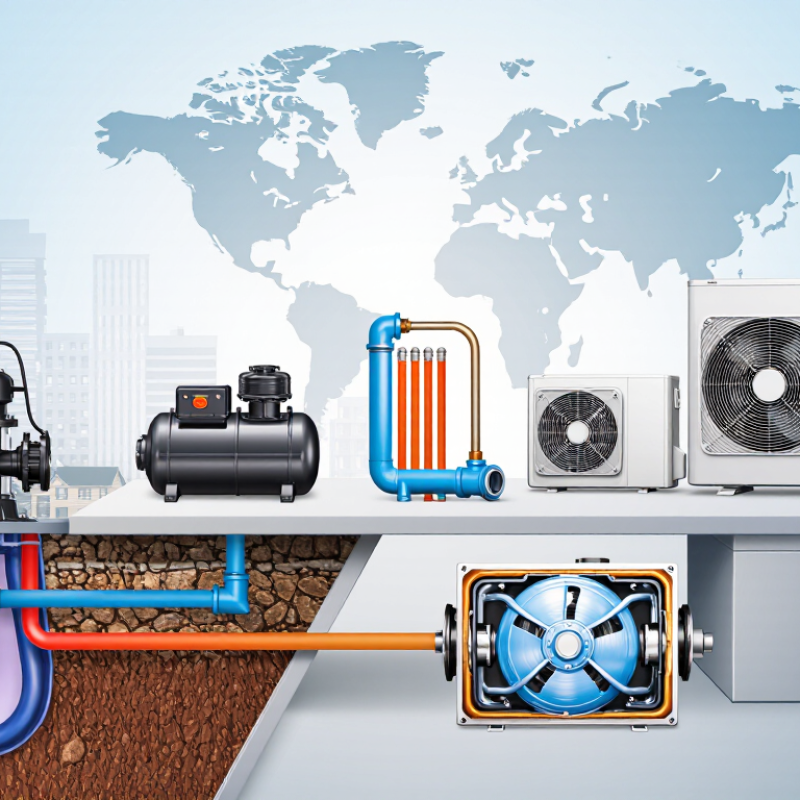
This guide examines air-source, water-source, ground-source, and specialized condensate pump options. It explains their operating principles, energy performance, installation demands, and practical limits. Air-source systems usually offer simpler installation and broader availability. Ground-source systems can provide steadier efficiency, but drilling and site assessment increase project costs. Water-source designs may work exceptionally well near reliable water resources. They also require careful engineering and responsible water management.
Reliable purchasing decisions should include verified performance data, warranty terms, noise ratings, replacement-part access, and qualified local service. Buyers should check voltage compatibility and regional certification requirements before ordering. Seasonal efficiency can matter more than peak output. A unit that looks powerful on paper may perform poorly with blocked filters, undersized pipework, or incorrect installation.
Real projects are messier than catalogs suggest. I have seen buyers focus on efficiency labels while overlooking technician availability. That mistake becomes expensive during a humid summer. There is no universal best choice. The right system depends on climate, building load, budget, infrastructure, and long-term service expectations. This overview offers a practical framework for comparing options honestly, while recognizing that manufacturer claims still require independent verification.
Air-conditioning pumps support the movement and removal of water within HVAC systems. They are not the same as refrigerant compressors. A circulation pump moves chilled or heated water through coils, pipes, and terminal units. A condensate pump lifts moisture from indoor drain pans when gravity drainage is impossible. Small systems may need only a compact condensate pump. Larger buildings often require carefully selected hydronic pumps.
Pump performance depends on flow rate, pressure head, fluid temperature, and pipe resistance. A pump with excessive capacity can waste electricity and create uncomfortable water noise. An undersized pump may leave distant rooms warm. During site inspections, technicians should check pipe length, elevation changes, valve positions, and filter condition. Real measurements matter more than assumptions. Flow meters and pressure readings can reveal problems that a visual inspection misses.
Material compatibility also affects service life. Water quality, corrosion, and repeated temperature changes can damage internal components. A reliable selection includes a suitable motor rating, control method, insulation level, and overload protection. Installation should follow local electrical and building requirements. One common mistake is treating every pump as interchangeable. They are not. I still question selections made without seasonal load data, because winter and summer demands can differ sharply. Routine checks should look for vibration, leaks, unusual sounds, blocked drains, and rising energy use.
Air conditioning pumps serve different jobs, and choosing by price alone often causes trouble. Condensate removal pumps suit wall-mounted units, ceiling cassettes, and compact indoor systems. They lift water through narrow discharge tubing when gravity drainage is impossible. Choose a model with enough lift, low operating noise, and a reliable float sensor. A small office may need quiet drainage more than maximum capacity.
Chilled-water circulation pumps support larger buildings, hotels, hospitals, and industrial cooling systems. They move cooled water between chillers, air handlers, and terminal units. Variable-speed models can reduce energy use when demand changes. Heat pump systems may require dedicated circulation pumps for hydronic heating or cooling loops. Service technicians should check flow rate, pressure head, pipe size, fluid temperature, and material compatibility. A pump can look powerful but still fail with poor system resistance calculations.
Tips: Match the pump to the application, not only the equipment size. Confirm voltage and frequency before ordering for another country. Review local electrical and safety requirements. Keep access clear for cleaning and sensor replacement. In humid coastal areas, corrosion-resistant materials deserve attention. Also, installation conditions are often underestimated. Even experienced buyers sometimes forget the vertical lift created by bends and long pipes. Allowing a modest safety margin is sensible, but excessive oversizing can increase noise, cycling, and energy consumption. There is no universal best type.
Choosing an air-condition pump starts with the operating point, not the catalogue headline. Air-source heat pumps suit moderate climates and simpler installations. Water-source systems can perform steadily when groundwater or loop temperatures remain stable. Condensate pumps solve drainage problems, but they do not improve cooling efficiency.
Compare capacity, power input, and coefficient of performance at the same temperature. The International Energy Agency reports that heat pumps can deliver three to five units of heat for each unit of electricity under suitable conditions (IEA, The Future of Heat Pumps, 2022). That figure can fall sharply during frost, poor airflow, or frequent defrost cycles.
Ask for tested data at low outdoor temperatures, not only nominal conditions. Check pressure, flow rate, lift height, and sound levels. A pump that struggles against a long, narrow pipe may consume more power than expected.
Reliability needs physical evidence.
Inspect corrosion protection, electrical sealing, bearing design, and access to filters or service panels. The U.S. Department of Energy notes that correct sizing and installation strongly affect seasonal performance (DOE, Residential Heat Pump Technology, 2024).
Field experience supports this warning: oversized equipment often short-cycles in mild weather, leaving rooms damp. Not ideal.
I would also compare warranty terms, spare-part availability, and maintenance intervals. Laboratory ratings are useful, but dusty coils, unstable voltage, and neglected drains can erase the promised advantage.
A simple log of temperature, amperage, vibration, and running hours often reveals problems earlier than a yearly inspection.
2026 Best Air Condition Pump Types for Global Buyers
Selecting the Right Air Conditioning Pump for Global Climates
Global buyers should match the pump type to local weather, building use, and maintenance skills. Climate matters more than catalog capacity. In hot, humid coastal areas, variable-speed scroll or rotary compressors manage long, changing cooling loads. They also reduce frequent starts. In dry, extremely hot regions, staged or inverter-driven systems can control power demand more smoothly. For cold climates, air-source heat pumps need low-ambient controls, defrost protection, and reliable crankcase heating.
The IEA’s The Future of Cooling reports that cooling uses more than 10% of global electricity. That figure makes efficiency a practical purchasing concern, not a marketing detail. The UNEP Global Cooling Watch 2023 projects cooling demand could more than triple by 2050 without stronger efficiency measures. Buyers should compare seasonal performance, not only rated capacity. Test conditions under EN 14511 or ISO 5151 help, but field results remain less tidy.
A 35°C laboratory rating may not reflect a dusty rooftop in a 45°C desert. Nor does it show voltage instability or blocked filters. I would question any unusually high COP claim without test conditions and part-load data. Refrigerant compatibility, spare-parts access, noise, and technician training deserve equal attention. A cheaper pump can become expensive when one control board takes weeks to replace. My own selection bias would favor serviceability, although that choice may sacrifice a small amount of peak efficiency.
Comparative guide to common pumps used in air-conditioning and HVAC systems. Performance figures are typical engineering ranges; final selection should be based on the equipment manufacturer’s data, local electrical standards, water quality, altitude and site conditions.
| Pump Type | Primary HVAC Application | Pumped Fluid | Typical Flow Range | Typical Head or Pressure | Best Climate or Site Conditions | Main Selection Factors | Energy and Control Features | Typical Service Considerations |
|---|---|---|---|---|---|---|---|---|
| Condensate Removal Pump | Removes water produced by indoor evaporator coils, fan-coil units and ductless indoor units where gravity drainage is unavailable. | Condensate water | 10–40 L/h | 2–15 m lift | Humid tropical, coastal and high-condensation environments; suitable for indoor installations. | Required lift, reservoir capacity, noise level, float-switch reliability, discharge-pipe size and compatibility with acidic condensate. | Low-power motor; models with demand-based operation and high-water-level alarm help reduce cycling and overflow risk. | Clean the reservoir and inlet screen regularly; inspect tubing for kinks, algae and blockage. |
| Mini Condensate Pump | Small split air conditioners, cassette units and compact fan-coil systems with limited installation space. | Condensate water | 8–25 L/h | 0.5–10 m lift | Residential and light-commercial applications in warm or humid climates. | Very low sound level, compact dimensions, vibration isolation, overflow protection and easy access for cleaning. | Usually intermittent operation; low standby consumption is useful for continuously powered indoor units. | Keep the drain pan and sensor free from dust and biological deposits. |
| Chilled-Water Circulation Pump | Circulates chilled water between chillers, air-handling units, fan-coil units and cooling terminals. | Water or water-glycol mixture | 0.5–500 m³/h | 10–60 m | Commercial buildings, hospitals, hotels and process-cooling systems in most climates. | Design flow, total dynamic head, fluid temperature, glycol concentration, pipe diameter and minimum-flow requirements. | Variable-frequency drives and differential-pressure control can reduce energy use at part load. | Check seals, bearings, air removal, water treatment and system pressure. |
| Primary Chilled-Water Pump | Moves chilled water through the chiller evaporator circuit in primary-only or primary-secondary systems. | Chilled water or glycol solution | 5–1,000 m³/h | 10–35 m | Central plants where stable evaporator flow and chiller protection are required. | Chiller minimum flow, evaporator pressure drop, operating temperature, NPSH margin and pump efficiency at design duty. | Variable-speed control is common in variable-primary-flow systems when approved by the chiller manufacturer. | Maintain correct flow through the evaporator; monitor strainers, sensors and differential pressure. |
| Condenser-Water Pump | Circulates water between a water-cooled chiller and cooling tower or dry cooler circuit. | Cooling-tower water | 10–1,500 m³/h | 15–70 m | Large commercial and industrial systems, especially where water-cooled chillers are practical. | Cooling-tower flow, condenser pressure drop, tower height, water chemistry, corrosion resistance and outdoor exposure. | Variable-speed operation can match cooling load and tower conditions; automatic sequencing improves plant efficiency. | Requires regular water treatment, strainer cleaning, seal inspection and corrosion monitoring. |
| Heat-Pump Hydronic Circulator | Moves heated or cooled water in air-to-water and water-to-water heat-pump systems for radiant floors, fan coils and radiators. | Water or water-glycol mixture | 0.2–100 m³/h | 3–40 m | Cold winters, moderate climates and reversible systems that provide both heating and cooling. | Lowest outdoor design temperature, glycol percentage, flow-temperature range, defrost-cycle behavior and freeze protection. | EC motors, proportional-pressure control and weather-compensated system control support efficient part-load operation. | Protect outdoor pipework from freezing; verify glycol concentration and purge trapped air. |
| Drainage and Sump Pump | Removes accumulated water from plant rooms, equipment bases, condensate collection pits and below-grade HVAC areas. | Drainage water; sometimes lightly contaminated water | 20–300 L/min | 5–30 m lift | Basements, underground plant rooms, flood-prone sites and areas with unreliable gravity drainage. | Solids-handling capability, pit size, float arrangement, emergency capacity, check valve and alarm integration. | Automatic float or level-sensor control; standby pump and high-level alarm improve resilience. | Test automatic start, clean the pit and inspect the check valve and discharge line. |
| Cooling-Tower Make-Up Pump | Supplies replacement water to cooling towers or evaporative condensers after evaporation, blowdown and drift losses. | Fresh or treated make-up water | 0.1–20 m³/h | 15–50 m | Hot, dry climates and facilities with high cooling-tower evaporation rates. | Required make-up rate, inlet pressure, water hardness, backflow protection, level-control accuracy and local water restrictions. | Level-based control and variable speed can prevent excessive filling and reduce unnecessary pump operation. | Use suitable filtration and backflow prevention; inspect valves, level sensors and water-treatment equipment. |
| Refrigerant Recovery Pump | Transfers refrigerant during air-conditioner servicing, recovery and system evacuation procedures. | Refrigerant vapor and liquid | Application-dependent | Application-dependent | Service workshops and field maintenance in all climates; equipment must match the refrigerant used. | Approved refrigerant type, recovery capacity, allowable pressure, oil management, electrical safety and local environmental regulations. | Automatic shutoff, pressure monitoring and thermal overload protection improve safe operation. | Use only certified equipment and recovery cylinders; never vent refrigerant or mix incompatible refrigerants. |
| Vacuum Pump for Refrigeration Service | Evacuates air and moisture from newly installed or repaired refrigeration and air-conditioning circuits before charging. | Air and non-condensable gases | 2–15 m³/h | Deep vacuum to approximately 15–50 microns, depending on equipment and test method | Installation and maintenance work in humid, coastal or rapidly changing climates where moisture control is important. | Ultimate vacuum, pumping speed, system volume, gas-ballast function, oil quality and micron-gauge verification. | Two-stage designs generally achieve deeper vacuum; isolation valves and a calibrated micron gauge improve commissioning accuracy. | Change contaminated oil, use short large-diameter hoses and confirm the vacuum holds after isolation. |
| Solar-Powered DC Water Pump | Circulates water in remote cooling, evaporative-cooling or small solar-assisted HVAC installations without dependable grid power. | Clean water or approved water-glycol mixture | 0.1–30 m³/h | 3–40 m | Remote, sunny and off-grid locations; performance varies with solar irradiance and storage capacity. | Solar array output, battery capacity, hydraulic duty, controller compatibility, cloudy-weather autonomy and freeze protection. | Brushless DC motors and maximum-power-point tracking can improve output over changing sunlight conditions. | Protect electronics from heat and moisture; clean panels and inspect wiring and dry-run protection. |
| Variable-Speed In-Line Pump | Compact circulation for zoned chilled-water, heating-water and small commercial HVAC systems. | Water or water-glycol mixture | 0.1–60 m³/h | 2–35 m | Buildings with fluctuating loads, multiple control zones and limited mechanical-room space. | Control mode, proportional-pressure range, constant-pressure range, fluid temperature, motor protection and connection size. | Integrated electronic commutation and automatic speed modulation typically reduce electricity use at part load. | Install with correct flow direction; remove air and verify that system valves do not force dead-heading. |

Choosing the right air condition pump begins with the building, not the product catalogue. Air-source, water-source, and ground-source systems suit different sites and climates. A professional survey should check heat load, insulation, outdoor space, and electrical capacity. Oversized equipment may cycle frequently and waste energy. Undersized equipment can struggle during extreme weather.
Installation quality strongly affects service life. Technicians should protect refrigerant lines from sunlight, moisture, and sharp bends. Outdoor units need a stable base and enough clearance for airflow. Drainage must prevent standing water near walls or electrical connections. Commissioning should include pressure checks, airflow measurement, noise inspection, and controller testing. Small errors matter. A clean installation can still perform poorly when settings are ignored.
Maintenance usually includes filter cleaning, coil inspection, fan checks, and refrigerant leak testing. A written service record helps identify gradual performance losses. International buyers should confirm voltage, frequency, plug requirements, language settings, and local technician support. Climate data also matters, especially in humid, coastal, or freezing regions. Verify refrigerant regulations, safety documents, warranty terms, and spare-part availability before payment. Shipping damage is another practical risk, so buyers should request strong packaging and inspect units immediately. One common mistake is trusting catalogue efficiency without checking test conditions. Real performance depends on installation, weather, occupancy, and maintenance discipline.