Industries
Get direct access to our extensive portfolio of optical products and specialist technical expertise.

Global buyers are entering 2026 with stronger demand for efficient fiber recovery. The U.S. Environmental Protection Agency reports that paper and paperboard remain among the largest recyclable material streams. AF&PA recorded a U.S. paper recycling rate of approximately 60% in 2023. These figures show why reliable Cardboard Balers matter in warehouses, retail stores, distribution centers, and recycling plants.
The right baler can reduce loose carton volume dramatically. It can also lower collection frequency, labor pressure, and transport emissions. However, equipment choices should follow measured conditions, not attractive catalogue claims. A supermarket may need a compact vertical baler for daily cartons. A fulfillment center may require a high-throughput horizontal machine with automatic wire tying. Moisture, fiber quality, bale weight, available floor space, and local power supply can change the decision completely.
Industry reports from Smithers and the Institute of Scrap Recycling Industries highlight continuing growth in recovered fiber demand and recycling infrastructure. Yet, global purchasing remains uneven. Service response can be slower in remote regions. Spare parts may become expensive. Some “low-cost” machines also create hidden maintenance costs. That lesson deserves attention.
This 2026 guide compares Cardboard Balers for global buyers through practical operating criteria. It considers capacity, compression force, bale density, safety systems, energy use, installation, and after-sales support. Manufacturer specifications provide a starting point. Site testing provides better evidence. A dependable baler should produce consistent bales beside a busy loading dock, not merely perform well in a showroom.
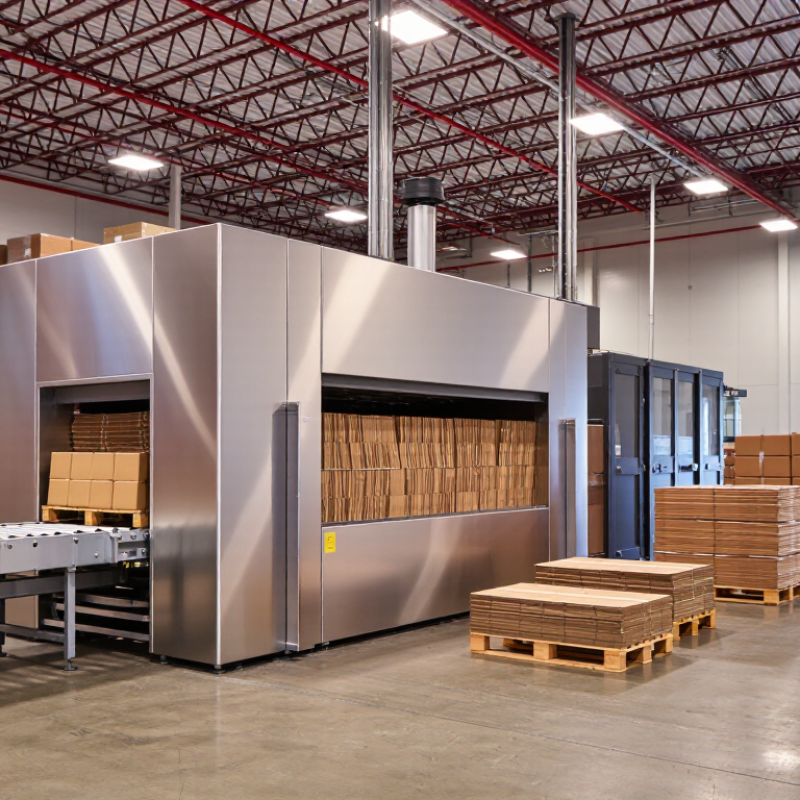
Cardboard balers compress loose cartons into dense, manageable bales for storage and transport. In global recycling, this step reduces floor congestion and improves loading efficiency. A typical buyer chooses between vertical and horizontal designs. Vertical units suit shops, warehouses, and moderate daily volumes. Horizontal systems handle larger streams and continuous feeding. The best choice depends on material flow, labor, space, and bale targets. Not always obvious.
Before purchasing, measure cartons for a full week, including rainy-day moisture and peak deliveries. Wet cardboard weighs more, binds poorly, and may damage internal surfaces over time. Check chamber size, bale density, cycle time, motor voltage, and usable feed opening. Ask for documented safety features, service procedures, spare-part availability, and operator training. Electrical compatibility matters across borders. A reliable supplier should explain testing methods and provide clear performance limits, not vague promises. I have found that claimed throughput often assumes perfectly prepared cardboard. Real warehouses are messier.
Operators need simple routines: remove plastic contamination, keep hands outside the chamber, inspect ties, and clean around moving parts. Bale wire or approved strapping must match the machine and local handling practice. Record bale weight, stoppages, and maintenance dates. These records reveal whether a machine is truly productive. Buyers should also consider container dimensions and regional recycling fees, because transport can erase expected savings. A lower purchase price may create higher downtime. Test samples before ordering whenever possible, especially when cartons vary in thickness, coating, and moisture.
Comparing cardboard balers in 2026 requires more than checking motor size. The U.S. EPA’s latest published Facts and Figures report recorded 46.9 million tons of recycled paper and paperboard in 2018. That volume shows why reliable compaction remains important. However, the report measures material recovery, not baler performance. Buyers should treat market data carefully.
Start with throughput, chamber size, bale dimensions, and bale weight. A retail site may need a small vertical baler producing 30–80 kilogram bales. A distribution warehouse may require 300–600 kilogram bales and continuous feeding. Check the full cycle time, not only the advertised pressing force. Moist cardboard reduces achievable density. It also changes bale stability.
Power requirements deserve equal attention. Compare motor rating, voltage, phase, noise, and average energy use. Confirm local electrical compatibility before ordering. Tie-wire or strap systems affect labor time and bale quality. Safety interlocks, emergency stops, guarding, and easy access for maintenance should be documented clearly. CEPI’s 2023 recycling monitoring data reported a European paper recycling rate near 79%, but recycled fibers still vary by moisture and contamination. EN 643 grades can guide material expectations, though they do not guarantee machine output. In a real trial, weigh several bales and record cycle times. A clean specification sheet can still mislead. Question the optimistic number.
Small shops, offices, and cafés usually benefit from vertical cardboard balers. They occupy little floor space and suit modest daily volumes. Operators can feed flattened cartons manually and produce compact bales for scheduled collection. These machines often need lower investment, but bale size remains limited.
Medium warehouses may prefer semi-automatic horizontal balers. They handle larger loads and reduce repeated manual tying. A hydraulic ram compresses cartons into denser bales, saving storage space. Large distribution centers often require fully automatic horizontal balers. Conveyor feeding, automatic tying, and continuous operation support demanding material flows. Two-ram models can manage mixed carton sizes more consistently. They also require more space, power, and technical support.
Material condition matters as much as machine capacity. Wet cardboard can reduce compression quality and increase maintenance problems. Measure daily volume, available floor space, electrical supply, and loading height before choosing. Local service access is important for global buyers, especially when replacement parts travel slowly. In practical site assessments, rated capacity sometimes looks impressive but does not match real feeding habits. That is an easy mistake.
Safety guards, emergency stops, clear operating instructions, and operator training should be checked carefully.
A quieter machine may improve workplace comfort, but noise claims need practical verification. No baler fits every business. The best choice balances volume, labor, space, maintenance, and future growth.
Global buyers should judge cardboard balers by working conditions, not brochure capacity. A 60-ton machine may suit a distribution center, but overwhelm a small warehouse. Measure cartons per hour, bale weight, loading method, and available floor space. Moisture and flattened-box quality also affect density. The U.S. EPA reported a 96.5% recycling rate for corrugated containers in 2018. That figure shows strong recovery potential, but it does not prove every baler delivers efficient results.
Safety requires closer inspection. Look for guarded access points, emergency stops, clear hydraulic warnings, and documented lockout procedures. OSHA guidance for baling operations emphasizes machine guarding, employee training, and energy isolation during maintenance. These controls matter more than a low purchase price. Buyers should request noise readings and service records. A larger chamber is not automatically better. It can increase walking distance, loading effort, and repair exposure.
Tips: Compare energy use per bale, not motor size alone. The International Energy Agency has reported that electric motor systems consume roughly 45% of global electricity. Efficient hydraulics, automatic standby modes, and short cycle times can reduce waste. Ask suppliers for tested figures under similar cardboard conditions. Published numbers are often difficult to compare. That is a weakness worth admitting. Review local electrical standards, operator language needs, spare-part access, and realistic daily volume before choosing capacity.
Comparative benchmark for common cardboard-baler configurations. Use the figures to match equipment with feed volume, available floor space, electrical infrastructure, operator practices, and local compliance requirements.
| Baler Configuration | Recommended Daily Cardboard Volume | Typical Bale Weight | Indicative Throughput | Installed Motor Power | Typical Energy Use | Cycle Time | Typical Footprint | Feed Opening | Safety Requirements to Verify | Best-Fit Buyer Profile |
|---|---|---|---|---|---|---|---|---|---|---|
| Compact Vertical Baler | 0.5–3 tonnes/day | 30–60 kg | 0.3–0.8 t/h | 4–7.5 kW | 8–18 kWh/t | 30–60 seconds | Approximately 1.2 × 0.9 m | 0.8 × 0.5 m | Interlocked loading door, emergency stop, guarded moving parts, two-hand or hold-to-run controls, and clear bale-ejection area | Small retailers, offices, restaurants, and sites with limited floor space |
| Medium Vertical Baler | 2–8 tonnes/day | 60–150 kg | 0.5–1.5 t/h | 7.5–15 kW | 8–16 kWh/t | 35–75 seconds | Approximately 1.5 × 1.2 m | 1.0 × 0.6 m | Door interlock, ram-position protection, pressure relief, emergency stop, electrical isolation, and operator training | Supermarkets, distribution points, warehouses, and medium-volume collection sites |
| Heavy-Duty Vertical Baler | 5–15 tonnes/day | 120–300 kg | 1–2.5 t/h | 15–30 kW | 7–15 kWh/t | 45–90 seconds | Approximately 2.0 × 1.5 m | 1.2 × 0.8 m | Full access guarding, hydraulic over-pressure protection, lockout/tagout provisions, emergency-stop circuit, and safe bale handling | Large retail facilities and warehouses without continuous conveyor feeding |
| Semi-Automatic Horizontal Baler | 8–25 tonnes/day | 100–250 kg | 1.5–3.0 t/h | 15–30 kW | 6–13 kWh/t | 35–70 seconds | Approximately 5.0 × 2.0 m | 1.2 × 0.8 m | Feed-hopper guarding, ram interlock, accessible emergency stops, automatic cycle monitoring, and safe manual tying procedures | Recycling centers and warehouses requiring denser bales with moderate automation |
| Small Automatic Horizontal Baler | 15–40 tonnes/day | 250–450 kg | 3–6 t/h | 30–55 kW | 5–12 kWh/t | 30–60 seconds | Approximately 8.0 × 3.0 m | 1.4 × 1.0 m | Light curtains or guarded access points, automatic fault detection, emergency-stop circuits, anti-jam control, and conveyor interlocking | Regional distribution centers and recycling operations with regular material flow |
| Medium Automatic Horizontal Baler | 30–80 tonnes/day | 400–700 kg | 5–10 t/h | 45–75 kW | 5–11 kWh/t | 25–50 seconds | Approximately 10.0 × 3.5 m | 1.6 × 1.1 m | Safety PLC or equivalent control architecture, perimeter guarding, access interlocks, hydraulic protection, and documented lockout procedures | High-volume material recovery facilities and large logistics hubs |
| High-Throughput Automatic Baler | 60–150 tonnes/day | 500–1,000 kg | 8–16 t/h | 75–132 kW | 5–10 kWh/t | 20–45 seconds | Approximately 14.0 × 4.0 m | 1.8 × 1.2 m | Perimeter safety fencing, safety-rated access switches, automatic shutdown, anti-blockage logic, remote fault indication, and planned maintenance access | National-scale recycling plants and continuous-feed industrial operations |
| Two-Ram Automatic Baler | 50–160 tonnes/day | 500–1,000 kg | 8–18 t/h | 75–150 kW | 6–12 kWh/t | 25–50 seconds | Approximately 15.0 × 4.5 m | 1.8 × 1.2 m | Independent ram protection, guarded bale discharge, safety-rated control system, pressure monitoring, emergency stops, and controlled access for servicing | Mixed-paper and cardboard processors seeking high density and flexible feed management |
For global buyers, a cardboard baler is a compliance project, not only a machinery purchase. The U.S. EPA reported 32.1 million tons of corrugated containers recycled in 2018, equal to a 96.5% recycling rate. This volume creates strong demand for reliable compaction equipment. In 2026, buyers should verify guarding, emergency stops, hydraulic safety, electrical compatibility, and technical documentation. EU projects also need a clear transition plan for the Machinery Regulation, which applies from January 2027.
Installation details can decide productivity. Confirm the feed opening against actual box sizes, not brochure samples. Check floor loading, ceiling height, drainage, voltage, and forklift access before shipment. A 400-volt machine may require different electrical work in another market. Operators need practical training, lockout procedures, and manuals in the working language. After-sales support should include critical seals, filters, sensors, and remote troubleshooting. The ISO 9001 framework is useful when evaluating documented service processes, although certification alone does not guarantee fast support. Some procurement teams still overlook response time. That is a costly mistake.
Tips: Request a factory acceptance test using your cardboard mix. Require test bales, cycle-time records, noise data, and power consumption. Ask for a written spare-parts list and a 24-hour escalation route. Keep photographs of the installation area. They prevent arguments later. The CEPI Recycling Monitoring Report 2023 recorded a European paper recycling rate of about 79%, showing why dependable baling remains operationally important. Yet recycling statistics vary by region, so buyers should validate local collection quality before selecting bale pressure and tying methods.