Industries
Get direct access to our extensive portfolio of optical products and specialist technical expertise.
Choosing the 2026 best Graphite Clay Crucible requires more than comparing product photos or advertised temperatures. Metal casters need dependable heat resistance, suitable capacity, and predictable performance during repeated melts. A crucible may look robust online, yet fail quickly when exposed to thermal shock, chemical attack, or careless handling.
This guide examines graphite clay crucibles through practical casting requirements. We consider graphite content, clay bonding, wall thickness, pouring design, and compatibility with common nonferrous metals. Copper, brass, aluminum, and bronze each create different demands. A crucible that performs well with aluminum may degrade faster during copper melting. Small details matter, including a dry storage area and gradual preheating before use.
Real workshop experience also reveals limitations. No crucible is perfect. Even a premium model can crack after sudden cooling or uneven heating. Some manufacturer claims lack enough independent testing, so buyers should remain cautious. We focus on measurable evidence, including heat-cycle durability, surface finish, visible porosity, and handling safety. Product selection should also follow current workplace guidance and the manufacturer’s instructions.
A reliable Graphite Clay Crucible should provide stable support during heating, lifting, and controlled pouring. Its rim must remain intact, and its interior should resist excessive metal penetration. We will compare practical strengths and weaknesses rather than present one universal winner. Careful inspection still matters. A well-chosen crucible improves consistency, but disciplined operating habits protect the investment.
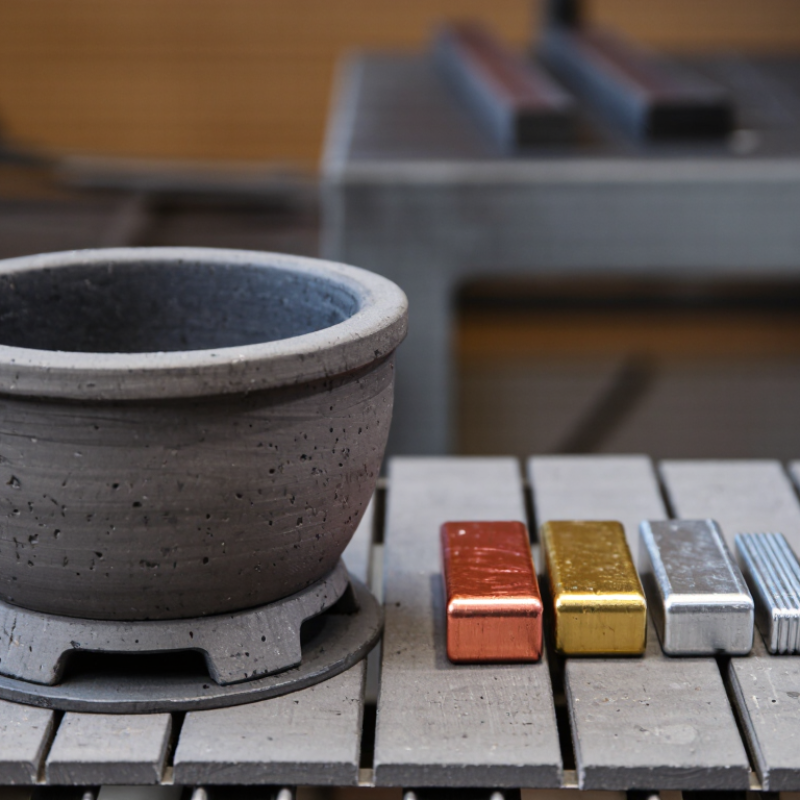
2026 Best Graphite Clay Crucible for Metal Casting
Graphite clay crucibles are refractory vessels used to melt and hold metals during casting. They combine graphite’s thermal conductivity with clay’s bonding and structural strength. This mixed composition helps the crucible heat evenly and resist sudden temperature changes. The material is not flawless.
Its structure usually includes graphite flakes, refractory clay, and carefully controlled mineral additives. Graphite forms a heat-conducting framework. Clay binds the particles after firing, creating a dense ceramic body. Some crucibles also contain silicon carbide or similar refractory materials for improved wear resistance. Wall thickness matters. A thicker wall stores more heat but may warm more slowly.
In practical casting work, inspect the rim, inner base, and outer surface before every cycle. Small hairline cracks can spread when the crucible reaches operating temperature. A sound crucible should show a firm rim, consistent color, and no loose grains. Preheating is essential because moisture can cause rapid damage. Avoid placing a cold crucible directly into an intense flame.
Graphite clay offers useful resistance to oxidation, chemical attack, and thermal shock, but performance depends on temperature, metal type, and heating speed. Excessive flux can erode the inner lining. Repeated thermal cycling also weakens the clay bond. I have found that visual inspection alone can miss early damage, especially around the base. Careful handling remains more reliable than relying on advertised service life.
A graphite clay crucible combines graphite for thermal conductivity and thermal-shock resistance with clay or ceramic binders for shape stability and high-temperature strength. The chart compares typical melting points of metals commonly evaluated for casting in this crucible type.
Melting points indicate the approximate thermal demand of each metal, not the recommended furnace setting. Actual casting temperatures are higher than the melting point, and crucible selection should also consider chemical compatibility, heating rate, thermal cycling, wall condition, and the manufacturer’s maximum service temperature.
How to Choose the Best Graphite Clay Crucible in 2026
Choosing a graphite clay crucible starts with the metal, furnace, and working temperature. Copper alloys demand stronger thermal-shock resistance than low-temperature aluminum work. Check the crucible’s rated temperature, bulk density, apparent porosity, and oxidation resistance. ASTM C20 provides recognized methods for measuring porosity, absorption, and density in refractory materials. These figures matter when molten metal repeatedly enters a hot crucible.
Size needs careful judgment. A crucible should not run nearly empty, yet overfilling creates dangerous splashing and uneven heating. Leave practical headspace above the metal. USGS Mineral Commodity Summaries 2025 reported global natural graphite production above 1.5 million metric tons in 2024. That supply figure does not prove quality. Purity, clay bonding, grain structure, and manufacturing consistency still control performance. Ask for test data, not vague claims.
Inspect the wall before every pour. Look for hairline cracks, swollen areas, deep scratches, or unusual discoloration. A dry, gradually preheated crucible usually survives better than one exposed to sudden flame. Keep it away from moisture. Very important.
The “best” model may be a poor choice if its capacity exceeds your furnace output. I would compare actual melt weight, heating cycle, and replacement cost over several batches. This approach is less glamorous, but more reliable. Some published ratings also seem optimistic; independent trials remain necessary. Track cycle count, surface wear, and metal contamination. Those notes often reveal more than a product sheet.
Metal compatibility should guide every crucible choice. Graphite clay crucibles work well with aluminum, copper, brass, bronze, silver, and gold alloys. They transfer heat evenly and resist many thermal shocks during repeated casting. However, they are not ideal for steel or iron melting. Their service temperature and oxidation resistance may not meet those demanding conditions.
Check the alloy’s melting range, pouring temperature, and chemical behavior. Aluminum can wet graphite surfaces, while copper alloys may require better ventilation and careful flux control. Avoid unknown fluxes. Some chemicals attack the clay binder and shorten crucible life. I inspect the inner wall for pitting, cracks, or flaking before every melt. A small defect can grow quickly after heating.
Crucible size matters just as much. Keep the metal charge below the manufacturer’s stated capacity, often around 70–80% of the internal volume. This leaves space for expansion, bubbling, and safe handling with tongs.
A crucible that is too large wastes fuel and heats unevenly. One that is too small may overflow during alloy additions. Measure your furnace chamber first, including clearance for lifting tools. Preheat a dry crucible gradually. I once rushed this step, and the resulting moisture damage was avoidable. Record melt weight, heating time, and wear after each casting cycle.
A graphite clay crucible needs a careful start. Inspect the walls and base for cracks, chips, or unusual soft spots. Do not use a damaged crucible. Place it inside a compatible furnace and warm it gradually. This removes moisture and reduces thermal shock. A sudden flame can ruin it.
After preheating, add clean, dry metal in small pieces. Keep the load below the recommended capacity. Leave room for movement and avoid forcing material inside. Heat steadily while watching the melt, not only the furnace display. Use heat-resistant gloves, a face shield, protective clothing, and reliable ventilation. Molten metal is unforgiving. Keep water away from the work area. Even a small amount can create a dangerous reaction.
Tips: Use dedicated tongs that grip the crucible securely. Lift smoothly, without twisting. Skim surface impurities with a suitable tool before pouring. Pour in one controlled stream into completely dry molds. I prefer a slower pour, although it sometimes leaves a rougher surface. That trade-off deserves review. After use, let the crucible cool naturally. Never quench it. Record the metal type, heating time, and visible wear after each casting session. That simple log can reveal problems before failure.
Cleaning, Storage, and Service Life Extension
A graphite clay crucible needs gentle handling after every pour. Let it cool naturally on a dry, non-combustible surface. Never quench it with water. Sudden cooling can create invisible thermal cracks. Remove solidified metal with a wooden or graphite tool, not steel. Steel impacts may chip the rim and contaminate future melts. A soft brush removes loose oxide and sand. Do not scrape aggressively.
Storage conditions matter more than many operators expect. Keep the crucible indoors, above the floor, and away from rain, oil, and furnace dust. Wrap it in breathable paper, not sealed plastic. Before reuse, inspect the base, sidewall, pouring lip, and interior coating under bright light. Retire it when cracks open, the wall becomes unusually thin, or the shape changes. It may still look usable.
Material conservation is becoming more important. The USGS Mineral Commodity Summaries 2024 estimated global natural graphite mine production at about 1.6 million metric tons in 2023. The International Energy Agency’s Global Critical Minerals Outlook 2024 also identifies graphite as a strategically important material for expanding clean-energy supply chains. These reports do not measure crucible life directly. That limitation matters. Still, careful cleaning and storage reduce avoidable replacement waste. In practice, written inspection records help more than memory. Record heat cycles, melt type, visible damage, and cleaning method. Some operators skip this step. That is a costly weakness.
| Maintenance Area | Recommended Practice | Practical Parameters | Reason | Suggested Frequency |
|---|---|---|---|---|
| Initial inspection | Check the crucible before every first use and after cooling. | Look for cracks, deep chips, bulging, severe oxidation, loose coating, and a damaged pouring lip. | Small defects can enlarge rapidly during heating and may cause metal leakage. | Before each melt |
| Surface cleaning | Remove solidified metal and slag only after the crucible has cooled naturally. | Use a graphite or non-metallic scraper; avoid aggressive hammering and sharp steel tools. | Hard impact can create hidden fractures and damage the working wall. | After every casting cycle |
| Residue removal | Brush away loose ash, flux residue, and dry particles before storage. | Use a soft natural-fiber or nylon brush. Do not use compressed air in enclosed work areas without dust control. | Reduces abrasive wear and limits airborne graphite and flux dust. | After each use |
| Water and chemical exposure | Keep the crucible dry and avoid soaking, detergents, acids, and alkaline cleaners. | If accidental contact with liquid occurs, dry completely and reheat gradually before metal charging. | Moisture trapped in a porous refractory can generate steam and cause spalling during rapid heating. | Whenever contamination occurs |
| Dry-out after idle storage | Warm a clean, dry crucible progressively before returning to full operating temperature. | Use a low-temperature drying stage followed by a controlled heat-up; follow the supplier's heating schedule whenever available. | Gradual heating reduces thermal shock caused by residual moisture or uneven temperature gradients. | After prolonged storage or damp exposure |
| Preheating before charging | Preheat the crucible gradually before adding cold metal or flux. | Avoid placing wet, oily, or heavily oxidized charge material into a cold crucible. | Limits thermal shock and reduces the chance of sudden expansion or surface flaking. | At every start-up |
| Loading practice | Load metal carefully without dropping heavy pieces against the base or sidewall. | Keep the charge balanced and avoid overfilling above the recommended working capacity. | Mechanical impact and excessive load can deform or crack the crucible. | Every melt |
| Flux control | Use only the minimum flux amount required for the alloy and process. | Remove corrosive or reactive residues while warm enough to release them, but never quench the crucible. | Excessive flux may attack refractory constituents and accelerate wall erosion. | Review each batch |
| Temperature management | Operate within the crucible's specified temperature and alloy compatibility range. | Avoid unnecessary overheating, prolonged empty heating, and direct flame concentration on one area. | Oxidation, thermal gradients, and overheating shorten service life. | Continuously during operation |
| Cooling procedure | Allow the crucible to cool gradually in a protected furnace or dry area. | Never quench with water, place on a wet surface, or expose a hot crucible to a cold draft. | Rapid temperature change can cause thermal shock and cracking. | After every melt |
| Storage position | Store upright on a flat, dry, cushioned surface with the opening unobstructed. | Keep away from floors, rain, condensation, direct sunlight, impact, and heavy objects. | Prevents moisture absorption, edge damage, and distortion during storage. | Throughout storage |
| Storage environment | Use a clean, dry, well-ventilated indoor location with stable conditions. | Avoid high humidity, chemical vapors, salt spray, and contact with wet refractory materials. | Reduces moisture uptake, corrosion of accessories, and chemical contamination. | Daily storage control |
| Service-life evaluation | Track wall thinning, oxidation, deformation, cracks, and changes in pouring behavior. | Retire the crucible if a crack, leakage path, unstable rim, serious distortion, or unsafe wall loss is found. | Visual condition is more reliable than a fixed number of cycles for determining safe replacement. | Weekly and before critical pours |
| Expected service life | Use cycle estimates only for planning; base replacement on inspection results and operating conditions. | Actual life varies with alloy, temperature, furnace atmosphere, flux, handling, capacity, and heating rate. | No universal cycle count applies to every graphite clay crucible or casting process. | Review after each operating period |
| Safe replacement rule | Replace rather than repair a crucible with structural damage. | Do not weld, patch, drill, or apply unapproved coatings to cracks or holes. | Improvised repairs may fail at high temperature and create a molten-metal hazard. | Immediately when damage is identified |
Note: Operating limits, heating schedules, alloy compatibility, and handling requirements should always be checked against the crucible manufacturer's technical instructions and the applicable workplace safety procedures.