2026 Top Mild Steel Pipe Manufacturers for Global Buyers
The 2026 search for reliable Mild Steel Pipe manufacturers begins with evidence, not impressive claims. World Steel Association data shows global crude steel production reached approximately 1.88 billion tonnes in 2024. This scale supports strong pipe supply, but it also creates uneven quality, delivery, and documentation standards across markets.
This guide evaluates manufacturers through practical buyer criteria. These include production capacity, steel grades, outside diameter ranges, wall thickness control, welding technology, and coating options. It also considers third-party inspection, mill test certificates, traceability, export experience, and after-sales support. Real projects often reveal the difference. A pipe bundle may arrive with clear heat numbers, protective end caps, and consistent dimensions—or with incomplete records and damaged threads.
Quality matters.
The World Steel Association’s World Steel in Figures 2025 provides useful production context, while ISO 3183 and ASTM A53 offer recognized requirements for applicable steel pipe products. Buyers should still confirm the correct standard, because one specification cannot fit every water, structural, mechanical, or low-pressure application. Industry forecasts from organizations such as Research and Markets also indicate continued demand for steel tubes, supported by construction, energy, infrastructure, and manufacturing investment. Forecasts are helpful, but they are not guarantees.
This overview highlights manufacturers with demonstrable capabilities and transparent commercial practices. It does not treat company size as proof of reliability. A smaller mill may provide better communication or inspection access. A major producer may offer stronger logistics and broader certifications. The final decision should match the project’s drawings, operating environment, budget, and delivery risk. No ranking is perfect. Supplier verification remains essential.
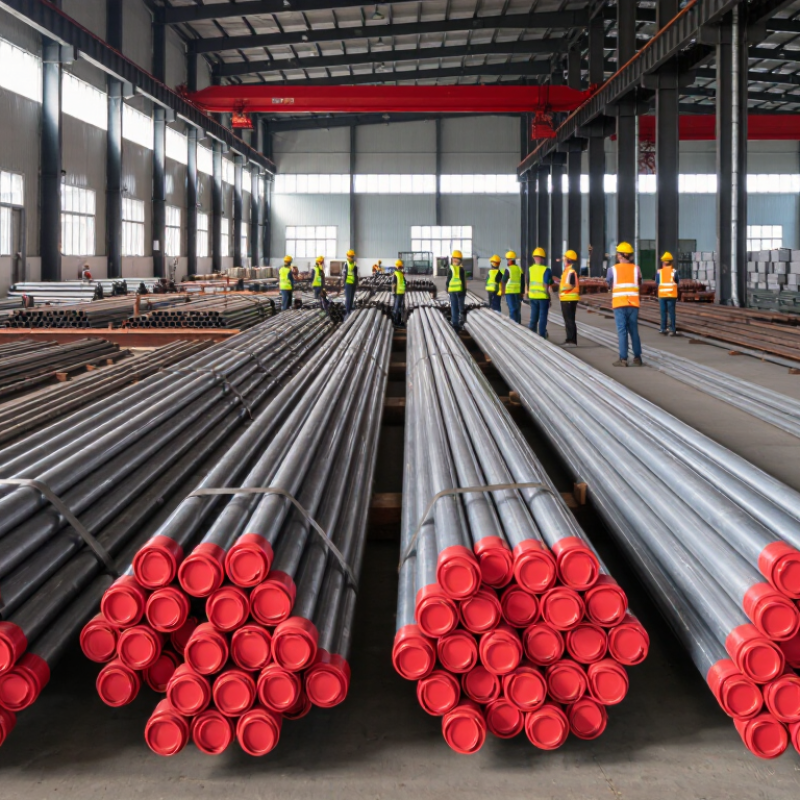
Mild Steel Pipe: Definition, Types, and Main Industrial Uses
Mild steel pipe is a low-carbon steel tube valued for strength, weldability, and practical cost. Carbon content varies by specification, so buyers should verify the mill certificate. It is not stainless steel. Surface rust can appear quickly in humid storage.
Common types include seamless, welded, galvanized, and black steel pipe. Seamless pipe has no longitudinal weld and suits demanding pressure service.
Welded pipe is formed from steel plate or coil, then joined along the seam. Galvanized pipe carries a zinc coating for improved corrosion resistance. Black pipe remains uncoated and often needs paint, wrapping, or controlled indoor storage.
Industrial uses are broad. Construction crews use it for handrails, scaffolding, frames, and structural supports. Factories install it in air, water, and low-pressure process lines. Agriculture uses it for irrigation, posts, and equipment supports. In fire-protection systems, only approved grades and dimensions should be selected. During site checks, I look for ovality, damaged threads, coating gaps, and water trapped inside. A practical detail is often missed: a cheap pipe can become expensive after cutting, welding, transport, and corrosion repairs. The category is not always cleanly defined. Confirm standards, wall thickness, outside diameter, end finish, and test requirements before ordering.
Key Criteria for Evaluating Mild Steel Pipe Manufacturers in 2026
Global buyers need more than a low quotation when evaluating mild steel pipe manufacturers in 2026. Start with production experience, material control, and documented quality systems. Ask for mill certificates, heat numbers, chemical analysis, and tensile results for each relevant batch. A reliable factory should explain its welding, forming, galvanizing, and dimensional inspection processes clearly. Look for traceability from raw coil to packed pipe. Small details matter.
Tips: Request recent inspection records, not only polished brochures. Compare tolerance data with the standards required at your destination. Confirm outside diameter, wall thickness, length, surface condition, and end finishing before ordering. A sample can reveal poor coating adhesion or uneven welds. It is not enough.
Assess export capability through realistic evidence. Review packing methods, loading photos, lead-time records, and responses to technical questions. Manufacturers with experienced engineers can recommend suitable grades without overstating performance. Check whether independent inspections are accepted and whether corrective-action reports are available. Price deserves attention, but an unusually cheap offer may hide inconsistent thickness or weak documentation. I would still test a supplier before a large contract. Even experienced buyers can miss corrosion risks when storage conditions are ignored. Ask about indoor storage, seawater exposure, and protective wrapping. Claims should be measurable.
Leading Mild Steel Pipe Manufacturers for Global Buyers
Leading mild steel pipe manufacturers for global buyers must offer more than competitive prices. They need stable chemistry, accurate dimensions, and dependable delivery. The World Steel Association reported global crude steel production at about 1.88 billion tonnes in 2024. This scale shows strong industrial capacity, but it also creates uneven quality among suppliers. Experienced manufacturers usually control melting, forming, welding, heat treatment, and inspection in documented stages.
For 2026 purchasing, buyers should review compliance with standards such as ASTM A53, ASTM A106, or ISO 3183, depending on the application. Mill test certificates should show chemical composition, tensile strength, yield strength, and hydrostatic test results. Independent inspection can verify wall thickness and surface condition before shipment. The International Energy Agency continues to identify infrastructure and energy networks as major steel-use areas, where corrosion resistance and traceability matter. A cheaper pipe may become expensive after installation. That lesson is easy to ignore.
Tips: Request recent production records, not only sample certificates. Confirm outside diameter, wall thickness, length tolerance, coating requirements, and packing details in writing. Check whether the manufacturer can trace each bundle to its heat number. No supplier is perfect. Buyers should also compare rejected-goods procedures, replacement timelines, and communication across time zones. These practical checks often separate leading manufacturers from ordinary exporters.
Manufacturing Standards, Quality Control, and Product Certification
For global buyers, reliable mild steel pipe begins with a clearly defined manufacturing standard. Specifications such as ASTM, EN, or API requirements control dimensions, chemical composition, strength, and testing methods. The selected standard must match the pipe’s intended service, pressure, temperature, and installation environment.
Experienced manufacturers control quality from billet selection to final packing. Each heat should remain traceable through production records and marked pipe bundles. Inspectors commonly verify outside diameter, wall thickness, straightness, surface condition, and pipe length. Laboratory checks may include tensile testing, flattening tests, chemical analysis, and hydrostatic pressure testing. Calibrated instruments matter. Small measurement errors can become costly installation problems.
Certification should provide evidence, not decoration. Buyers should request mill test certificates, inspection reports, and documented compliance with the agreed specification. An EN 10204 3.1 certificate can connect test results to a specific production batch. ISO 9001 supports process management, but it does not automatically certify every pipe. Independent inspection can add confidence before shipment. Still, no quality system is flawless. Records may contain gaps, and visual inspection can miss internal defects. A practical buyer reviews traceability, sampling plans, corrective actions, and certificate consistency. Clear packing lists, durable markings, and photographs of loading also reduce disputes across borders. The strongest suppliers welcome technical questions and disclose reasonable limitations.
How to Select and Import the Right Mild Steel Pipe Supplier
Selecting the right mild steel pipe supplier requires more than comparing prices. Start with your project drawings, required outside diameter, wall thickness, length, grade, and connection type. A reliable supplier should explain production limits clearly, not promise everything.
Request recent mill test certificates, dimensional reports, and material traceability records. Check whether the documents match the heat number marked on each bundle. Ask for photographs of pipe ends, protective packaging, and loading methods. Small details matter. A wet container can damage uncoated pipes before arrival.
Evaluate manufacturing capacity, inspection equipment, and export experience. A factory audit, video inspection, or independent pre-shipment inspection can reveal gaps that brochures hide. Confirm the applicable technical standard and testing requirements with your engineer and local customs broker. Do not assume one standard fits every market.
Import planning also needs practical discipline. Confirm the HS classification, packing dimensions, shipping terms, delivery port, insurance responsibility, and payment milestones in writing. Compare the full landed cost, including inspection, inland transport, duties, and storage. A low quotation may become expensive after arrival. Even careful buyers miss small specification changes. I would approve a trial order before committing to a large shipment. That step may feel slow, but it exposes communication and quality problems early.
