Industries
Get direct access to our extensive portfolio of optical products and specialist technical expertise.

Choosing among the 7 Best Biosafety Isolators for Global Buyers requires more than comparing prices or polished product photographs. A Biosafety Isolator should create a controlled barrier between operators, materials, and the surrounding laboratory. Its performance depends on measurable details, including pressure stability, HEPA filtration, glove integrity, transfer-chamber design, decontamination access, and alarm visibility. Small features matter. A difficult-to-clean corner can become a serious maintenance weakness.
Biosafety expert Dr. David L. Heymann has emphasized a practical principle: “Biosafety is everyone’s responsibility.” That responsibility begins with selecting equipment that matches the work, facility layout, staff training, and local validation requirements. Global buyers should also examine installation support, replacement-filter availability, electrical compatibility, documentation quality, and long-term service response. A technically excellent isolator may still disappoint if engineers cannot support it locally.
This guide compares seven leading options through a buyer-focused lens. It considers containment performance, usability, construction, monitoring, customization, and total ownership value. The “best” model is not universal. A pharmaceutical production site may prioritize automated decontamination, while a research laboratory may need flexible glove ports and compact dimensions. Some supplier claims also deserve closer examination. Marketing language can sound precise, yet practical testing may reveal limitations. Careful buyers should request validation records, maintenance schedules, and realistic operating examples before committing. Even then, selection remains partly imperfect. Good judgment means recognizing uncertainty, documenting assumptions, and choosing the isolator that supports safer daily work.
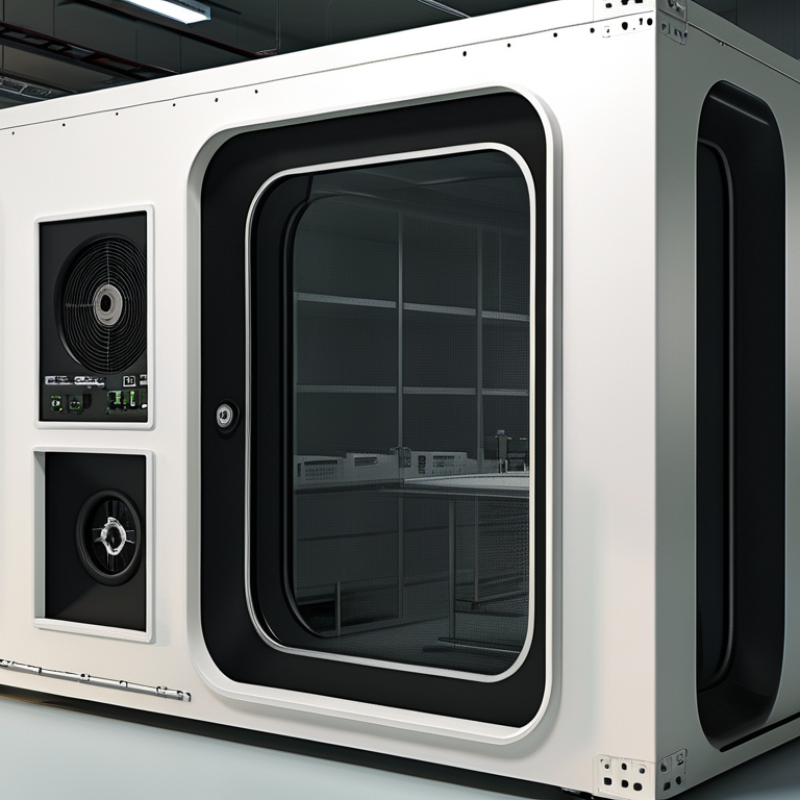
A biosafety isolator is a sealed workspace that separates operators, materials, and the room environment. It usually combines rigid walls, glove ports, controlled airflow, HEPA filtration, and a transfer chamber. The operator works through attached gloves, not an open sash. This physical distance matters when handling infectious or sensitizing materials.
The WHO Laboratory Biosafety Manual, fourth edition (2020), places risk assessment before selecting containment equipment. That guidance is practical. A buyer should examine the material, procedure, exposure route, and waste path. The CDC/NIH BMBL, sixth edition, also treats primary containment as a key layer of laboratory protection. A pressure gauge, door interlock, and audible alarm provide immediate clues when protection weakens.
Filter data needs careful reading. EN 1822-1:2019 classifies an H14 filter at a minimum efficiency of 99.995% at its most penetrating particle size. That number does not prove complete system safety. Leaks, poor seals, incorrect airflow, or careless transfers can defeat excellent filtration.
Technicians should request factory testing, site acceptance testing, and documented airflow verification. Check the glove sleeves too. Small cracks can remain unnoticed during routine wiping.
A common purchasing mistake is trusting a brochure more than maintenance records.
It is also easy to overlook ergonomics: dim lighting, awkward ports, and heavy gloves can increase handling errors. A safer isolator should protect the work without making careful work unnecessarily difficult.
Biosafety isolators differ by pressure control, enclosure design, and transfer method. Negative-pressure rigid isolators suit infectious sample handling. They protect workers by drawing air inward. Flexible-film isolators offer lighter installation and useful temporary capacity. However, their seals require frequent inspection. Positive-pressure isolators support aseptic cell processing and sterile preparations. They protect products, but may not control hazardous aerosols alone.
The WHO Laboratory Biosafety Manual, fourth edition, promotes risk-based containment rather than fixed equipment selection. Its framework recognizes four biosafety levels. ISO 14644-1 defines nine cleanroom classes, helping buyers specify airflow and particle control. For high-risk procedures, choose validated HEPA filtration, pressure alarms, sealed transfer chambers, and documented decontamination cycles. A 2024 biocontainment market analysis by MarketsandMarkets projects continued growth through 2029, driven by vaccine, diagnostic, and cell-processing demand. Market growth does not replace site-specific assessment. That distinction is easy to miss.
Tips: Match the isolator to the workflow, not only the laboratory level. Check glove reach, viewing angles, noise, and filter-change access. Ask for smoke studies and cleaning-validation records. A small weakness remains: many purchasing teams compare specifications but overlook operator fatigue. Test the unit with real containers, gowns, and transfer trays. Also review maintenance response time before approval.
This comparison maps common isolator configurations against four practical design characteristics: negative-pressure containment, positive-pressure product protection, glove-port operation, and closed-transfer capability. A value of 1 indicates that the feature is commonly associated with the configuration; 0 indicates that it is not the typical design. Final selection should be based on risk assessment, pressure strategy, decontamination method, airflow validation, and applicable regulatory requirements.
Choosing among seven leading biosafety isolator designs requires more than reading airflow numbers.
Compare hard-wall negative-pressure isolators, flexible-film units, glovebox isolators, aseptic transfer systems, animal-containment isolators, compact benchtop models, and hybrid pressure systems. Each design serves a different risk profile.
Hard-wall systems usually offer stronger structural protection and simpler decontamination validation. Flexible-film units reduce installation costs and adapt well to temporary workflows. Glovebox designs provide precise manipulation, but they can restrict operator movement. Aseptic transfer isolators prioritize product protection, while animal-containment models emphasize exhaust control. Compact units save space, yet their working area may become uncomfortable during long procedures. Hybrid systems improve flexibility, although their controls can require more training.
The WHO Laboratory Biosafety Manual, fourth edition, stresses risk assessment over universal equipment selection. That principle matters here. A visually impressive isolator may still fail a poorly planned workflow.
Tips:
Check pressure recovery after glove movement, transfer-door cycling, alarm response, and filter-change procedures. Request independent airflow and containment test records. ISO 14644-1 classifies airborne cleanliness using particle limits, including 3,520 particles per cubic metre at 0.5 micrometres for ISO Class 5. Cleanliness alone does not prove biological containment. The CDC/NIH BMBL, 6th edition, also links containment controls with task-specific risk assessment. I would not rely on one performance score. Noise, reach distance, decontamination time, and maintenance access often decide real-world usability. A small design compromise can become a daily operational problem.
Choosing among the seven best biosafety isolators requires more than comparing enclosure size or airflow volume. Global buyers should review ISO 14644 cleanroom principles, applicable biosafety guidance, and local regulatory expectations. EN 12469 may support microbiological safety assessments, but it should not replace a documented risk evaluation.
Look closely at pressure control, HEPA filtration, glove integrity, interlock design, and alarm visibility. A practical isolator should show stable pressure on its display, even during glove movement. Doors should prevent unsafe simultaneous opening. Transfer chambers need verified decontamination cycles, not attractive screens. Safety depends on tested performance.
Validation should cover installation qualification, operational qualification, and performance qualification. Test records should include filter integrity, airflow patterns, pressure recovery, leak tightness, alarm response, and surface decontamination. Use calibrated instruments with traceable certificates. During commissioning, operators should repeat critical checks under realistic loading conditions.
Do not trust one successful test.
Routine monitoring matters. Define acceptance limits before testing, and document deviations without hiding inconvenient results. Some validation plans are too theoretical; they ignore awkward glove positions, frequent material transfers, or cleaning delays. Experienced teams challenge these assumptions. They also train users, review maintenance history, and reassess the isolator after process changes. A reliable purchase decision connects safety features, recognized standards, evidence-based validation, and the daily behavior of the people using the system.
Global buyers should select an isolator by risk assessment, workflow, and service access. A glossy enclosure is not enough. Check containment performance, airflow stability, filter configuration, glove-port design, and cleaning compatibility. Ask for test data, factory acceptance records, and clear operating limits. The best unit fits the process, not merely the available budget.
Installation requires more than delivery and assembly. Confirm floor loading, room pressure, electrical supply, ventilation, and access routes before shipment. Qualified engineers should verify airflow, alarms, leak integrity, and filter performance after installation. Staff also need practical training with gloves, transfer systems, spills, and emergency shutdowns. Small layout errors can create daily frustration.
Tips: Keep maintenance space visible and reachable. Record every filter change and alarm. Use a written cleaning sequence. Review pressure trends weekly. Do not ignore unusual glove movement. During one project, operators focused heavily on cabinet size and overlooked door clearance. The result was a difficult transfer route. That mistake was avoidable, but it shows why user feedback matters. Maintenance plans should include spare parts, calibration intervals, remote support, and local technical capability. Requirements differ across regions, so buyers should confirm applicable standards with competent safety and engineering professionals. No selection is perfect. Careful review reduces surprises.