Industries
Get direct access to our extensive portfolio of optical products and specialist technical expertise.
Choosing the right Rubber Pipe Hose is not a simple matter of matching diameter and price. In real working conditions, a hose may face pressure surges, hot water, oil mist, vibration, sunlight, or repeated bending. A hose that looks strong on a showroom shelf can soften, crack, or collapse during daily use. That is why selection should begin with the actual operating environment, not a convenient guess.
This guide presents seven practical tips for evaluating hose construction, pressure ratings, temperature limits, flexibility, chemical resistance, and connection requirements. It also considers length, reinforcement layers, storage conditions, and supplier documentation. Experienced maintenance teams usually check these details before installation. They measure the fitting, inspect the inner wall, and confirm whether the stated working pressure includes a proper safety margin. Small mistakes matter.
Do not trust appearance alone.
A reliable Rubber Pipe Hose should match the medium it carries and the equipment around it. For example, a hose used near a hot pump may require different materials from one carrying clean water indoors. Product standards and test reports can support a safer decision, but paperwork is not everything. Some specifications are unclear, outdated, or poorly explained. That deserves careful questioning. The best choice balances performance, service life, maintenance access, and total cost. These tips cannot replace professional engineering advice for high-risk systems, yet they can prevent many avoidable failures before the hose reaches the job site.
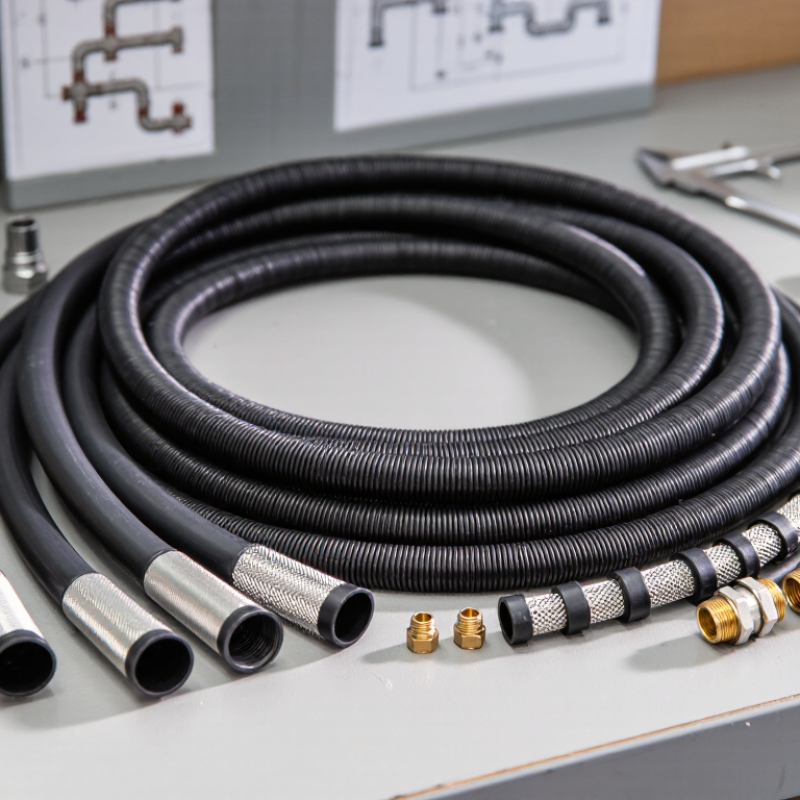
A rubber hose should match its actual duty, not only its diameter. Identify the medium first. Water, air, oil, chemicals, and abrasive slurry affect the tube differently. Check the fluid temperature, concentration, pressure, and flow speed before selecting materials. A hose carrying hot water may need different construction from one carrying cool water.
Look closely at the working environment. Will the hose bend repeatedly, drag across concrete, or remain outdoors? Sunlight, ozone, vibration, and sharp edges can shorten its service life. Measure the minimum bend radius during operation, not while the hose lies straight. Also consider pressure surges. A pump starting suddenly can create loads that a normal pressure reading will miss.
In practical inspections, failures often begin near fittings. Clamps, couplings, and poorly supported bends can create local stress. Select reinforcement that suits the pressure and movement requirements. Confirm compatibility with published technical data, and request test evidence when the application is critical. Standards and manufacturer instructions should guide the final decision.
Do not treat every operating condition as permanent. Temperatures may rise, cleaning fluids may change, and operators may pull the hose beyond its intended range. I have seen otherwise suitable hoses fail because storage conditions were ignored. That is a useful warning, although field assumptions can still be wrong. Record real operating conditions, inspect the hose regularly, and replace it when cuts, swelling, exposed reinforcement, or unusual stiffness appears.
7 Tips to Choose the Right Rubber Pipe Hose
Selecting the correct rubber hose material starts with the fluid, not the hose appearance. Water, oil, chemicals, air, and food liquids can require different rubber compounds. Natural rubber offers strong flexibility and abrasion resistance, while nitrile rubber usually handles petroleum-based oils better. EPDM performs well with hot water, steam, and weather exposure. Fluorocarbon rubber may suit demanding chemical or temperature conditions, but it can cost more.
Tip: Match the tube material to the actual medium.
Check the operating temperature carefully. A hose may tolerate brief heat spikes but fail under constant heat. Pressure also matters, especially during pumping or sudden surges. The cover needs resistance to sunlight, ozone, oil mist, and surface wear. In a workshop, I have seen a flexible hose crack because its inner tube was suitable, but its cover was not. Material selection is rarely about one property.
Tip: Review the whole hose construction.
Request technical data, compatibility charts, and test conditions from a qualified supplier. Confirm whether the figures describe continuous service or short exposure. Consider cleaning fluids, bending radius, and storage conditions too. A material can look perfect on paper and still perform poorly in a vibrating installation. I once overlooked repeated movement during selection. That mistake was preventable. Trial testing under real conditions remains valuable, particularly when temperature, pressure, and chemical contact change together.
7 Tips to Choose the Right Rubber Pipe Hose
Match the hose size, pressure, and temperature ratings before checking color or appearance. Measure the inner diameter, not the outside cover. A one-size mistake can increase pressure loss and heat. The U.S. Department of Energy notes that oversized or poorly selected fluid components can reduce system efficiency. Keep the route length as short as practical. Allow enough bend radius. Tight bends can damage reinforcement layers. Tip seven is often missed: confirm the fitting standard and sealing method.
Check working pressure, surge pressure, and impulse pressure separately. Never select a hose from its maximum burst pressure. ISO 18752 classifies hydraulic hoses by pressure and performance requirements, while SAE J517 defines commonly used hydraulic hose constructions. Their ratings are not interchangeable without verification. Leave a safety margin for pump start-up and valve closure. I have seen hoses fail near fittings because the catalog pressure looked adequate, but the repeated surge was ignored.
Temperature needs two checks: the conveyed fluid and the surrounding air. Rubber may tolerate a brief peak but degrade under constant heat. Verify chemical compatibility with the fluid, especially with oils, coolants, and cleaning agents. The U.S. Bureau of Labor Statistics reported 2.6 million nonfatal workplace injuries in private industry during 2023, according to its annual release. Hose selection cannot remove every hazard, but correct ratings reduce avoidable failures. Recheck the choice after installation. The first selection is not always right.
This reference chart shows representative maximum working-pressure values for SAE 100R1AT-style, single-wire-braid hydraulic hose at different nominal bore sizes. Larger hose bores generally have lower pressure ratings within the same construction. The commonly published operating temperature range is approximately −40°C to +100°C. Always verify the exact hose specification, fluid compatibility, temperature derating, fittings, and safety factor before selection.
Check flexibility, compatibility, and durability
A practical lesson from field inspections is simple: a hose can look healthy and still be wrong for the job. Check its minimum bend radius before installation. A tight bend can flatten the tube and restrict flow. Also check flexibility at the lowest working temperature.
Tip one: choose the correct bend radius. Tip two: match the hose to the fluid. Oil, solvents, water, and compressed air can require different rubber compounds. Tip three: compare working pressure, burst pressure, and pressure surges. ISO 18752 connects hose classes with pressure and impulse performance, not appearance alone.
Fit matters too. Tip four: verify the inner diameter and end fittings. A small mismatch may create turbulence, leaks, or pull-out risks. Tip five: confirm temperature limits, including short heat spikes near engines or steam lines. The U.S. Department of Energy reports that compressed-air leaks can waste 20–30% of compressor output. A damaged hose may therefore increase energy loss, not only maintenance costs.
Tip six: inspect the cover for abrasion, cracking, and chemical swelling. Tip seven: select reinforcement suited to movement and pressure cycles. ASTM D380 provides recognized test methods for rubber hose evaluation.
Do not rely on a thick wall alone. Durability also depends on sunlight, vibration, storage, and cleaning chemicals. I would document the hose route and inspection date. That small record is often missed. It also exposes weak assumptions before failure.恒一
A safe rubber hose begins with the working conditions, not its price. Check pressure, temperature, fluid compatibility, bending radius, and abrasion exposure. ISO 1307 defines hose dimensions, while ISO 18752 covers performance classifications for hydraulic applications. Request test records, material details, and traceable batch information. A vague certificate is a warning sign.
Maintenance changes the real purchase cost. Inspect the hose for cracks, blisters, flattened sections, exposed reinforcement, and loose fittings. Keep it away from sharp edges and excessive heat. A small bend can become a serious failure. The U.S. Bureau of Labor Statistics recorded about 2.6 million nonfatal workplace injuries in private industry during 2023. Not every incident involves hoses, but preventable equipment failures still deserve attention. Inspection intervals should follow operating risk, manufacturer guidance, and site experience.
Compare total cost, not only the invoice. Include installation, clamps, cleaning, storage, inspection labor, downtime, replacement frequency, and disposal. A cheaper hose that fails twice a year may cost more than a durable option. ISO 9001-based quality controls can improve consistency, but certification alone does not prove field performance. Ask for pressure-test results and service-life evidence. I have seen teams overvalue high pressure ratings while ignoring chemical exposure. That assumption needs challenging. Five minutes of inspection can prevent hours of shutdown.