Which Is the Best Data Cable Manufacturer in China?
Choosing the best data cable manufacturer in China depends on the cable’s intended use, not a single online ranking. A supplier serving data centers may excel at fiber-optic assemblies, while another focuses on USB, Ethernet, or coaxial products. The difference shows up in practical details: stable connector fit, clean cable jackets, clear labeling, and test records linked to each production batch.
Fiber-optics pioneer Charles K. Kao wrote, “the problem of transmission loss in fibers is not a fundamental one,” in his 2009 Nobel lecture. His observation highlights how materials and manufacturing affect performance; it is not an endorsement of any current supplier. For buyers, the same careful thinking applies. Ask manufacturers for relevant test reports, conductor and shielding specifications, quality-control procedures, and traceability details. Then compare samples under the conditions your product will actually face.
Details matter. A polished catalog is not proof of consistent output. Request samples from more than one production run, check dimensions and labeling, and confirm that stated certifications cover the specific product. Also ask how the manufacturer handles defects, engineering changes, and delivery delays. That is measurable. Still, no checklist removes every risk, and a sample may not represent routine production. That part deserves reflection. The strongest choice is the manufacturer that can explain its process clearly, provide verifiable evidence, and meet your technical and commercial requirements consistently.
What Is a Data Cable Manufacturer?
A data cable manufacturer is a company that designs, builds, or assembles cables used to carry data between devices. Its work may begin with a drawing and a list of requirements, such as cable length, connector type, transfer rate, and operating conditions. It then selects conductors, insulation, shielding, and connector parts to suit the intended use. That sounds simple. It isn’t. A cable can look tidy while its internal wiring or shielding falls short of the specification.
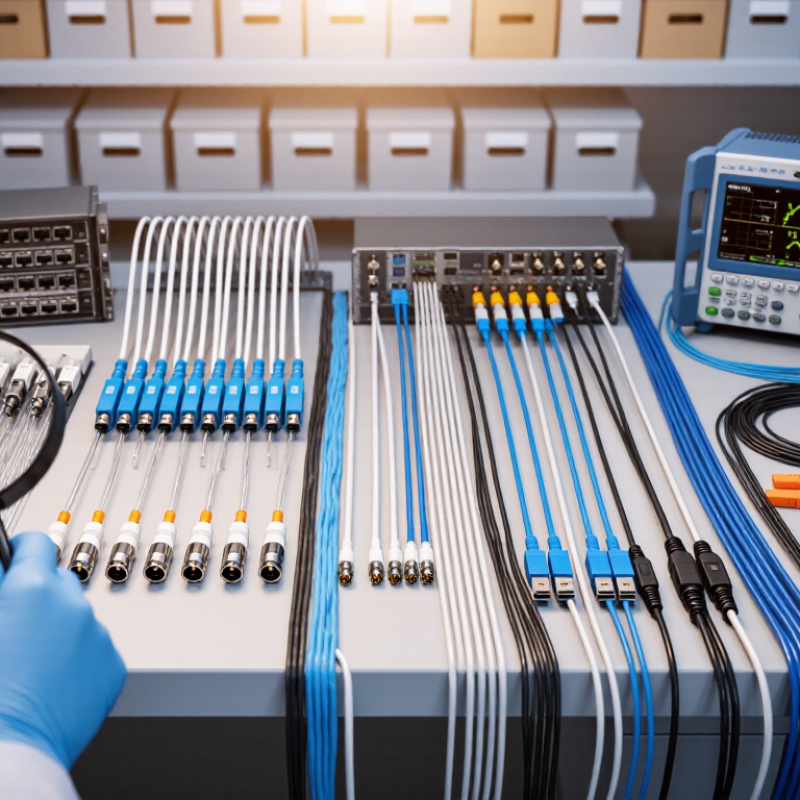
Manufacturing may include cutting wires, stripping insulation, crimping or soldering contacts, molding connectors, and checking finished assemblies. Reliable manufacturers document material choices and production steps, and they test samples or finished cables against relevant requirements. Checks can include continuity, contact resistance, connector fit, and signal performance. The exact tests depend on the cable design; one checklist does not fit every product. A useful factory review looks beyond machines on the floor. Ask how production changes are recorded, how faulty pieces are handled, and whether test reports match the cable being ordered. A polished sample helps, but it cannot prove every production batch will be identical. That part deserves a second look.
What Types of Data Cables Are Made in China?
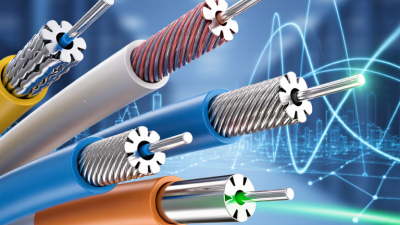
China manufactures several practical data-cable families. Common examples include copper Ethernet cables, fiber-optic cables, USB data cables, and coaxial cables used in broadband networks. ITU’s Facts and Figures 2024 estimated that 5.5 billion people used the internet, about 68% of the world’s population. That growing connectivity relies on both short device cables and longer network links.
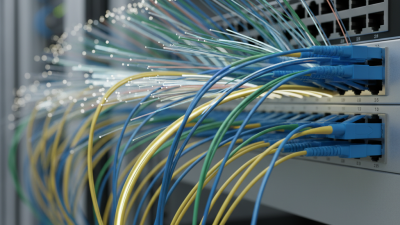
Ethernet cables commonly use twisted copper pairs, with categories such as Cat5e, Cat6, and Cat6A suited to different network speeds and installation needs. Fiber cables use glass strands to carry data over longer distances, and are available in single-mode or multimode designs. USB cables connect computers, storage devices, and peripherals; USB-IF’s USB4 Version 2.0 specification supports data rates up to 80 Gbps with compatible equipment and cables. Coaxial cable remains useful in some broadband systems. Small details matter.
Cable labels alone can be misleading. Conductor thickness, shielding, fiber type, connector quality, and test results all affect real-world performance. I have seen specifications that look impressive but omit test conditions; that makes comparison harder. For procurement, request documented performance results and check that the cable matches the intended distance, environment, and equipment. A neat outer jacket is not proof of reliable transmission.
How Should Data Cable Manufacturers Be Evaluated?
Which Is the Best Data Cable Manufacturer in China?
How Should Data Cable Manufacturers Be Evaluated?
There is no single best manufacturer for every project. Start by matching its experience to your cable type, intended environment, and order volume. Ask for technical data sheets, conductor specifications, insulation details, and test reports for the exact model you plan to buy. Check whether reported results cover electrical performance, durability, and temperature resistance. Documents should be traceable to product batches, not just presented as generic samples.
Evaluate production consistency, not only a polished sample. Request details about incoming material checks, in-process inspections, and final testing. If possible, review a recent sample and compare its markings, flexibility, connector fit, and measured performance with the specification. Ask how the factory handles failed tests and production changes. A site visit or live production review can help, though one visit cannot prove long-term consistency. That limitation matters.
Tips: Send the same written specification to each candidate. Compare test evidence, lead times, minimum order quantities, and warranty terms side by side. Keep records. A low quote may omit testing or packaging costs, so clarify what is included. If a claim sounds broad, ask for a measurable criterion. I would also reassess suppliers after the first delivery; early checks can miss issues that appear only across larger batches.
Which Is the Best Data Cable Manufacturer in China? How Should Data Cable Manufacturers Be Evaluated?
A useful starting point for evaluating a manufacturer is whether its products meet the bandwidth specifications for their stated cable category. The values shown are nominal frequencies defined for each category; they are not measured test results from any manufacturer. Check independent test reports and confirm that the cable meets the standards and performance requirements for your intended installation.
Which Manufacturing Capabilities Indicate High Quality?
A high-quality data cable manufacturer is defined by repeatable process control, not impressive machinery alone. Look for controlled conductor stranding, stable insulation extrusion, and consistent cable geometry. Operators should monitor conductor diameter, insulation thickness, and concentricity during production, not just inspect finished coils. Small variations can affect signal performance or make installation difficult.
Ask how the factory verifies performance against the cable’s stated specifications. Useful evidence includes documented electrical tests, sample inspection records, and traceability from raw materials to finished batches. Testing equipment should be calibrated, and rejected products should be recorded rather than quietly reworked. Details matter. A tidy laboratory helps, but it does not prove that every production shift follows the same procedure.
Manufacturing capacity also means handling custom lengths, construction requirements, and changing order volumes without losing control of quality. Review a sample cable, its test report, and the process used to make it. If possible, observe production and compare recorded measurements with the physical product. One imperfect point: a polished audit visit can show only one day’s performance. Ask how the factory tracks defects and corrects recurring problems over time.
How Can Buyers Choose the Best Manufacturer for Their Needs?
Choosing the best data cable manufacturer begins with a clear description of your application. Define cable length, data rate, connector type, installation environment, and expected production volume. A cable used inside a control cabinet faces different demands from one bent repeatedly on a factory floor. Details matter.
Ask for technical drawings, material specifications, and test records for the exact cable you plan to order. Check conductor size, insulation, shielding, and connector fit against your requirements. If signal quality matters, request relevant performance data rather than relying on phrases such as “high speed.” For moving cables, ask how flex life is tested and what conditions the test uses.
A sample should match the proposed production process, not just look tidy on a desk. Compare several samples for consistent length, clean termination, and firm connector retention. Ask how batches are identified and how defects are handled. Even this process is not foolproof. A report may describe a test without showing whether routine production follows it, so ask for recent, product-specific evidence. Responsiveness matters too: clear answers about lead times, minimum orders, and design changes can prevent delays later. Some buyers focus too much on price; that is understandable, but the cheapest quote can leave important details unclear. Decide which trade-offs you can accept before placing a larger order.