Industries
Get direct access to our extensive portfolio of optical products and specialist technical expertise.
Choosing the best Slim frame aluminum sliding doors in 2026 means looking beyond narrow sightlines. A slim profile can bring more daylight into a room, but glass area, frame design, and installation all affect comfort. The U.S. Department of Energy’s Energy Saver guidance estimates that windows account for about 25–30% of residential heating and cooling energy use. That figure concerns windows broadly, not sliding doors alone, but it shows why glazing performance deserves attention.
Look for independently verified U-factor and solar heat gain coefficient ratings, then match them to your climate and orientation. The National Fenestration Rating Council’s certified ratings help compare those performance measures across products. For durability, ask whether the door has been tested for air leakage, water penetration, and structural performance under relevant Fenestration and Glazing Industry Alliance standards. A showroom display cannot prove how a large installed unit will behave in wind-driven rain. Details matter.
This guide compares leading options by frame sightline, thermal performance, hardware, configuration, and available test documentation. It also considers practical details: a flush track may look clean, while poor drainage or difficult maintenance can frustrate daily use. “Slim” is not a performance rating. And not every home needs the thinnest frame. Product specifications can vary by size and configuration, so confirm the exact model data before choosing. Even careful comparisons have limits; installation quality can change the result.
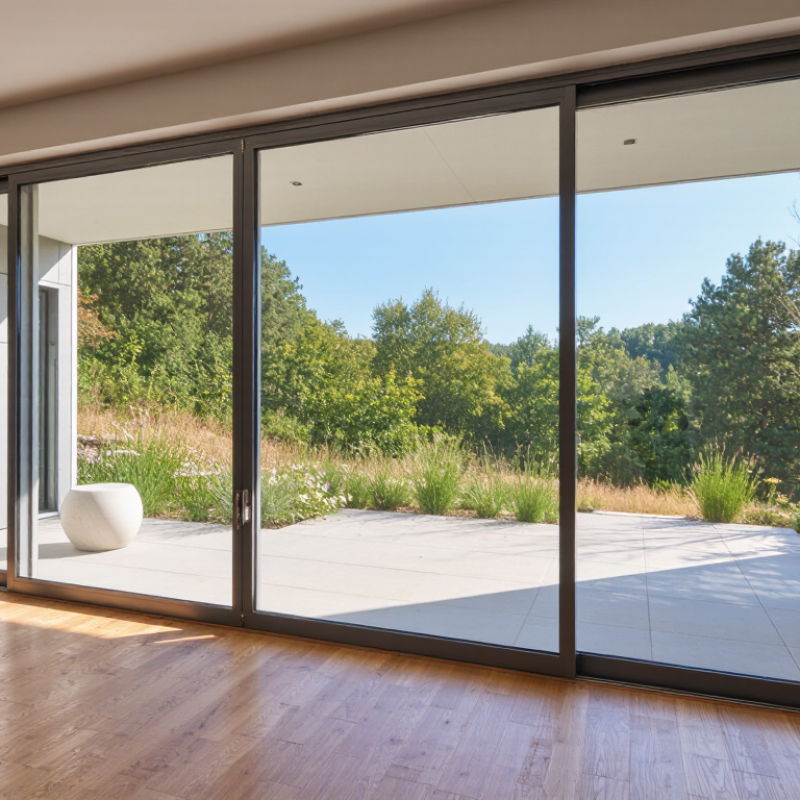
Slim-frame aluminum sliding doors are defined by their sightlines: the visible frame width around each glass panel and where panels meet. Compare the full opening, not just the advertised frame dimension. Center stiles, handles, and meeting rails can create a noticeably wider visual break. A thin profile looks clean, but it is not automatically the better choice. Check that the proposed system suits the opening, glass weight, and local wind exposure.
Panel size depends on the door system and site conditions. Larger panes offer clearer views, but they add weight and demand suitable rollers, structural support, and careful installation. Two-panel layouts keep the arrangement simple; multi-panel systems can open more of the wall, though stacked panels need parking space. Track options include standard raised tracks, multiple parallel tracks, and recessed or flush thresholds. Flush details look seamless, but drainage and water management need close attention.
Tips: Ask for a section drawing showing sightlines, panel dimensions, handle position, and track depth. Check tested size limits and maintenance access before ordering. I would not decide from a rendering alone; real floor levels and tolerances can change the finished look. Dust collects quickly in tracks.
For slim-frame aluminum sliding doors in 2026, compare NFRC-listed ratings before comparing appearance. U-factor estimates heat transfer through the complete unit; lower values generally mean less heat loss in cold weather. SHGC measures how much solar heat enters through the glass. a lower SHGC can help limit summer overheating, while a higher value may suit cold, sunny rooms. There is no universally best pairing. Climate, orientation, shading, and heating or cooling needs all matter.
Check ratings for the exact size, glazing package, and operating style you plan to buy. A large slider may perform differently from a smaller tested configuration. Slim aluminum frames leave less room for insulation, so check for a thermal break and compare whole-unit ratings, not glass-only claims. Read the label. In a sunny west-facing room, lower SHGC may reduce afternoon glare and cooling demand. On a shaded north side, U-factor may deserve more attention. Ask for current NFRC documentation and confirm the quoted ratings match your chosen glass. I would not choose by one decimal place alone; installation gaps, seals, and local weather can quietly change comfort. These details are easy to overlook when the narrow sightline looks so clean.
For slim-frame aluminum sliding doors, the NAFS Performance Grade is more useful than frame appearance alone. Under the AAMA/WDMA/CSA 101/I.S.2/A440-22 standard, PG 15 and PG 100 indicate design-pressure ratings of 15 and 100 pounds per square foot. Higher grades generally suit greater wind loads, but the correct rating depends on the building’s location, height, exposure, and opening size. Bigger glass panels can change the result.
Water resistance deserves a separate check. NAFS evaluates water penetration at a test pressure tied to the product’s performance class and grade; the test pressure is not simply the PG number. ASTM E547 describes a laboratory method that subjects windows and doors to water spray and repeated pressure changes. Ask for the tested assembly’s report, including its water-test pressure. Look for the exact door size and configuration, not just a similar-looking sample.
On site, wind-driven rain can press against the meeting stile, track, and sill. A high PG cannot fix poor installation or blocked drainage. Still, paperwork is easy to overread. Compare the documented rating with project-specific design pressures and local exposure conditions, ideally with a qualified design professional. A narrow frame looks elegant; the test data should make the choice dependable.
For slim-frame aluminum sliding doors, the coating deserves as much attention as the narrow sightlines. AAMA 2605 is a high-performance coating specification that includes a 10-year South Florida outdoor exposure test. Test panels face intense sun, heat, humidity, and salty air. These conditions make the test useful when comparing finishes for bright, exposed openings.
Ask for documentation showing that the coating system—not merely the aluminum—is tested to AAMA 2605. Check the specified color, gloss, and pretreatment, too. A pale finish may show fading differently from a dark one, while poorly prepared metal can undermine even a robust coating. That detail matters. The test evaluates coating performance under defined conditions; it does not certify an entire sliding door or guarantee identical results at every home.
Look for test reports and written warranty terms, then compare their coverage with the door’s location and care requirements. A sheltered patio opening and a west-facing coastal wall do not face the same exposure. The standard is a strong screening tool, not a crystal ball. It may still be tempting to judge a finish by a small showroom sample; that is imperfect. Ask how the actual production finish is controlled, and whether scratches or cut edges require specific maintenance.
AAMA South Florida outdoor exposure durations by performance class
AAMA 2605 calls for 10 years of South Florida outdoor exposure. Commonly cited 2605 requirements also include a maximum color change of 5 ΔE units and a minimum chalk rating of 8. These are coating-performance criteria; they do not by themselves guarantee the performance of an entire sliding-door system.
Reference: AAMA 2603, AAMA 2604, and AAMA 2605 performance specifications. Exposure durations shown are specification requirements, not results for a particular product.
For 2026, rank slim-frame aluminum sliding doors by the complete system, not frame width alone. Top-tier options pair multi-point locks, anti-lift devices, and suitable safety glazing with documented performance testing. Check that the rollers, handles, and locking parts are serviceable; beautiful hardware is little help if replacements are difficult to source. A narrow frame can still be secure.
For best overall value, favor systems with clear, separate warranty terms for the frame finish, glass, hardware, and installation. A long frame warranty may not cover a failed roller or labor costs. Compare installed quotes that specify removal, flashing, interior trim, and disposal. Installed cost varies with opening size and site conditions, so a low headline price is not a fair ranking. My ranking would favor proven security and repair access over the absolute thinnest sightline. That trade-off is not perfect.
Tips: Ask installers to show the lock engaging and the panel resisting lift before signing. Get warranty exclusions and maintenance instructions in writing. Check the sill height, too; a sleek threshold can still collect grit and water. If two quotes differ sharply, compare their exact glass, hardware, and installation scope before choosing.