Industries
Get direct access to our extensive portfolio of optical products and specialist technical expertise.

China’s air-conditioning market is expanding, and the Air Conditioner Contactor remains a small but critical component. It controls compressor and fan motor circuits. It also supports safer switching during repeated cooling cycles.
The International Energy Agency reports that global space-cooling energy demand could more than triple by 2050 without stronger efficiency measures. China’s expanding cities, hotter summers, and rising household incomes make reliable switching equipment increasingly important. A weak contactor can create visible problems: pitted contacts, buzzing coils, overheated terminals, or unexpected compressor shutdowns.
Jean-Pascal Tricoire, a former Schneider Electric chairman and a prominent electrification leader, stated, “We are not going to solve climate change without electrification.” His observation extends beyond energy generation. It also highlights the importance of dependable low-voltage control devices inside air-conditioning systems.
This guide examines China’s top 10 Air Conditioner Contactor manufacturers through practical criteria. These include rated operational current, coil-voltage options, AC-3 motor ratings, thermal performance, certification coverage, production capacity, and after-sales support. Manufacturer experience matters. So does field evidence.
The list is not perfectly objective. That deserves attention. Public rankings often mix brand reputation with limited technical evidence. Therefore, buyers should verify test reports, factory quality systems, and compatibility with refrigerant equipment before selecting a supplier. The China Refrigeration and Air-Conditioning Industry Association and international standards, including IEC 60947-4-1, provide useful reference points.
A low purchase price may look attractive. A failed contactor is expensive. It can stop a retail freezer, hotel chiller, or residential outdoor unit at the worst moment.
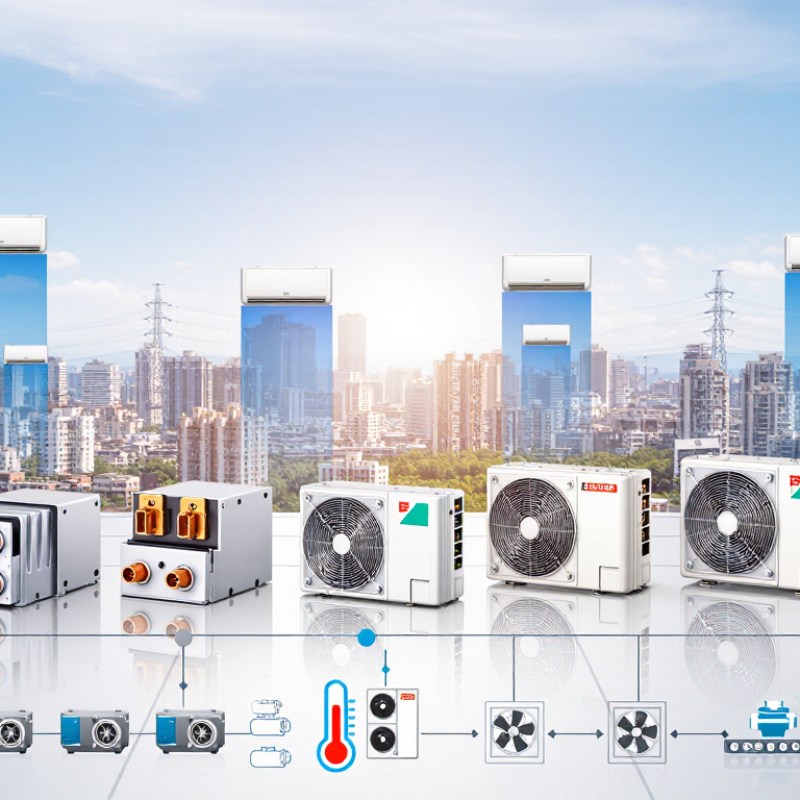
China’s air-conditioner supply chain increasingly depends on reliable AC contactors, especially as equipment volumes and efficiency demands rise. The IEA’s The Future of Cooling report estimates that global air-conditioner stock could reach 5.6 billion units by 2050, compared with about 1.6 billion in 2016. That growth makes component verification more important than a low purchase price.
IEC 60947-4-1 defines requirements for electromechanical contactors and motor starters, including utilization categories, temperature rise, insulation, switching endurance, and short-circuit coordination. GB/T 14048.4 provides the corresponding Chinese framework for low-voltage contactors and motor starters. They are closely aligned, but buyers should confirm the applicable edition and national test requirements. A practical evaluation should check AC-3 ratings, coil voltage tolerance, terminal heating, contact welding resistance, and operation under repeated compressor starts. Test records should identify sampling rules and laboratory competence. A certificate alone is not enough.
In factory assessments, small details often reveal quality. Inspect contact pressure, arc-chamber condition, screw torque, and coil noise after thermal cycling. The China Refrigeration and Air-Conditioning Industry Association has repeatedly highlighted efficiency and reliability as key directions for equipment development. Yet contactor selection is sometimes treated as a catalogue exercise. That is a weakness. Real service conditions may include voltage fluctuation, high cabinet temperatures, moisture, and frequent cycling. Performance data should therefore be matched with the actual compressor circuit, not copied from a general product sheet.
China’s air-conditioner contactor market deserves comparison beyond catalogue price. The IEA’s Future of Cooling report estimates that global air-conditioner ownership could reach 4.5 billion units by 2050. That growth increases demand for reliable switching components in compressors, fans, and heating circuits.
This comparison focuses on Ie, Ue, poles, and coil voltage. Ie shows the rated operational current under a stated utilisation category. Ue identifies the working voltage, not merely the insulation rating. A 9 A contactor may suit a small fan motor, while larger compressors require higher Ie and verified motor-duty performance. Pole configuration also matters. Two-pole devices commonly control single-phase loads, while three-pole versions suit many three-phase compressors. Four-pole designs can switch a neutral when the application requires it.
Coil voltage needs careful checking. Common control options include 24 V AC, 110 V AC, 220–240 V AC, and several DC ratings. IEC 60947-4-1 requires contactors to be assessed under defined electrical and endurance conditions. However, catalogue figures can still mislead. Ambient temperature, inrush current, switching frequency, and enclosure heat can reduce practical service life. Field testing should confirm terminal temperature rise and coil stability. I have seen selections fail because engineers matched Ie but ignored utilisation category. That mistake is expensive. A credible top-ten review should compare certified ratings, test evidence, replacement availability, and actual HVAC application experience, not just headline current values.
When comparing China’s top 10 air conditioner contactor manufacturers, AC-3 and AC-8a ratings deserve careful attention. AC-3 covers squirrel-cage motor starting and stopping. AC-8a is intended for hermetic refrigerant compressor motors with manual-reset overload protection. These categories reflect real compressor stress, not simple resistive switching.
For a 230 V compressor, the contactor must handle starting current, locked-rotor conditions, and frequent cycling. A 400 V motor usually draws less line current at the same output, but its switching duty remains demanding. Always compare the rated operational current, motor power, poles, frequency, and permitted cycles. A larger frame is not automatically safer. Check the technical sheet.
In practical supplier evaluations, I inspect test records, terminal temperature rise, contact resistance, coil consumption, and mechanical endurance. Samples should be tested under the intended voltage, not only in a quiet laboratory setup. I also verify whether the AC-3 or AC-8a value applies at 230 V, 400 V, or both. A neat table can still mislead. Some listings mix thermal ratings with utilization-category ratings. That mistake is easy to miss. Reliable manufacturers provide traceable reports, clear production controls, and replacement data. Still, field conditions may expose weaknesses that certification tests do not reveal. Pay attention to ambient temperature, enclosure ventilation, humidity, and compressor restart intervals.
This chart compares calculated three-phase compressor running current for common IEC motor power sizes at 230 V and 400 V. The calculation uses an assumed power factor of 0.80 and motor efficiency of 90%: I = P ÷ (√3 × V × η × cos φ). AC-3 is typically used for standard squirrel-cage motor switching, while AC-8a applies to hermetic refrigerant compressor applications. Actual AC-8a contactor ratings are manufacturer-specific and must be verified against the contactor datasheet, compressor locked-rotor current, and applicable IEC requirements.
A credible comparison of ten manufacturers should begin with safety evidence, not production volume. For air-conditioning systems, SCCR shows how much fault current an assembly can withstand safely. The contactor rating must match the complete circuit, including fuses, breakers, wiring, and compressor load. A high-looking number means little without test conditions.
Ask each manufacturer for certified test reports, protection-device combinations, and traceable production records. Short-circuit coordination matters because a contactor may fail when upstream protection operates too slowly. Type 1 or Type 2 coordination results should identify voltage, prospective current, and test duration. Small details matter. Missing values deserve questions.
Endurance data should cover electrical and mechanical cycles, not only laboratory switching. Check compressor starting current, locked-rotor conditions, ambient temperature, coil voltage variation, and contact wear. A useful report explains whether contacts welded, pitted, or remained stable after testing.
In practical reviews, inconsistent terminology often hides weak evidence. I have seen impressive spreadsheets with no raw test records. That is not enough. Supplier audits should also examine sampling plans, batch identification, and corrective-action history. SCCR alone cannot prove long-term reliability.
When evaluating China’s top ten air conditioner contactor manufacturers, OEM capacity deserves close attention. A capable factory should handle customized coil voltages, terminal layouts, label designs, and packaging. It should also provide pilot samples before mass production. Production lines need automated assembly, contact welding, and reliable end-of-line testing. Ask for monthly output figures, process controls, and recent quality records. Numbers alone can mislead.
CCC certification is another practical checkpoint. Buyers should confirm whether the exact contactor model falls within applicable certification requirements. Check the certificate holder, product range, validity, and factory address. Test reports should match the delivered structure, rated current, insulation level, and operating conditions. Small differences matter. A certificate copied into a quotation is not enough.
Export capability involves more than shipping products overseas. Experienced suppliers prepare commercial invoices, packing lists, technical datasheets, and compliance documents for different markets. They should understand voltage systems, frequency variations, customs expectations, and regional safety standards. Technical support should cover sample selection, compressor starting loads, AC-1 and AC-3 ratings, auxiliary contacts, and coil surge behavior. Fast answers help, but documented answers are better. Ask for troubleshooting guidance, batch traceability, and failure-analysis reports. Some manufacturers offer impressive catalogs yet respond slowly after delivery. That weakness deserves attention, especially when a failed contactor can stop an entire cooling system.
| No. | Supplier Profile | Typical Contactor Application | OEM / ODM Capability | CCC Certification Status | International Standards Commonly Supported | Export Reach | Technical Support | Typical Production Lead Time | Procurement Score |
|---|---|---|---|---|---|---|---|---|---|
| 1 | Manufacturer Profile 01 High-volume low-voltage component producer | Compressor, condenser-fan, and HVAC motor switching | Private label, coil-voltage changes, terminal configuration, packaging customization | Model-specific CCC available | IEC 60947-4-1; CE documentation available by project | Asia, Middle East, Europe, Africa, Latin America | Application selection, drawings, samples, and failure analysis | 15–30 working days after approval | 9.2 / 10 |
| 2 | Manufacturer Profile 02 HVAC-focused relay and contactor supplier | Single-phase and three-phase air-conditioner compressors | Coil and contact configuration customization; OEM labels subject to MOQ | Model-specific CCC available | IEC 60947-4-1; RoHS and CE support for export orders | Southeast Asia, Europe, North Africa, South America | Electrical parameter matching and replacement guidance | 20–35 working days after technical confirmation | 9.0 / 10 |
| 3 | Manufacturer Profile 03 Industrial control equipment manufacturer | HVAC control panels, compressors, pumps, and fan motors | Custom current ratings, auxiliary contacts, mounting options, and documentation | CCC scope confirmed per model | IEC 60947 series; CE technical file support | Asia-Pacific, Europe, Middle East, North America | Pre-sales engineering and commissioning assistance | 25–40 working days for customized orders | 8.8 / 10 |
| 4 | Manufacturer Profile 04 Mass-production electrical appliance supplier | Residential and light-commercial air-conditioner units | Standardized OEM models, packaging, color, labeling, and terminal options | CCC available for applicable models | IEC 60947-4-1; RoHS declarations commonly supplied | Asia, Africa, Middle East, Eastern Europe | Catalog selection, sample testing, and technical datasheets | 15–25 working days for standard models | 8.6 / 10 |
| 5 | Manufacturer Profile 05 Medium-voltage and low-voltage control specialist | Commercial HVAC compressors and packaged units | Custom enclosures, auxiliary contact blocks, and control assemblies | Available for selected product families | IEC 60947-4-1; export compliance reviewed per destination | Europe, Central Asia, Middle East, Southeast Asia | Load calculation, wiring review, and product replacement support | 25–45 working days | 8.4 / 10 |
| 6 | Manufacturer Profile 06 Cost-competitive HVAC parts manufacturer | Residential compressor and condenser-fan circuits | OEM labeling, carton design, coil voltage, and standard current options | CCC available for selected models | IEC 60947-4-1; CE and RoHS documents available on request | South Asia, Africa, Southeast Asia, Latin America | Basic selection support and pre-shipment inspection documents | 20–35 working days | 8.1 / 10 |
| 7 | Manufacturer Profile 07 Export-oriented electrical components producer | Air-conditioner compressors, fans, pumps, and control cabinets | Private label, multilingual packaging, and export documentation | Confirmation required by rated model | IEC 60947-4-1; CE documentation for selected ranges | Middle East, Africa, Southeast Asia, Europe | Remote technical consultation and document support | 20–40 working days | 7.9 / 10 |
| 8 | Manufacturer Profile 08 Small-batch customization specialist | OEM air-conditioning equipment and replacement parts | Low-volume customization, prototype samples, and non-standard terminals | Certification depends on product series | IEC 60947-4-1; destination-market documents project-dependent | Asia-Pacific, Europe, North America, selected distributors | Prototype development and application troubleshooting | 30–50 working days for new designs | 7.7 / 10 |
| 9 | Manufacturer Profile 09 General-purpose contactor manufacturer | HVAC motors, refrigeration equipment, and auxiliary loads | Standard OEM models with limited mechanical customization | CCC available for applicable models | IEC 60947-4-1; basic CE and RoHS support | Domestic China market and selected export distributors | Standard datasheets and product replacement support | 15–30 working days | 7.5 / 10 |
| 10 | Manufacturer Profile 10 Regional electrical control supplier | Light-commercial air-conditioners and fan-control systems | Packaging and label customization; limited engineering changes | Verify before purchase | IEC 60947-4-1 may be supported by product family | China, Southeast Asia, South Asia, selected African markets | Sales-engineer support and standard wiring guidance | 20–40 working days | 7.2 / 10 |