China Top 10 Gas Metal Arc Welder Manufacturers in 2026
China’s welding equipment market continues to expand in 2026, supported by manufacturing, construction, shipbuilding, and repair industries. Among these applications, the Gas Metal Arc Welder remains a practical choice for stable, continuous welding. It supports productive work with steel, stainless steel, and aluminum when properly configured.
This guide introduces ten notable Chinese manufacturers based on product range, manufacturing experience, technical support, quality controls, and market reputation. The evaluation considers welding current stability, wire feeding performance, duty cycle, control interfaces, safety design, and after-sales service. Factory capability also matters. A polished brochure cannot replace consistent performance on a workshop floor.
Real details matter.
For example, operators notice whether the arc starts smoothly, the torch cable remains flexible, and the wire feeder avoids sudden pauses. We also consider documentation, spare-part availability, training resources, and response times for technical questions. These points can influence productivity more than a low purchase price.
No ranking is flawless. Manufacturer information may change, and published specifications do not always reflect long-term field performance. Buyers should request test welds, review applicable certifications, confirm input power requirements, and compare warranty terms before making a decision. Independent inspection can add confidence, especially for large orders or automated production lines. This article aims to provide a balanced starting point, not a substitute for practical verification. Each company has strengths, limitations, and different suitability for specific users. Careful comparison remains essential.
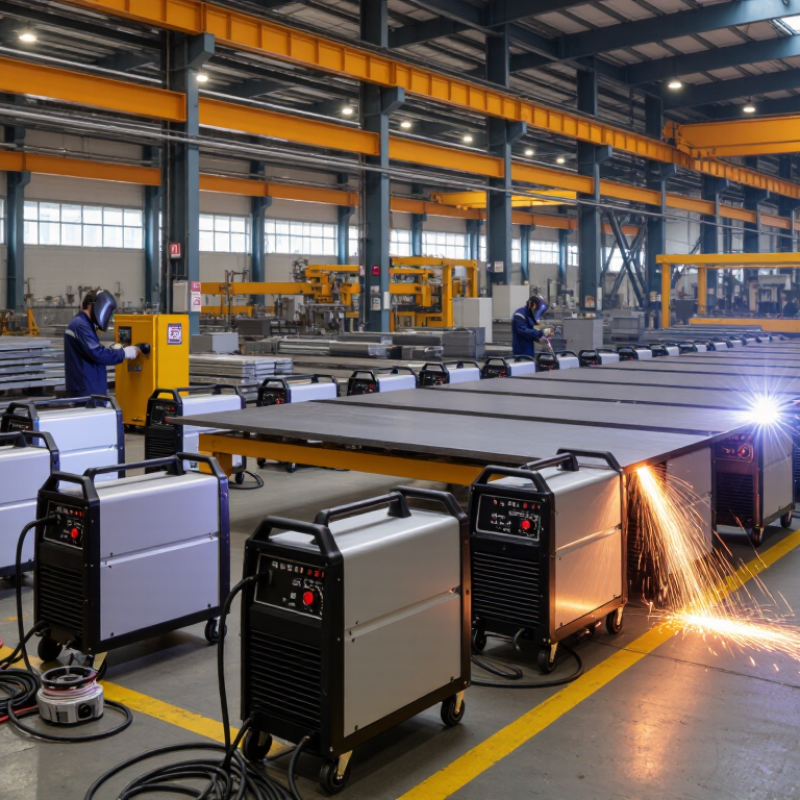
What Defines a Gas Metal Arc Welder Manufacturer in China
China’s top gas metal arc welder manufacturers are defined by more than production volume. They must control arc stability, wire feeding, shielding-gas performance, and thermal management. Experienced factories test welders under continuous-load conditions, not only short demonstrations. Their engineering teams should provide measurable duty-cycle data, waveform records, and repair guidance.
Grand View Research reports that the global welding equipment market was valued at about USD 14.7 billion in 2023. It also expects steady growth through 2030, driven by automation and energy-efficient equipment. This trend raises the standard for Chinese manufacturers. A capable supplier should support robotic integration, digital parameter storage, and consistent output across different steel thicknesses. Compliance with recognized electrical and welding standards also strengthens reliability. Yet paperwork alone proves little. Factory audits, sample welds, and traceable quality records matter more.
Tips: Ask for duty-cycle tests at realistic amperage, not ideal laboratory settings. Check feeder response, torch temperature, spare-part availability, and technician training. Request independent inspection when possible. A polished catalog can hide weak field performance. That is an uncomfortable point, but buyers should accept it. Even advanced manufacturers may struggle with software updates or regional service coverage. The strongest choice combines stable engineering, transparent data, practical user support, and evidence from demanding production environments.
China Top 10 Gas Metal Arc Welder Manufacturers in 2026 — What Defines a Gas Metal Arc Welder Manufacturer in China
This chart presents practical GMAW specification benchmarks commonly used to evaluate manufacturers in China. The values represent typical welding-current ranges by solid-wire diameter and are not company rankings or brand-specific data.
A capable manufacturer typically supports multiple wire diameters, stable current control, reliable duty-cycle performance, and compatibility with common MIG/MAG shielding-gas processes. Current ranges are general industry benchmarks and may vary by material, transfer mode, shielding gas, and equipment configuration.
Key Factors for Ranking China’s Top GMAW Manufacturers in 2026
China Top 10 Gas Metal Arc Welder Manufacturers in 2026
Ranking China’s top GMAW manufacturers requires more than comparing sales volume. The first measure is welding stability. Evaluators should test arc starting, voltage control, wire feeding, and spatter levels under repeated workloads. IEC 60974-1 compliance provides a useful safety baseline. However, laboratory compliance cannot fully represent factory conditions. Real workshops are messier.
Duty cycle also deserves close attention. A machine rated at 60% duty cycle should sustain production without frequent thermal shutdowns. Testers should record output current, cooling time, and performance with steel, stainless steel, and aluminum wire. MarketsandMarkets’ welding equipment research identifies automation and energy efficiency as major market drivers through the late 2020s. Therefore, ranking criteria should include digital controls, low-load power use, and compatibility with robotic cells.
China’s industrial scale makes service capability equally important. The International Federation of Robotics reported 276,288 industrial robot installations in China during 2023, representing about 51% of global installations. This supports demand for reliable GMAW integration. A strong manufacturer should provide traceable calibration, spare-part availability, software updates, and technician training. Export records, ISO 9001 systems, and documented failure rates strengthen credibility. Yet public data often remains incomplete. That weakness deserves a lower score, not a convenient assumption. Judges should combine factory audits, independent weld tests, warranty evidence, and verified user feedback before selecting the final ten.
China’s Top 10 Gas Metal Arc Welder Manufacturers
China’s top 10 gas metal arc welder manufacturers in 2026 should be judged by evidence, not advertising. Reliable manufacturers usually show stable production, clear technical documents, and responsive engineering support. Their equipment should maintain steady arc performance during continuous welding. It should also handle thin sheet, structural steel, and changing workshop conditions.
During factory evaluations, inspect control panels, wire feeding systems, cooling units, and internal wiring. Ask for duty-cycle data at realistic temperatures, not only laboratory conditions. Quality teams should record component testing, weld trials, and final safety inspections. International certifications can support credibility, but they do not replace practical testing. A supplier may present impressive numbers while offering weak after-sales service. That difference matters.
Tips: Compare at least three welding samples before selecting a manufacturer. Check arc stability, spatter levels, wire feeding, and restart performance. Request maintenance guidance and spare-part response times in writing. Leave room for doubt. A machine that performs well for ten minutes may struggle after several hours. Test it under your actual voltage, material thickness, shielding gas, and production schedule. A thoughtful evaluation often reveals small weaknesses before they become expensive downtime.
China Top 10 Gas Metal Arc Welder Manufacturers in 2026 - China’s Top 10 Gas Metal Arc Welder Manufacturers
| Rank | Manufacturer Profile | Primary Product Positioning | Typical Output Current | Supported Processes | Input Supply | Typical Duty Cycle | Protection Rating | Common Compliance References |
| 1 | Anonymous Manufacturer Profile 01 | Industrial inverter GMAW systems | 30–500 A | GMAW, FCAW, SMAW | 3-phase, 380 V, 50 Hz | 60% at rated output | IP21S | IEC 60974-1; IEC 60974-10 |
| 2 | Anonymous Manufacturer Profile 02 | Compact workshop MIG/MAG welders | 20–250 A | GMAW, FCAW, SMAW | 1-phase, 220 V, 50 Hz | 40% at rated output | IP21S | IEC 60974-1; IEC 60974-10 |
| 3 | Anonymous Manufacturer Profile 03 | Heavy-fabrication welding equipment | 60–630 A | GMAW, FCAW, SMAW, GTAW | 3-phase, 380 V, 50 Hz | 60% at rated output | IP23 | IEC 60974-1; ISO 17662 |
| 4 | Anonymous Manufacturer Profile 04 | Portable and field-service welders | 30–400 A | GMAW, FCAW, SMAW | 1/3-phase, 220/380 V | 35%–60% | IP21S | IEC 60974-1; IEC 60974-10 |
| 5 | Anonymous Manufacturer Profile 05 | Automated and robotic GMAW platforms | 50–500 A | GMAW, pulsed GMAW, FCAW | 3-phase, 380 V, 50 Hz | 100% at selected output | IP23 | IEC 60974-1; ISO 10218 integration |
| 6 | Anonymous Manufacturer Profile 06 | Entry-level and small-business equipment | 20–315 A | GMAW, FCAW, SMAW | 1-phase, 220 V, 50 Hz | 35%–40% | IP21S | IEC 60974-1; IEC 60974-10 |
| 7 | Anonymous Manufacturer Profile 07 | Stainless-steel and precision fabrication | 30–400 A | GMAW, pulsed GMAW, GTAW | 1/3-phase, 220/380 V | 60% at rated output | IP21S | IEC 60974-1; ISO 3834 |
| 8 | Anonymous Manufacturer Profile 08 | Shipbuilding and structural steel systems | 60–630 A | GMAW, FCAW, SMAW | 3-phase, 380 V, 50 Hz | 60%–100% | IP23 | IEC 60974-1; ISO 3834 |
| 9 | Anonymous Manufacturer Profile 09 | Multi-function construction welders | 25–400 A | GMAW, FCAW, SMAW, GTAW | 1/3-phase, 220/380 V | 40%–60% | IP21S | IEC 60974-1; IEC 60974-10 |
| 10 | Anonymous Manufacturer Profile 10 | Export-oriented OEM welding equipment | 30–500 A | GMAW, FCAW, SMAW | 1/3-phase, 220/380 V | 40%–60% | IP21S/IP23 | IEC 60974-1; IEC 60974-10 |
Note: The table uses anonymous manufacturer profiles and presents representative technical ranges commonly specified for gas metal arc welding equipment. Actual ratings, duty cycles, protection levels, and compliance status should be confirmed against the relevant product datasheet and certification documents.
How to Select the Right Chinese GMAW Manufacturer for Your Needs
Selecting a Chinese GMAW manufacturer requires more than comparing prices on a product list. The right supplier should match your material, production volume, and working environment. Start with the required wire diameter, shielding gas, input voltage, duty cycle, and welding position.
Ask for test records from machines close to your intended model. A live weld sample is more useful than a polished catalog. Watch the arc start, spatter level, bead shape, and wire feeding at different current settings. Request inspection data for transformers, control boards, cooling systems, and safety protection. Small details matter.
During supplier evaluations, I look for traceable component records and clear quality procedures. A manufacturer with documented incoming inspection and final load testing is easier to trust. Check whether its products meet relevant electrical and welding safety standards for your market. Verify certificates directly, rather than accepting screenshots.
After-sales support can decide whether a machine earns money or sits idle. Confirm spare-part availability, remote troubleshooting, training, and response times. Ask how faults are diagnosed when voltage fluctuates or wire jams occur. A factory visit can reveal production discipline, but it is not perfect evidence. Some workshops prepare heavily for visitors. Independent samples and customer references still matter.
Price deserves attention, but unstable arc control may create more grinding, rework, and wasted wire. Compare total operating cost over three years. The cheapest quotation may be expensive in practice. Define acceptance tests before payment, including output stability, duty-cycle performance, and documentation. Manufacturers that accept measurable requirements usually inspire greater confidence.