China Top Fiber Access Manufacturers for Global Buyers

China has become a major production base for fiber access equipment, serving telecom operators, system integrators, and broadband projects worldwide. Its manufacturers supply optical line terminals, optical network units, fiber distribution frames, and passive components. However, factory scale alone does not prove dependable performance.

The FTTH Council Global Alliance’s 2024 Global FTTH/B Market Panorama reported continued growth in fiber deployments across major markets. OECD broadband statistics also showed fiber represented a growing share of fixed broadband connections in member economies during 2024. These figures indicate stronger demand for stable, high-capacity access networks. They also raise practical questions about interoperability, software support, warranty response, and long-term replacement costs.

As Vincent Garnier, Director General of the FTTH Council Europe, stated, “Fiber is the only future-proof technology capable of meeting the ever-growing bandwidth demand.” His observation explains why global buyers continue examining China’s fiber access manufacturers. Yet no supplier ranking is perfect. Pricing may look attractive on paper, while testing records, delivery consistency, or local technical support remain unclear. That gap deserves attention.

This guide evaluates leading Chinese suppliers through manufacturing experience, product coverage, international certifications, deployment references, and after-sales capability. It considers real purchasing details, including connector cleanliness, cabinet space, firmware updates, and spare-part availability. Buyers should still verify every claim independently. A polished website is not enough. The strongest supplier is not always the largest one; it is the partner that can deliver compatible equipment, documented performance, and responsive support across the network’s full operating life.

China Top Fiber Access Manufacturers for Global Buyers

Understanding China’s Fiber Access Manufacturing Landscape

China’s fiber access manufacturing landscape is broad, practical, and highly specialized. Manufacturers may produce optical line terminals, network units, splitters, cabinets, patch panels, or complete access assemblies. Some factories handle molding, PCB production, assembly, and testing in one facility. Others depend on qualified suppliers for critical components. This difference affects consistency, lead time, and technical support.

Experienced buyers should examine more than catalog prices. Ask for test records, component traceability, firmware control, and documented quality procedures. Check whether products support required optical standards and local network conditions. Factory audits can reveal details that brochures miss, such as calibration habits, connector cleanliness, and spare-parts storage. A reliable supplier should explain failure rates honestly. Perfect claims deserve careful questions.

Tips: Request a sample batch before placing a large order. Test optical power, temperature performance, compatibility, and management functions. Confirm packaging with actual transit conditions, not photographs. Clarify warranty handling, replacement timing, and engineering communication. Keep written specifications. Small details matter.

Some factories are excellent at customization but weaker in after-sales response. Others offer fast delivery but limited design flexibility. This is where careful comparison becomes necessary. I have found that a lower price can hide longer validation work. That lesson is easy to overlook. Buyers should balance engineering depth, production capacity, compliance documents, and communication quality before selecting a manufacturing partner.
Key Products and Technologies Offered by Chinese Manufacturers

China Top Fiber Access Manufacturers for Global Buyers

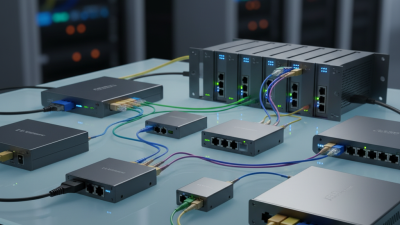
Chinese fiber access manufacturers supply complete networks, not only individual devices. Their portfolios often include OLT platforms, ONT or ONU terminals, fiber splitters, patch panels, cabinets, and outdoor distribution boxes. GPON and XGS-PON remain common choices for residential and business deployments. Some factories also support EPON, 25G PON, and mixed-access scenarios.

These manufacturers focus on practical engineering. They offer PLC splitters with different splitting ratios, armored drop cables, waterproof connectors, and compact wall-mounted enclosures. A cabinet with clear labeling can reduce installation errors. Custom firmware, multilingual interfaces, and remote management tools are also available. However, compatibility should never be assumed. Buyers need optical budgets, protocol details, and interoperability test records before placing large orders.

Production experience is visible in the small details. Good suppliers test insertion loss, return loss, temperature tolerance, and port stability. They usually provide samples, inspection reports, and traceable batch information. Sample testing matters. Some product pages still lack clear data, which creates avoidable uncertainty. Buyers should request calibrated test results and confirm packaging for humid or long-distance transport. A cheaper component may become expensive after field replacement. Manufacturing quality can vary between batches, so ongoing inspection remains necessary.

How to Evaluate Fiber Access Manufacturers for Global Buyers

China Top Fiber Access Manufacturers for Global Buyers

How to Evaluate Fiber Access Manufacturers for Global Buyers

Global demand makes supplier evaluation more important than factory size. ITU Facts and Figures 2023 estimated 5.4 billion people were online. OECD Broadband Data Update 2024 reported fiber represented about 42% of fixed broadband subscriptions across OECD economies. These figures show why reliable access equipment matters.

Start with technical evidence. Check compliance with GPON, XG-PON, and 25G PON standards. Request interoperability test reports, optical budgets, temperature ranges, and documented firmware policies. Ask whether the manufacturer controls key processes, from PCB assembly to final optical testing. Factory audits should examine calibration records, traceability, burn-in procedures, and failure analysis.

Measure twice.

A credible manufacturer should provide field failure rates, warranty terms, spare-part plans, and realistic lead times. Look for third-party certifications covering safety, electromagnetic compatibility, and environmental management. Cybersecurity deserves equal attention; ask about secure boot, vulnerability disclosure, access control, and update support. Practical buyers should also review installation manuals and remote troubleshooting quality. Clear answers are useful evidence. Vague claims are not.

The FTTH Council Global Alliance’s 2024 market reporting highlights continued fiber expansion, but growth can hide uneven quality. A low quotation may exclude testing, training, or regional certification. I have seen scorecards reward price too heavily. That is a mistake. A stronger comparison weighs lifecycle cost, verified performance, local support, and delivery consistency. No scorecard is perfect. Regular supplier reviews remain necessary.

Quality, Certifications, Pricing, and Export Capabilities

China Top Fiber Access Manufacturers for Global Buyers

Quality, Certifications, Pricing, and Export Capabilities

China’s fiber access manufacturing base supports large-scale overseas projects, from FTTH drop cables to optical distribution boxes and OLT accessories. The OECD Digital Economy Outlook 2024 reported that fiber represented about 42% of fixed broadband subscriptions across OECD countries in late 2023. This growth increases demand for stable components, traceable testing, and flexible production. Experienced buyers should request insertion-loss results, return-loss data, temperature-cycle records, and batch numbers. A polished sample is not enough.

Certifications help, but their scope matters. Serious suppliers commonly maintain ISO 9001 systems and provide RoHS, REACH, CE, or UKCA documentation when required by the destination market. Product standards such as IEC 60794 for fiber-optic cables and IEC 61754 for connector interfaces support technical consistency. Export-ready manufacturers should also provide bilingual datasheets, carton markings, packing lists, and clear Incoterms. Omdia’s 2024 fiber broadband research points to continued global subscriber growth, yet procurement teams still face uneven lead times and component availability.

Pricing from China can be competitive because of integrated tooling, local materials, and high-volume assembly. However, the lowest quotation may exclude testing, customized packaging, spare parts, or freight handling. That is where many comparisons become misleading. Ask for a total landed-cost model and a pre-shipment inspection plan. One practical weakness remains: some suppliers present certificates without explaining renewal dates or factory scope. Buyers should verify every document independently, inspect production samples, and treat promised delivery dates as estimates rather than guarantees.

China Top Fiber Access Manufacturers for Global Buyers - Quality, Certifications, Pricing, and Export Capabilities

Indicative China OEM/ODM market ranges for export-oriented fiber-access suppliers. Prices are typical FOB estimates in USD and vary by specification, order volume, testing requirements, packaging, and destination.
Evaluation Dimension Entry-Level OEM Supplier Mid-Range OEM/ODM Supplier High-Spec OEM/ODM Supplier Buyer Verification Point
Typical Fiber-Access Products FTTH drop cables, indoor fiber cables, basic patch cords, fiber termination boxes GPON/EPON optical network terminals, optical distribution boxes, PLC splitter modules, outdoor enclosures XGS-PON equipment, high-density ODF systems, hardened outdoor terminals, fiber-access cabinets, customized FTTx assemblies Confirm product datasheets, applicable standards, software functions, and interoperability requirements
Common Fiber Standards Single-mode fiber compliant with ITU-T G.652.D or G.657.A1; 1.25–2.0 mm cable constructions G.652.D and bend-insensitive G.657.A1/A2; 2–24 fiber distribution configurations G.657.A2/B3 options, high-fiber-count designs, low-loss assemblies, and application-specific cable constructions Request test reports for attenuation, insertion loss, return loss, bend performance, and tensile strength
Typical Access Technology FTTH passive infrastructure; basic EPON or GPON configurations GPON, EPON, and selected XG-PON or XGS-PON product lines GPON, XG-PON, XGS-PON, combo-PON, and carrier-grade management features Check compliance with applicable ITU-T recommendations and interoperability with the buyer’s OLT/ONT network
Typical Splitter Options 1×2, 1×4, 1×8, and 1×16 PLC splitters; standard connectorized modules 1×2 to 1×64 PLC splitters; rack, cassette, tray, and box formats High-density 1×64 and 2×64 configurations, balanced/unbalanced options, and customized packaging Verify maximum insertion loss, uniformity, operating temperature, and connector polishing quality
Quality Management Incoming inspection, basic production checks, and final visual testing Documented quality procedures, batch traceability, sampling inspection, and optical performance testing ISO 9001-based quality systems, process control, automated testing, lot traceability, and reliability validation Request a valid ISO 9001 certificate, sample inspection records, and a corrective-action procedure
Common Certifications and Compliance CE and RoHS may be available for applicable products and markets CE, RoHS, REACH declarations, and selected product safety or EMC documentation CE, RoHS, REACH, EMC/safety test reports, ISO 9001, and market-specific approvals where required Confirm certificate scope, issuing body, validity, product model coverage, and destination-country requirements
Indicative FOB Price Range Passive components: approximately US$0.20–25 per unit, depending on product type and quantity ONTs and active access devices: approximately US$12–65 per unit; passive assemblies vary by configuration Advanced XGS-PON devices and customized systems: approximately US$35–180+ per unit Obtain a quotation based on exact specifications, annual volume, firmware, packaging, and test requirements
Typical MOQ 100–1,000 units for standard passive products; samples often available 100–500 units for standard active or passive products; customized orders may require higher quantities 50–500 units for standard products; custom hardware, firmware, or tooling can require project-based MOQs Ask whether MOQ applies per model, color, connector type, firmware version, or shipment
Sample and Production Lead Time Samples typically 3–10 working days; repeat production approximately 10–25 working days Samples typically 5–15 working days; production approximately 15–35 working days Engineering samples approximately 10–30 working days; production commonly 25–60 working days Lead time depends on component availability, customization, certification, and order confirmation
Customization Capability Labels, colors, connector types, cable lengths, and basic packaging Private labeling, enclosure design, fiber counts, splitter ratios, firmware parameters, and packaging Hardware and firmware engineering, network management integration, tooling, industrial design, and test-plan customization Clarify tooling ownership, intellectual-property rights, NRE charges, and post-project support
Export Documentation Commercial invoice, packing list, certificate of origin upon request, and standard shipping documents Export declaration support, commercial invoice, packing list, certificate of origin, and product compliance files Full export documentation, technical files, test reports, HS-code support, and destination-market compliance assistance Confirm Incoterms, HS classification, document language, legalization needs, and importer responsibilities
Packaging and Logistics Standard cartons, protective bags, and courier or air freight for smaller shipments Export cartons, palletized shipments, moisture protection, and sea, air, or rail freight coordination Engineered export packaging, serial-number control, pallet optimization, and multi-country delivery planning Review packaging test results, carton dimensions, pallet specifications, and damage-claim procedures
Warranty and Technical Support Commonly 12 months with basic replacement support and email communication Typically 12–24 months, with remote troubleshooting, configuration support, and replacement procedures Typically 24–36 months for qualified projects, with engineering support, firmware maintenance, RMA procedures, and integration assistance Confirm warranty exclusions, response times, spare-parts policy, firmware ownership, and local service arrangements

Selecting the Right China-Based Fiber Access Partner

Selecting the right China-based fiber access partner requires more than comparing prices. Study the manufacturer’s engineering depth, production controls, and communication habits. Ask for optical budgets, supported PON standards, operating temperature ranges, and verified test records. A reliable supplier should explain these details clearly, not hide behind broad catalog language. Request samples before volume purchasing. Check connector quality, enclosure strength, labeling, and firmware stability under realistic conditions.

Tips: Visit the facility remotely or in person when possible. Review incoming-material checks, fiber-end inspection, burn-in testing, and final packing procedures. Confirm production capacity during peak seasons. Discuss lead times, spare units, warranty handling, and replacement procedures in writing. Ask whether the same test method applies to every batch. Small differences can become expensive field problems.

Experience also shows that technical support deserves equal attention. Test response times with practical questions about link loss, split ratios, and interoperability. A capable team should provide clear diagrams and measured data. Certificates matter, but they do not replace independent verification. A polished factory tour may still miss weak after-sales processes. That is easy to overlook. Buyers should also clarify customization limits, software update control, and documentation ownership. Some suppliers promise flexible engineering, then charge heavily for minor changes. That possibility deserves careful discussion before signing an order.

China Top Fiber Access Manufacturers for Global Buyers — Selecting the Right China-Based Fiber Access Partner

Nominal downstream and upstream line rates of major fiber-access technologies commonly evaluated by global buyers.

GPON and EPON are widely deployed broadband access technologies, while XGS-PON and 25G-PON provide higher symmetrical capacity for newer deployments. Actual user throughput depends on network design, split ratio, optical budget, and subscriber utilization.