Industries
Get direct access to our extensive portfolio of optical products and specialist technical expertise.

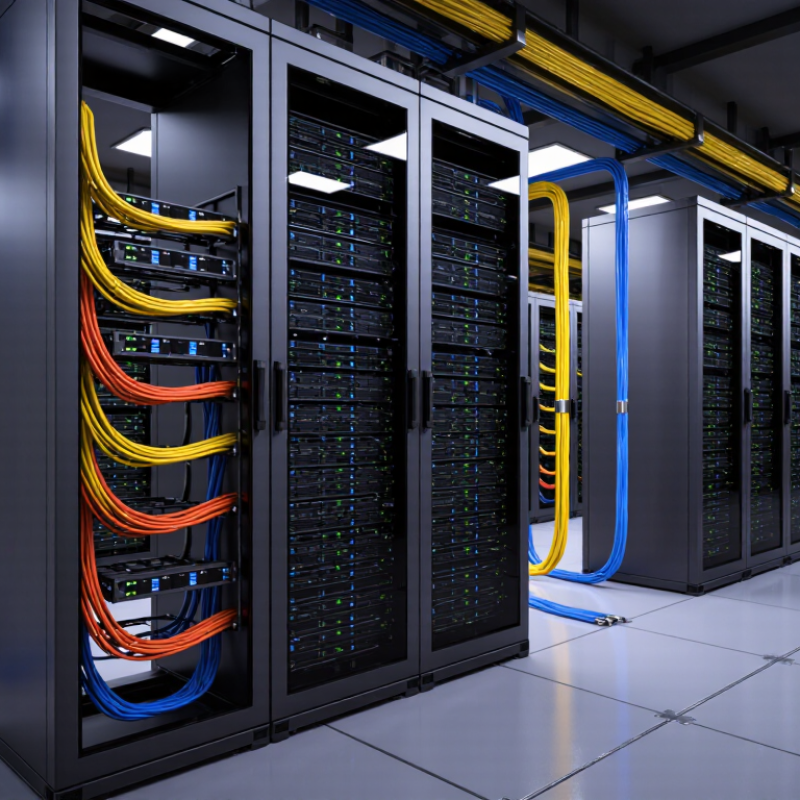
Choosing an aoc cable supplier is not just a price comparison. Active optical cables convert electrical signals into optical signals within the cable assembly. They can help connect switches, servers, and storage systems across racks or rooms. In busy data centers, their lighter construction may simplify cable routing and reduce congestion. A neat rack matters. So does reliable performance.
China has a broad supplier base, but manufacturers differ in engineering depth, product range, and service. This guide introduces ten companies for global buyers to investigate, not a universal ranking. Buyers should compare supported data rates, cable lengths, connector options, power requirements, and compatibility with specific equipment. Request current datasheets and sample units. Check how each supplier handles testing, traceability, customization, and after-sales questions. Those details can reveal more than a polished catalog.
Price still matters, of course. Yet the lowest quotation may not reflect validation work, delivery consistency, or long-term support. Ask suppliers to explain their test process and provide clear product documentation. Confirm lead times and packaging requirements before placing an order. Small details can become expensive later. A vendor’s website cannot prove every capability, and even a careful review has limits. Treat this list as a starting point, then verify claims directly with manufacturers. The right choice depends on your equipment, deployment environment, and support needs—not simply the country of origin.
What Active Optical Cables Are and Where They Are Used
An active optical cable, or AOC, combines optical fiber with conversion electronics built into both ends. The electronics convert electrical signals into light and back again. Unlike a fiber cable paired with separate transceivers, an AOC is supplied as one assembly with fixed connectors and length. Less clutter. Its optical link can help reduce signal loss and electromagnetic interference on suitable high-speed connections.
AOCs are commonly used between servers, switches, and storage equipment in data centers. They also connect devices in high-performance computing systems and other installations that need fast links over several meters. For example, a cable may run from a top-of-rack switch to a server across a rack row. The right choice depends on the required data rate, reach, connector type, and equipment compatibility. Optical does not mean unlimited distance, and active components make the cable less adaptable than separate optics and fiber.
Tips: Check the cable’s supported speed, length, and connector before ordering. Confirm that both connected devices support the same interface. Keep bends within the manufacturer’s limits, and avoid pulling on the connector housing. A small detail is easy to miss: an AOC may need replacement as a whole if one end fails. That trade-off is worth considering.
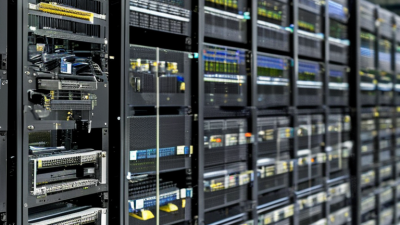
Active optical cables (AOCs) combine fiber-optic cabling with transceivers attached at both ends. They carry high-speed data between devices and are commonly used in data centers, high-performance computing, and other short-reach connections.
The chart compares nominal aggregate link rates for selected Ethernet generations, not guaranteed AOC performance. Actual supported rates and transmission distances depend on the interface and cable specifications.
China’s AOC cable manufacturing market is organized around capabilities, not one uniform factory model. Some suppliers focus on optical-engine design and electrical integration; others specialize in cable assembly, connector fitting, or volume production. AOC cables combine optical transmission with electrical-to-optical conversion, so coordination across these steps affects signal quality and consistency.
That matters. For global buyers, a supplier’s role in the chain can be as important as its quoted price. Ask who designs the optical engine, who controls assembly, and where finished cables are tested. Practical checks may include length verification, connector inspection, and performance tests under the intended data rate. Requesting sample reports helps reveal what “tested” actually means.
The market also serves different needs, from short links inside server racks to longer data-center connections. These products may share a category name but differ in construction, validation, and operating limits. The structure is not perfectly tidy: some companies manage most production, while others rely on specialist partners. That can work well, but buyers should clarify traceability and change-control procedures. A small detail, such as an undocumented component substitution, can complicate repeat orders. Reliable sourcing depends on clear specifications and evidence, not broad manufacturing claims.
Market-structure overview of ten common supplier and production roles; this is not a ranked list of named companies.
| No. | Market role | Typical AOC-related products or work | What global buyers should check |
|---|---|---|---|
| 1 | AOC system integrators | Combine optical engines, cable assemblies, connectors, and product testing into finished active optical cables. | Confirm the supported protocol, maximum specified length, compatibility, and test documentation for the exact product. |
| 2 | Optical transceiver and engine suppliers | Supply optical transmit-and-receive components that convert electrical signals to optical signals and back. | Check interoperability, operating conditions, component traceability, and qualification evidence. |
| 3 | Optical fiber and cable-material suppliers | Provide optical fiber and cable materials used in the internal optical link and protective cable structure. | Review fiber type, construction, bend guidance, jacket specification, and applicable material compliance. |
| 4 | Connector and interface specialists | Develop or source connector assemblies for interfaces such as HDMI, DisplayPort, USB, and data-center interconnects. | Verify the precise interface version, connector orientation, host-device compatibility, and any required certifications. |
| 5 | Protocol-focused AOC producers | Design finished cables for particular signal standards, rather than treating all AOCs as interchangeable. | Match the cable to the required protocol, data rate, resolution or application, and source-and-display combination. |
| 6 | Data-center and networking suppliers | Offer optical interconnect products for compatible switches, servers, and other networking equipment. | Check equipment compatibility, port type, link requirements, and whether the item is an AOC or a separate transceiver-and-fiber solution. |
| 7 | Industrial and custom cable assemblers | Build application-specific assemblies, potentially including customized lengths, jackets, or packaging. | Request drawings, sample approval, environmental limits, and written confirmation of any custom specification. |
| 8 | OEM and contract manufacturers | Manufacture products to a buyer’s design, specification, or private-label requirements. | Clarify design ownership, approved components, change control, minimum order quantities, and production responsibilities. |
| 9 | Testing and quality-control operations | Perform product checks such as continuity, functional operation, optical-link performance, and visual inspection. | Ask for applicable test methods, acceptance criteria, batch records, and sample or lot test reports. |
| 10 | Export and distribution suppliers | Coordinate quotations, export documentation, packaging, logistics, and after-sales communication for international orders. | Confirm the actual manufacturing party, shipping terms, warranty scope, lead-time basis, and document requirements. |
Buyer note: AOC means active optical cable. Product capabilities, supported standards, performance, and compliance vary by model; verify claims against the specific datasheet and test records before ordering.
Choosing a leading Chinese AOC manufacturer requires evidence beyond a polished catalog. Ask for test reports covering optical power, bit-error rate, cable length, and operation at specified temperatures. For high-speed products, request compliance evidence against the applicable IEEE Ethernet specifications and connector requirements. These records help buyers compare products on measurable performance, not claims alone.
Factory capability matters. Review whether each production lot has traceable serial numbers, calibrated test equipment, and documented quality checks. Ask how samples perform with the actual switches and port configurations used in deployment; a lab pass does not guarantee smooth interoperability. The Uptime Institute’s 2023 Global Data Center Survey reported a mean PUE of 1.58 for 2022.
That figure is not an AOC benchmark, but it underscores why buyers should examine power consumption and thermal behavior in dense racks.
Small details matter. Also check lead-time history, change-control practices, failure analysis, and replacement support. Request raw test results, not only certificates. No checklist catches everything. A supplier’s response to an unexpected failure can reveal as much as its published specifications.
These ten profiles compare Chinese AOC cable manufacturers by practical capabilities rather than unsupported rankings. One focuses on short-reach links for server racks, where flexible jackets and clear length labels help during installation. Another serves data-center projects, offering varied connector options and support for high-density layouts. A third specializes in customized assemblies, including selected lengths and packaging. Small details matter.
A fourth profile represents manufacturers with broad interface coverage for enterprise networks. A fifth emphasizes production consistency, with documented inspection steps for connector fit and cable continuity. Another targets industrial environments, where buyers should verify temperature and bending specifications against actual operating conditions. A seventh serves equipment integrators and may support sample evaluation before larger orders. Sample testing is sensible.
The remaining profiles include export-focused suppliers experienced with technical documents, manufacturers geared toward volume orders, and smaller specialists serving narrower applications. Their strengths are not interchangeable. Buyers can request current datasheets, test reports, and sample cables, then compare those details with their equipment requirements. A polished catalog alone proves little. This overview is a starting point, not a factory audit; product quality, lead times, and customization can vary between production runs.
When comparing China-based AOC cable manufacturers, look beyond price and advertised bandwidth. Define the intended link first: data rate, connector type, cable length, host equipment, and operating temperature. Request a current datasheet and sample test results. Ask how the supplier checks signal performance and connector fit. Details matter. A report is more useful when it identifies the test setup and sample conditions.
Verify that the supplier can support repeat orders, not just a promising sample. Ask about production capacity, inspection steps, lot identification, and how defects are handled. If possible, evaluate samples using your own equipment and the actual cable length. A single successful test does not guarantee every shipment will perform the same way. I would also check whether stated lead times match recent delivery records; this detail is easy to overlook.
Tips: Send each candidate the same written requirements. Compare evidence, not just claims. Keep notes on unanswered questions, too; a vague reply may signal a gap, though it is not proof of poor quality.