How to Choose the Best Multi Mode Fiber Cable for Your Needs?
Choosing the right multi mode fiber cable can be a daunting task. With numerous options available, making the best choice requires careful consideration. Multi mode fiber cables are essential for high-speed data transmission in various setups. They differ significantly in core size, material, and performance.
Understanding your specific needs is crucial. For instance, are you setting up a local area network or connecting data centers? The cable’s bandwidth and distance limitations matter greatly to your performance. Don't overlook the environment where the cable will be installed, as certain cables perform better in different conditions.
In making your decision, remember to consider future expansion. You might think that a current choice will suffice, only to realize later it does not meet emerging demands. Getting expert advice can help navigate these complexities. This process may seem overwhelming, but it’s an opportunity to invest wisely for long-term benefits.

Understanding Multi Mode Fiber Cable Basics
When choosing a multi-mode fiber cable, understanding the basics is crucial. Multi-mode fiber cables use multiple light paths to transmit signals. They are ideal for short distances, typically within a building or campus. The most common types are OM1, OM2, OM3, and OM4, with each type supporting different data rates and distances.
Tips: Always consider your future needs. As technology evolves, a cable that suits your current requirements may not be sufficient later. Selecting a higher grade cable can save you from future upgrades.
Cable diameter is also important. The standard outer diameter for multi-mode cables is typically 50 or 62.5 microns. Ensure compatibility with your connectors. Misalignment can lead to increased signal loss and reduced performance. Check the installation environment as well. Certain environments may require special jackets to withstand harsh conditions.
Tips: Don't overlook the importance of testing the cable after installation. A simple test can help identify any weaknesses in your network setup. Regular inspections can ensure optimal performance over time.
Multi Mode Fiber Cable Demand by Application
Different Types of Multi Mode Fiber Cables Explained
When selecting a multi-mode fiber cable, understanding the different types is crucial. Multi-mode fiber cables primarily vary in core diameter, which affects performance and application. The two most common sizes are OM1 and OM3. OM1 typically has a 62.5-micron core, suitable for short distances. It is less efficient for speeds above 1 Gbps.
In contrast, OM3 has a 50-micron core. This type is designed for higher bandwidth applications. It supports speeds of up to 10 Gbps over distances of 300 meters. Choosing between these options depends on your specific needs. Reflecting on your network demands can influence your decision significantly.
While these distinctions help, minor details can complicate choices. For instance, installation environments might impact cable performance. If you're operating in a high-interference area, consider the impact of other nearby equipment. Moreover, not all installations go as planned. Challenging layouts can limit cable effectiveness.
Key Factors to Consider When Selecting a Multi Mode Fiber Cable
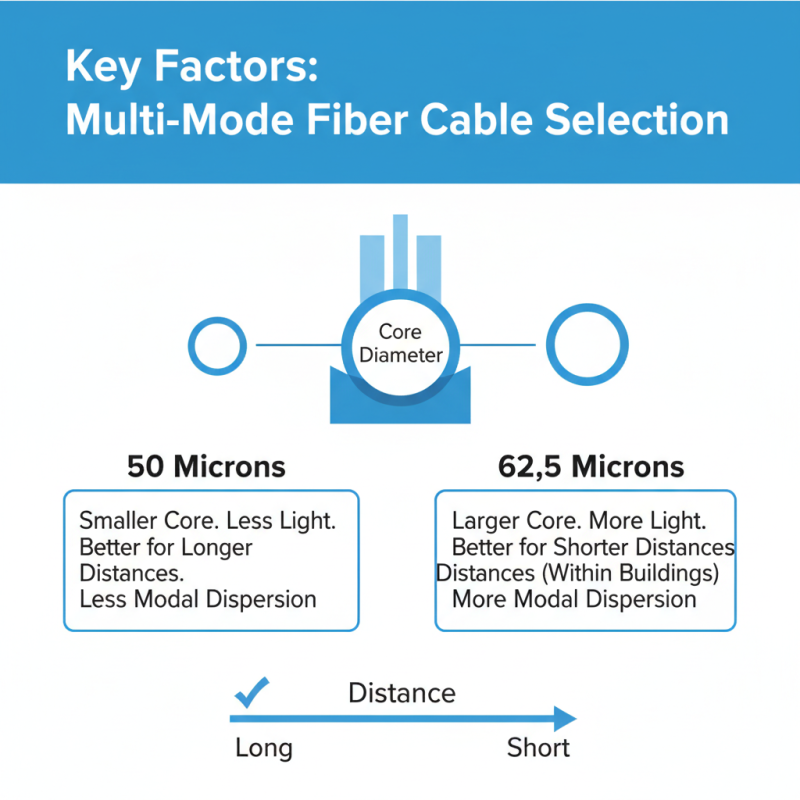
When selecting a multi-mode fiber cable, several key factors warrant consideration. The first is the cable's core diameter. Common sizes include 50 micron and 62.5 micron. A larger core diameter allows more light to enter. This can enhance performance for short distances, like within a building. Still, larger cores can lead to modal dispersion. This might reduce signal quality over extended distances.
Next, look at the cable's bandwidth capabilities. Different cables support varying bandwidths. Some are suited for high-speed data transmission. Others may struggle with large volumes of data. Understanding your specific needs is crucial. Will you use it for multimedia or basic networking? Lastly, consider the cable's durability and environmental conditions. Cables can be exposed to harsh environments, like temperature changes or moisture. Choose a cable rated for your specific conditions. Remember, the wrong choice could lead to frequent failures.
Evaluating Fiber Cable Compatibility with Network Requirements
When selecting the right multi-mode fiber cable, compatibility with your network requirements is crucial. The choice of cable affects speed, distance, and overall performance. A mismatch can lead to reduced efficiency. Always consider the bandwidth needs. Different applications may require varying capacities.
Tips for choosing a fiber cable include assessing your network's architecture. Look into whether you need OM2, OM3, or OM4 cables based on the distance and speed required. OM3 is suitable for most standard applications, while OM4 is ideal for higher demands. Verify whether your hardware supports the fiber type you're considering.
Understand cable limitations too. Multi-mode fibers can support limited distances depending on the specific type and application. If unsure, seek guidance from experts. Overlooking these details may lead to costly mistakes. Review your current infrastructure regularly. A detailed analysis can help in making informed decisions.
Tips for Proper Installation and Maintenance of Multi Mode Fiber Cables
Proper installation and maintenance of multi-mode fiber cables are crucial for optimal performance. Start by ensuring that the installation environment is clean and free of dust. Dust can cause signal loss and affect performance. Make sure to handle the cables carefully. Bending them too sharply can damage the fibers inside, leading to degradation over time.
Use the right tools for installation. Avoid using tools that might scratch or damage the fiber. Each splice point should be properly aligned to avoid unnecessary signal loss. Regularly inspect your connectors and patch panels. Look for signs of wear or dirt that can compromise the connection.
Keep in mind that moisture can also pose risks. Ensure that the cables are rated for the environment they are used in. Sometimes, minor issues can go unnoticed until they become significant problems. Scheduling routine maintenance checks can help catch these before they escalate. Remember, fiber optics require care, but they can provide excellent performance when well maintained.