How to Choose Kids Walkie Talkies for Global Sourcing
Choosing Kids Walkie Talkies for global sourcing requires more than comparing colors, prices, and advertised range. According to Grand View Research’s 2024 two-way radio market analysis, demand remains supported by outdoor recreation, family communication, and short-range personal use. Toy-industry data from Circana also shows that active and outdoor play continues to influence purchasing decisions. These trends create opportunity, but they also raise expectations for safety, durability, and clear product information.
A useful sourcing review should examine transmission performance, battery design, charging methods, materials, and age suitability. Test the units in realistic places: a noisy playground, a concrete apartment, and a wooded campsite. “Long range” claims can change sharply with walls, hills, weather, and interference. A low factory price can look attractive. It may conceal weak antennas, fragile belt clips, or poor battery consistency. Independent laboratory testing should verify applicable requirements, including EN 71 for European toy safety, ASTM F963 for the United States, RoHS and REACH restrictions, and IEC 62133-2 or UN 38.3 requirements where rechargeable batteries are included.
Supplier evaluation matters just as much. Request recent test reports, component specifications, quality-control records, and samples from actual production. Confirm whether the factory can maintain the same microphone clarity after repeated drops and charging cycles. No checklist is perfect. A polished sample can still fail during mass production, which is why pre-shipment inspection and batch-level testing remain valuable. This guide explains how to assess Kids Walkie Talkies with practical sourcing judgment, credible documentation, and the safety expectations required for international markets.
What Kids Walkie Talkies Are and How They Work
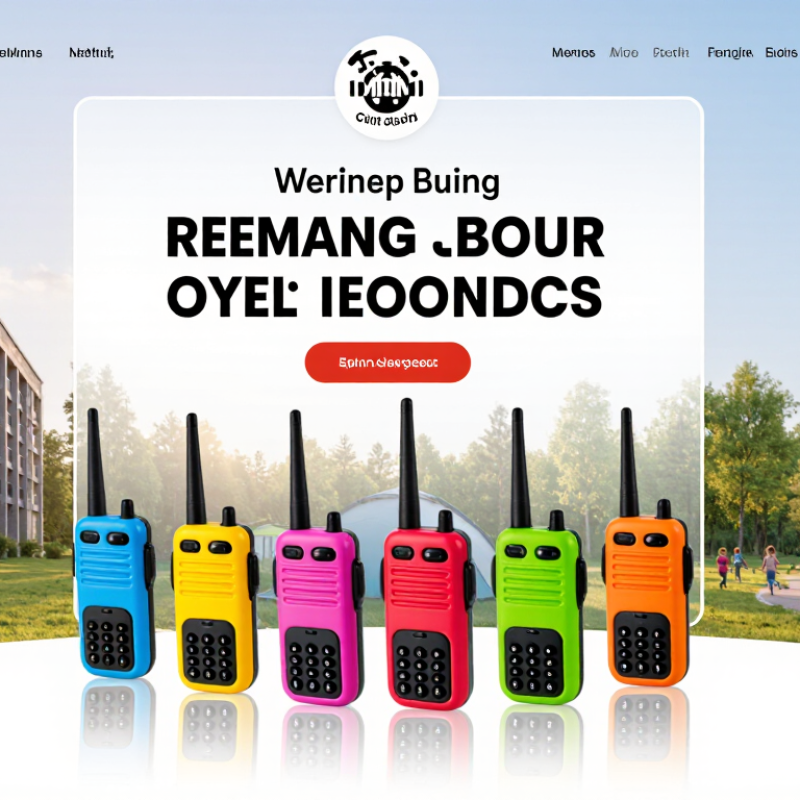
Kids walkie talkies are compact, two-way radios designed for short-range voice communication. Unlike mobile phones, they usually work without cellular service or monthly fees. Pressing the push-to-talk button activates the transmitter. Releasing it returns the unit to listening mode. Many models use shared radio channels, so nearby users may hear the conversation.
That limitation matters.
Most children’s units use low-power radio signals, simple controls, and fixed antennas. Their practical range changes with walls, trees, hills, battery condition, and local radio rules. Advertised distances often assume open outdoor space. Real use may be much shorter. I have found that a courtyard can perform well, while a concrete apartment building quickly weakens the signal. Buyers should test both voice clarity and button response, not only the printed range.
Ofcom’s Children and Parents: Media Use and Attitudes Report 2024 found that 97% of UK children aged 5–15 used the internet at home. A walkie talkie offers a different experience, with direct voice contact and no screen dependency. The 2024 Global E-waste Monitor also reported 62 million tonnes of electronic waste generated worldwide in 2022.
For global sourcing, replaceable batteries and durable housings deserve attention. Suppliers should provide frequency details, safety testing records, charging specifications, and instructions for the destination market. Standards such as EN 71 and applicable radio equipment requirements can support responsible evaluation, but paperwork still needs independent checking. Cheap is not always efficient.
Key Safety, Range, and Performance Requirements
When sourcing kids’ walkie talkies, safety should guide the specification before color or packaging. ASTM F963-23 requires children’s products to address hazards such as accessible small parts, sharp edges, and toxic materials. For rechargeable models, IEC 62133-2 testing helps assess battery safety during charging and misuse. Use recessed charging ports, secure battery doors, rounded housings, and clear age warnings. A supplier should provide current test reports, not only a factory declaration. That distinction matters.
Range claims need careful review. The ETSI EN 300 296 standard limits PMR446 equipment to 0.5 watts effective radiated power in applicable European markets. Buildings, trees, hills, and crowded neighborhoods can reduce practical range sharply. A claimed 5-kilometer range may become 500 meters between apartment blocks. Ask for open-field and indoor test results, including voice clarity and reconnection behavior. Global sourcing also requires checking regional frequency rules, certification pathways, and user instructions for each destination.
Performance testing should include drop resistance, water exposure, speaker volume, microphone sensitivity, battery runtime, and standby drain. The WHO’s 2023 Global Status Report on Drowning records more than 230,000 annual drowning deaths worldwide, so communication aids near water must never be treated as rescue devices. That limitation belongs in training materials. One weakness is easy to miss: children may press buttons accidentally, blocking a channel. Test lock functions with small hands, gloves, and low light. Product teams should record failures honestly. A perfect laboratory result is not real-world proof.
How to Choose Kids Walkie Talkies for Global Sourcing
Key safety, range, and performance requirements vary by destination market. Radio power limits must be checked before selecting a common global specification.
Reference values show maximum permitted transmitter power for selected licence-exempt services. PMR446 is commonly limited to 0.5 W ERP in Europe. In the United States, FRS permits up to 2 W ERP on channels 1–7 and 0.5 W ERP on channels 8–14. These services are not interchangeable across countries.
Supplier Evaluation Checklist
- Safety: Request applicable battery safety evidence, such as IEC 62133-2 test documentation for rechargeable lithium batteries and UN 38.3 transport test records.
- Range: Require separate open-field and built-up-area range results. Actual range depends on terrain, buildings, antenna design, frequency, and legal transmit power.
- Durability: If water and dust resistance is claimed, ask for an IP code test report under IEC 60529. IP54, for example, indicates dust protection and protection against water splashes.
- Child suitability: Check secure battery doors, rounded edges, controlled maximum audio volume, clear channel controls, and mechanical safety testing. EN 71 requirements may apply when the product is classified and marketed as a toy.
- Compliance: Confirm the radio approval requirements for every destination market instead of using one power or frequency configuration globally.
Sources: European PMR446 technical requirements, U.S. FCC Family Radio Service rules, IEC 62133-2, UN Manual of Tests and Criteria Part III subsection 38.3, and IEC 60529.
How to Match Features with Children’s Ages and Uses
Choosing kids’ walkie talkies starts with the child, not the specification sheet. For ages three to five, choose large push-to-talk buttons, rounded housing, simple volume control, and a short usable range. Children this age may forget charging steps. Keep controls obvious. For ages six to eight, add channel selection, a belt clip, and a bright display. Older children can manage multiple channels, call tones, and rechargeable batteries. Pew Research Center’s 2024 report found that 95% of U.S. teens have smartphone access, yet offline voice devices still support outdoor play without screens.
Use matters as much as age. A home-to-garden distance may need only a modest range. Camping, school trips, and warehouse-style family events require stronger reception and clearer audio. Claimed range often assumes open land. Walls, trees, hills, and weather reduce it. This is where supplier testing matters. Ask for measured indoor and outdoor results, battery runtime, charging time, drop testing, and sound levels. ASTM F963 and EN 71 references can help screen toy safety documentation, but certificates should match the exact model.
Tips: Match the product to one real scenario. Let a six-year-old test the buttons. Check whether small hands can hold it securely. Avoid excessive features. They often become unused costs. I would also test the emergency call function carefully; some children may press it repeatedly. That small behavior is easy to overlook. Verify operating frequencies and local requirements before global sourcing.
How to Evaluate Suppliers, Certifications, and Product Quality
How to Choose Kids Walkie Talkies for Global Sourcing
Supplier evaluation should begin with traceable evidence, not attractive samples. Request the factory’s business license, production history, quality records, and recent audit findings. Confirm that its test laboratory is accredited to ISO/IEC 17025. The European Commission’s 2023 Safety Gate report recorded 3,412 product alerts, with toys among the most frequently reported categories at 13%. That figure makes supplier discipline difficult to ignore. Ask for certificates matching the exact model, radio frequency, battery, firmware, and packaging.
Certifications must fit the destination market. Depending on the country, buyers may need radio approval, electrical safety testing, chemical compliance, and battery transport documents. A CE marking alone does not prove every requirement has been met. Check the EU Radio Equipment Directive documentation, relevant United States FCC authorization, and UN 38.3 test evidence for lithium batteries when applicable. Use an independent laboratory to verify range, output power, charging temperature, drop resistance, sound levels, and small-part safety. Test real samples.
Quality often fails between the approved sample and mass production. Inspect plastic seams, battery doors, antenna strength, button response, and charging ports under repeated use. Keep golden samples and define acceptable defect limits in the purchase contract. I have seen suppliers pass a first inspection, then change a component quietly. That mistake is expensive. Require batch records, pre-shipment inspections, and random functional tests. Do not trust a PDF alone. Recheck critical documents before every major order.
How to Compare Costs, Customization, and Global Shipping Options
Choosing kids' walkie talkies for global sourcing requires more than checking the unit price. In my sourcing reviews, I compare the landed cost, not just the factory quote. A low price can hide molds, testing fees, spare batteries, carton upgrades, or port charges. Request a cost sheet with minimum order quantity, sample fees, payment terms, and delivery estimates. Keep currencies consistent. Small details matter.
Customization changes the calculation quickly. Printing a logo may be inexpensive, while a new shell color, button layout, or retail box may require tooling and larger orders. Ask for digital artwork proofs and a physical sample before approval. Check volume, sound clarity, battery access, and drop-resistant packaging. I once underestimated the cost of separate color cartons. That mistake still informs my purchase planning.
Shipping options should match the sales calendar and product risk. Ocean freight usually reduces cost, but it needs more time and careful carton planning. Air freight is faster, yet dimensional weight can surprise buyers. Compare door-to-door quotations with insurance, customs handling, and destination delivery listed clearly. Confirm product documents and destination requirements before production. I prefer a written shipping schedule, although schedules can still move. Leave buffer time.