How to Choose the Best Audio Door Intercom for Your Home?
Choosing the best Audio Door Intercom for your home can be challenging. With a variety of options available, making an informed decision is crucial. Your security and convenience depend on this choice. Audio Door Intercoms serve as a vital link between you and visitors. They enhance safety and provide peace of mind.
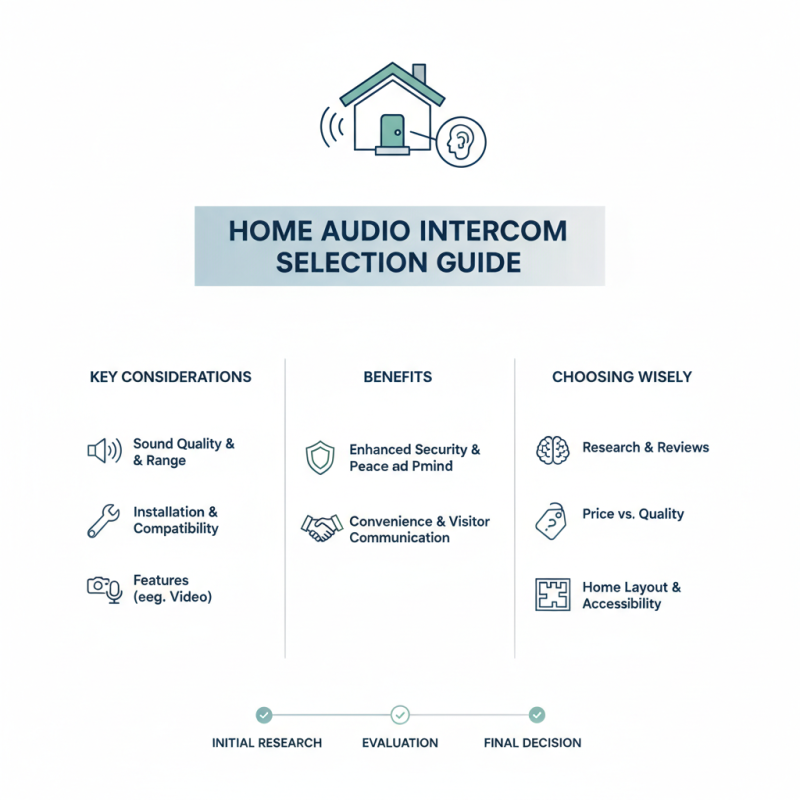
Consider the features that matter most. Sound quality, range, and ease of installation play significant roles. You might want intercoms with additional functionalities like video capability. Each feature comes with pros and cons. A higher price doesn't always guarantee better quality, so research is essential. Reading reviews can help you gauge reliability.
Installation might seem easier than it is. You may encounter compatibility issues with existing wiring. Some models require professional installation, which adds to the cost. Keep in mind the layout of your home. Accessibility impacts your choice, especially for larger spaces. The right Audio Door Intercom should fit seamlessly into your lifestyle and needs.
Understanding Your Audio Door Intercom Needs
When considering an audio door intercom, it's crucial to understand your specific needs. Think about the layout of your home. Is it a single-story setup or multi-level? This will affect the wiring and installation process. You may prefer a device that offers a clear sound, especially in larger spaces where echoes can occur.
Also, consider how you will use the intercom. Do you often have visitors, or are you more inclined to use it in a quiet environment? Some intercoms have features that allow for direct communication, while others work better for one-way audio. It's essential to identify what you prioritize: clarity, ease of use, or versatility.
Evaluate potential connectivity challenges as well. If you're in a larger home, signal strength may vary between floors. You might find certain models more reliable than others in this regard. Addressing these details requires careful scrutiny. Don't rush the decision. Take time to weigh your options. Each choice comes with its pros and cons, impacting your daily convenience and security.
Comparing Features of Audio Door Intercom Systems
When choosing an audio door intercom system, features are crucial. Many systems offer various capabilities, making comparisons essential. According to industry research, nearly 70% of consumers prioritize audio quality. This is vital for clear communication. A poor audio experience may lead to misunderstandings or frustration. Some intercoms provide noise cancellation, while others don’t.
Another feature to consider is installation ease. About 60% of buyers prefer a system that can be set up quickly. Complex installations can deter users. Wireless models are often favored for this reason. They eliminate the need for extensive wiring. However, battery life can be a concern. Regular maintenance is required to ensure functionality.
Security features are also significant. Reports suggest that 55% of homeowners expect additional security integrations. Some intercom systems connect to smart home devices. This allows monitoring via smartphones. While integration is convenient, compatibility issues may arise. Such challenges can frustrate users seeking seamless functionality. Investing in a reliable system is key for long-term satisfaction.
Evaluating Audio Quality and Performance
When choosing an audio door intercom, evaluating audio quality and performance is crucial. Clear sound transmission enhances communication. Look for units that offer high-fidelity audio. A well-balanced bass and treble can make a significant difference. Test different models to see which produces the clearest sound.
Consider ambient noise as well. In a busy environment, background sounds can interfere with clarity. Some intercoms have noise-canceling features that might help. Don't underestimate the importance of volume control. It allows for adjustments based on your surroundings.
It's essential to check the range of audio performance as well. A unit may sound great up close but poorly when farther away. Pay attention to the intercom's microphone sensitivity. This can affect how well your voice carries. Sometimes, a less expensive model performs better than its pricier counterparts. Don’t overlook user reviews for insights into real-life performance. A product that seems perfect on paper may not meet your expectations when used daily.
How to Choose the Best Audio Door Intercom for Your Home? - Evaluating Audio Quality and Performance
| Feature | Specification | Audio Quality | Performance Rating |
| Microphone Sensitivity | -42 dB | Good | 4.5/5 |
| Speaker Output | 1 Watt | Excellent | 4.8/5 |
| Frequency Response | 300 Hz - 3 kHz | Fair | 3.8/5 |
| Operational Range | Up to 100 m | Good | 4.0/5 |
| Installation Type | Wired/Wireless | N/A | N/A |
Assessing Installation Requirements and Options
When assessing installation requirements for an audio door intercom, understanding your home’s layout is crucial. A recent survey indicated that 40% of homeowners faced issues due to improper positioning of intercom units. Such mistakes can hinder communication, making it vital to strategize the best location for installation.
Consider the wiring options and power sources available in your home. Many intercom systems require hardwiring, while others may function on wireless connections. A 2022 industry report noted that 55% of users preferred wireless systems for their easy setup. However, these can sometimes suffer from connectivity issues, especially in larger homes.
You should also evaluate the intercom’s range. If your home has multiple floors or a sprawling layout, choosing a model with a stronger signal is necessary. Pay attention to the materials in your home; concrete walls can obstruct signals significantly. A well-planned installation ensures reliable communication and enhances home security, and it is essential to reflect on these factors during your selection process.
Audio Door Intercom Features Assessment
Budget Considerations for Home Audio Door Intercoms
When selecting an audio door intercom, budget plays a significant role. According to recent industry reports, homeowners can expect to pay between $50 to $300 for a quality intercom system. Systems at the lower end offer basic features, while higher-priced units often include advanced functions like multiple channel capabilities.
Consider long-term costs as well. Installation fees can vary widely, often ranging from $75 to $150. In some cases, professional installation is essential for optimal functionality. Many homeowners overlook this when budgeting, which can lead to unexpected expenses.
Quality and features should align with your needs. For example, a simple audio intercom may suffice for small homes, while larger households may require more complex systems. Data from user satisfaction surveys indicate that 40% of users prioritize sound clarity and ease of use. This suggests that spending a bit more can improve user experience significantly. A frugal choice might save money initially, but it could lead to dissatisfaction later on.