How to Choose an Ion Tester in 2026?
Choosing an Ion Tester in 2026 requires more than comparing prices, screen sizes, or probe designs. Accuracy begins with the measurement question.
The WHO/UNICEF Joint Monitoring Programme reported that 2.2 billion people lacked safely managed drinking water in 2022. This figure highlights the practical value of reliable field testing. Meanwhile, MarketsandMarkets’ Water Quality Monitoring Market report identifies growing demand for portable, connected, and multi-parameter instruments. Yet market growth does not guarantee dependable results.
An Ion Tester should match the target ion, sample type, expected concentration, and testing environment. A handheld meter used beside a treatment tank faces splashing, temperature changes, and contaminated electrodes. A laboratory instrument faces different demands. Consider calibration range, detection limits, automatic temperature compensation, electrode lifespan, data logging, and service support. Small details matter.
The ion-selective electrode specialist Erno Pretsch has emphasized a crucial limitation: “Selectivity is never absolute.” That warning deserves attention. An instrument may display a confident number while interference, poor conditioning, or incorrect calibration quietly distorts it.
The U.S. EPA’s analytical methods also stress calibration, quality control, and documented procedures. These principles apply outside regulated laboratories. They matter in agriculture, aquaculture, environmental monitoring, and water treatment.
No tester is perfect.
A thoughtful selection process should therefore compare real samples, not only product brochures. Test your water temperature, matrix complexity, and required reporting accuracy before purchasing. The best Ion Tester is not always the most advanced model. It is the model that produces repeatable, defensible results under your actual working conditions. Even experienced users can overlook maintenance time. That is where many buying decisions become weaker.
Define Ion Tester Types: Air Ionizers, Water Quality, and Gas Analyzers
How to Choose an Ion Tester in 2026?
Choosing an ion tester in 2026 starts with defining what “ion” means in your application. An air ionizer meter examines charged particles, polarity, and concentration near a device. It can reveal uneven output across a room, especially beside vents or furniture. Readings change with humidity, airflow, and distance. Record those conditions, or the number may mislead you. A tester with zeroing, repeatable sampling, and a clear display is more useful than a feature-heavy instrument.
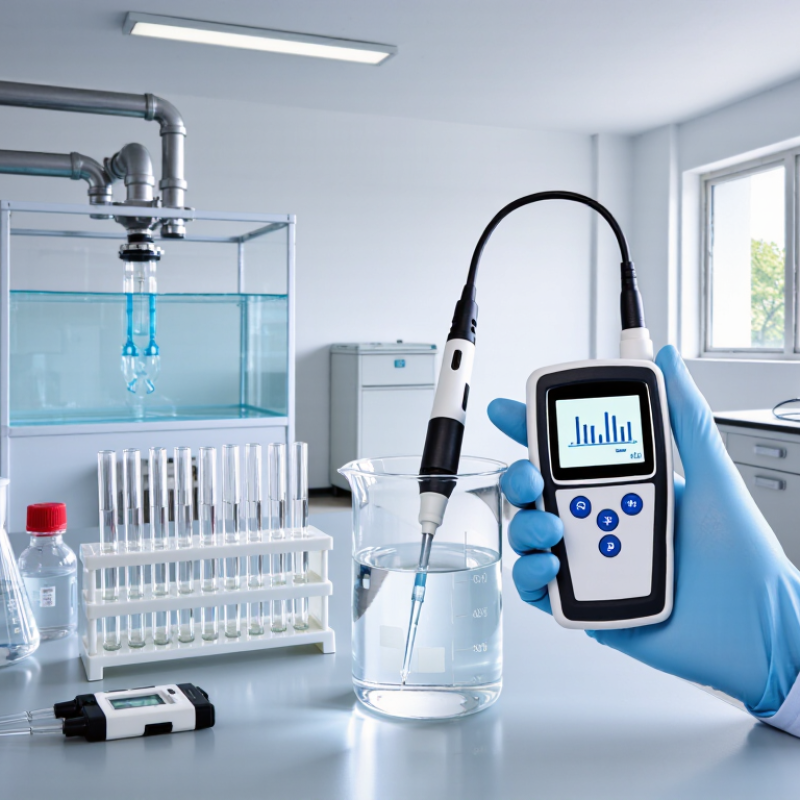
For water quality, choose an instrument designed for dissolved ions, not airborne particles. Conductivity, total dissolved solids, pH, and selective ion probes answer different questions. A water sample can show stable conductivity yet contain an unwanted specific ion. Calibration solutions and temperature compensation therefore matter. Test the source, then test after filtration, using clean containers and consistent timing. I once treated a single reading as decisive; it was not. Contamination from a wet sample cup changed the result.
Gas analyzers require a different design entirely. They measure target gases through sensor, infrared, or electrochemical methods. Check detection limits, response time, cross-sensitivity, and replacement intervals. Compare field results with a documented reference method when accuracy affects health or process decisions. Portable convenience can hide drift. Keep a log. Do not assume a low reading means absence; ventilation and sampling position may simply be wrong.
Match Measurement Needs to IEC 61340-5-1 and ANSI/ESD STM3.1 Standards
How to Choose an Ion Tester in 2026?
Choose an ion tester by matching its measurements to your ESD control procedure. IEC 61340-5-1 focuses on managing electrostatic risks within a protected area. It does not approve one specific instrument. Your tester should help verify ionizer performance under controlled, repeatable conditions.
ANSI/ESD STM3.1 provides a test method for ionization. It commonly evaluates discharge time and offset voltage using a charged plate monitor. Check whether the instrument supports both positive and negative polarity tests. Confirm its measurement range, accuracy, resolution, and environmental limits. Small details matter.
At a real workstation, nearby airflow can change readings within seconds. Record distance, fan speed, temperature, humidity, and test position. A tester with data logging can expose unstable performance that a single reading hides. Do not guess.
Calibration traceability is also important. Review the calibration interval, stated uncertainty, and service process before purchasing. The tester should support your site’s documented procedures, not replace them. A perfect reading in one location may not represent the entire work area. That is where many evaluations become too optimistic.
IEC 61340-5-1 and ANSI/ESD STM3.1 serve different purposes, so avoid treating them as interchangeable checklists. Use the IEC framework to define control requirements. Use STM3.1 methods to assess ionizer behavior. Then compare results with your internal acceptance limits and risk assessment. Range matters less than repeatability.
Compare Accuracy, Resolution, and ±1,000 V Discharge-Time Testing
How to Choose an Ion Tester in 2026?
An ion tester should reveal more than a pass or fail result. It must measure positive and negative charge decay separately, because imbalance can remain hidden in a single average. ANSI/ESD STM3.1 and ESDA TR53 describe charge-plate methods using a 1,000 V starting charge. The common verification target is decay from 1,000 V to 100 V within 20 seconds, although the required limit depends on the protected process.
Resolution matters when readings approach the control limit. A tester showing 1 V steps can expose small offsets that a 10 V display may hide. Accuracy also needs context. A specification such as ±1% of reading sounds strong, but uncertainty, grounding, humidity, and plate position can change the result. Keep the setup repeatable. Small details matter.
Look for documented calibration traceability and an uncertainty statement. ISO/IEC 17025 calibration reports provide stronger evidence than a simple factory sticker. IEC 61340-5-1 also supports controlled verification within an ESD program. In practice, record the voltage decay curve, polarity, distance, temperature, and relative humidity. I would not choose the fastest tester automatically. A quick reading is useless if its resolution is poor or its ±1,000 V discharge-time result cannot be reproduced. The 20-second target is useful, but treating it as universal would be a mistake.
How to Choose an Ion Tester in 2026?
Compare measurement accuracy, voltage resolution, and the time required to discharge a charged surface from ±1,000 V to ±100 V. The values below represent practical specification bands used for non-contact electrostatic testing and are intended for comparison rather than product ranking.
How to read the chart: Lower values indicate tighter accuracy tolerance, finer voltage resolution, and faster discharge-time measurement. When selecting an ion tester, prioritize accuracy and resolution first, then confirm that its discharge-time test range covers the ±1,000 V to ±100 V measurement used in your application.
Verify Calibration Traceability, Sensor Life, and Measurement Uncertainty
How to Choose an Ion Tester in 2026?
Verify Calibration Traceability, Sensor Life, and Measurement Uncertainty
Choosing an ion tester in 2026 requires more than comparing range, resolution, and display features. In laboratory and field checks, traceable calibration often determines whether a reading can be defended. Ask for a calibration certificate linked to national or international measurement standards. Check the reference points, date, environmental conditions, and stated uncertainty. A certificate alone is not proof of good practice. Confirm that the laboratory uses documented methods and competent personnel. Good records matter.
Sensor life deserves equal attention. Ask how membrane condition, reference junction performance, and storage affect results. A sensor may look clean yet respond slowly after repeated exposure to difficult samples. Look for replacement intervals based on data, not optimistic claims. Test response time with a control solution during routine checks. Record slope, offset, temperature, and stabilization time. Small changes can reveal drift early. I have seen users replace sensors too late because the display still looked stable. That assumption was costly.
Measurement uncertainty is often ignored because it complicates purchasing decisions. It should guide them. Request an uncertainty budget covering calibration, repeatability, temperature, sample preparation, and sensor drift. Compare combined uncertainty with the decision limit, not only instrument resolution. A reading of 10.00 may look precise. It may not be accurate to 0.01. Build a verification plan using independent standards and real samples. Even experienced teams miss matrix effects sometimes. Leave room for doubt, and document what remains unknown.