How to Choose the Right PCB Board for Your Projects?
Choosing the right Pcb Board for your projects can be a daunting task. According to Dr. Linda Harrington, a leading expert in PCB design, "The right PCB board can make or break your project." Understanding the various types and specifications is essential to ensure your project’s success.
PCB boards come in different materials and designs. Each type serves specific purposes and varies in performance. For example, FR-4 is popular for many applications due to its balance of cost and functionality. However, not all projects require this standard option. Some projects might need specialized boards that withstand higher temperatures or provide better signal integrity.
Amateurs often struggle with selecting the right board. They might overlook critical factors such as layer counts, thickness, and copper weight. It’s important to reflect on your project’s requirements before settling on a choice. An informed decision can lead to better performance and longevity of your electronic devices. Remember that the right PCB board is not just a component; it’s the foundation of your project’s success.
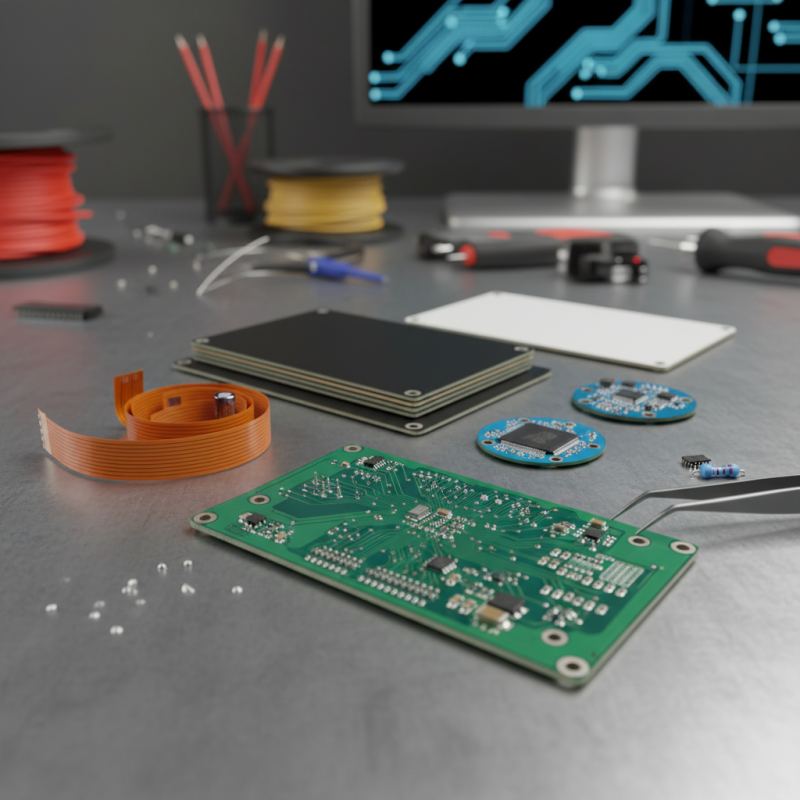
Understanding the Basics of PCB Boards and Their Types
Understanding the basics of PCB boards and their types is crucial for successful projects.
PCB, or printed circuit board, serves as the backbone of electronic devices. Different types include single-sided, double-sided, and multilayer boards. According to industry reports, the global PCB market is expected to reach $75 billion by 2025, reflecting the growing demand.
Choosing the right type depends on your project’s requirements. Single-sided boards are simpler and cost-effective for basic designs. However, they may lack space for complex circuits. In contrast, multilayer boards support intricate designs but are more expensive and harder to manufacture. It's essential to weigh the cost against functionality.
Tip: Always consider the size of your project when selecting a PCB type. Larger designs often need multilayer boards, while smaller applications can utilize single-sided boards efficiently. Remember, each option has its trade-offs. Reflect on your project goals to determine what works best in terms of functionality and budget.
Identifying Project Requirements and Specifications
When selecting a PCB board for your project, it's essential to clearly identify your project requirements and specifications. Start by considering the electronic components you will use. Their size, pin configuration, and power requirements will directly influence your PCB design. Are there specific voltage and current ratings that your board must support? These factors will determine the materials and thickness of the PCB.
Next, think about the board's application environment. Will it be exposed to high temperatures or moisture? This aspect is crucial for ensuring durability. Additionally, consider the required connectivity options. Do you need USB, HDMI, or other interfaces? Each connection type has different layout requirements and impacts the overall design.
Reflecting on the complexities of your project can lead to better decisions. It’s tempting to opt for a standard design. However, that might not serve your specific needs well. By assessing the project deeply, you can avoid future pitfalls. This approach will lead to a more reliable and robust PCB, tailored to your unique specifications and challenges.
Evaluating Material Options for PCB Fabrication
Choosing the right PCB board is crucial for your project's success. The material options available can significantly affect the functionality and reliability of your electronic designs. Typically, FR-4 is a popular choice due to its balanced electrical, mechanical, and thermal properties. However, other materials like polyimide or metal cores may suit specific needs better.
When evaluating materials, consider the operating environment. For high-temperature applications, polyimide offers superior heat resistance. On the other hand, metal-based boards improve thermal management in high-power devices. Each material brings unique challenges and benefits that must be weighed carefully.
Tips: Always review the thermal and electrical characteristics specified for your chosen material. Understand the limitations of each type, including potential delamination or mechanical reliability issues. It’s essential to prototype to test real-world performance before full-scale production. Engage with PCB experts if uncertainties arise during selection.
Comparing PCB Design and Manufacturing Techniques
When selecting a PCB board, understanding design and manufacturing techniques is crucial. Various methods exist for creating PCBs, each with unique features. For instance, traditional etching provides accuracy and cost-effectiveness for small runs. This technique allows for detailed designs, but can struggle with complex layers.
Conversely, advanced techniques like surface mount technology (SMT) enable compact designs. SMT is ideal for high-density boards, facilitating efficient space usage. However, this method can increase manufacturing complexity. Choices like these require careful consideration of project needs and budget.
Additionally, prototyping methods vary as well. Rapid prototyping offers quick iterations, crucial for testing concepts. Yet, it may not always reflect the final product's durability. Balancing speed and quality is essential. Overall, understanding these nuances helps you make informed decisions in PCB selection.
How to Choose the Right PCB Board for Your Projects?
| PCB Type | Layer Count | Material | Thickness (mm) | Min. Trace Width (mm) | Cost Range |
| Single-Sided | 1 | FR-4 | 1.6 | 0.2 | $0.50 - $2.00 |
| Double-Sided | 2 | FR-4 | 1.6 | 0.2 | $1.00 - $3.00 |
| Multilayer | 4 | FR-4 | 1.6 | 0.15 | $2.50 - $6.00 |
| High-Frequency | 2 | PTFE | 1.6 | 0.2 | $3.00 - $8.00 |
| Rigid-Flex | Multiple | Polyimide | Varies | 0.1 | $5.00 - $15.00 |
Making Cost-Effective Choices for Small vs. Large Scale Projects
When selecting PCB boards, understanding project scale is crucial. Small-scale projects often require higher customization but can be done economically. Reports indicate the average cost per unit for low-volume PCBs can range from $5 to $20. In contrast, larger projects benefit from mass production, driving costs down. Experts suggest that the cost per unit for large-scale orders may drop to as low as $1.
However, the trade-off comes with design complexity. For small projects, the flexibility allows for iterative designs. This adaptability can lead to unanticipated challenges, such as increased lead times. Conversely, larger projects often employ standardized designs, which can limit innovation. Yet, these designs can avoid excess material waste, a crucial factor as reported by industry analyses. Sustainable practices suggest that responsible materials management in larger projects can improve overall cost-effectiveness.
Investing in reliable sourcing is essential. The variation in supplier reliability can impact both timelines and budgets. A study revealed that 30% of delays in PCB production stem from subpar component providers. Hence, building strong relationships with trustworthy suppliers becomes vital, regardless of project size. Balancing cost and quality is not merely a choice; it reflects one's depth of understanding in PCB selection.