Industries
Get direct access to our extensive portfolio of optical products and specialist technical expertise.

Choosing Ultrapure Water Equipment in 2026 requires more than comparing flow rates, filter brands, or polished product photographs. Laboratories, semiconductor plants, pharmaceutical facilities, and hospitals face different purity risks. A system producing 18.2 MΩ·cm water may still fail if microbial control, endotoxin reduction, or storage hygiene is overlooked. Small details matter. A warm tank can quietly become a contamination source.
The 2024 Global Water Intelligence market analysis highlights rising investment in advanced treatment, driven by stricter quality requirements and industrial water stress. However, market growth does not prove that every new technology performs reliably. The World Health Organization’s Guidelines for Drinking-water Quality emphasize risk-based monitoring, while USP <1231> and ASTM D1193 define important expectations for laboratory and pharmaceutical water quality. Semiconductor users should also review SEMI-related facility practices, where trace metals, particles, and total organic carbon can affect sensitive processes. These references provide direction, not automatic compliance.
A practical selection begins with the final application, required flow, feed-water variability, and acceptable operating cost. Ask for recent validation records, sensor calibration data, sanitization procedures, and maintenance response times. Request real operating results, not only laboratory demonstrations. Experience often reveals the hidden cost of consumables, rejected water, and unplanned shutdowns. No design is perfect. Some specifications may be unnecessarily strict, while others may be dangerously vague. This guide examines how to compare pretreatment, reverse osmosis, deionization, UV, ultrafiltration, monitoring, and lifecycle support. The best Ultrapure Water Equipment is not simply the most advanced system. It is the system that consistently delivers the required quality, under real operating conditions, with evidence that can be audited.
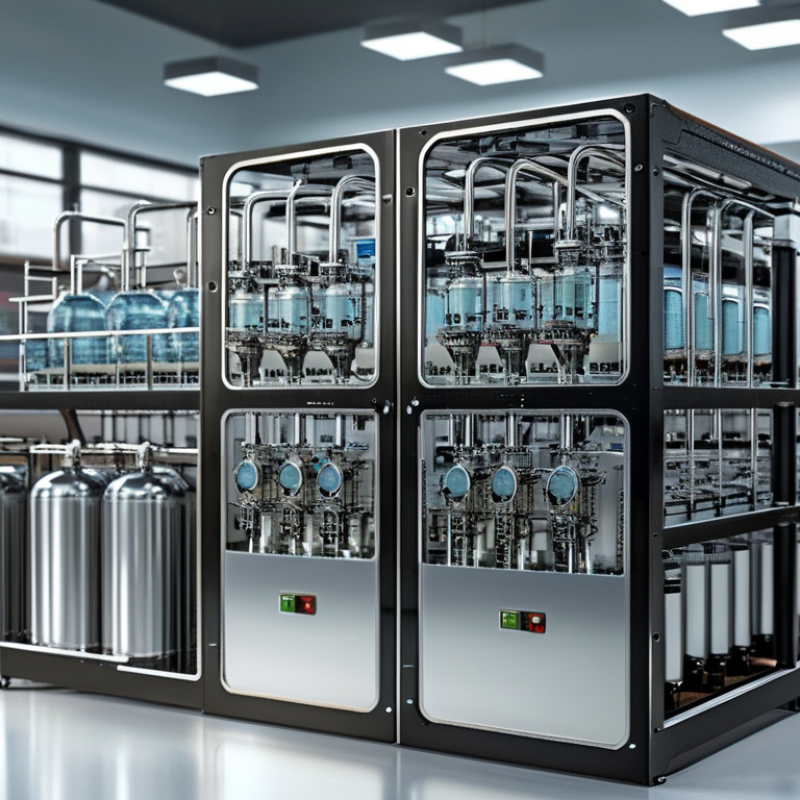
Understanding water quality standards prevents costly equipment mistakes. ASTM D1193 defines Type I reagent water at approximately 18.0 megohm-centimeters resistivity at 25°C. ISO 3696 Grade 1 sets conductivity below 0.1 microsiemens per centimeter. These figures describe purity, not guaranteed performance at every outlet.
For pharmaceutical applications, USP General Chapter <643> uses 500 micrograms per liter as a common total organic carbon limit. USP <645> also requires conductivity testing under controlled temperature conditions.
Water for Injection has a bacterial endotoxin limit of 0.25 endotoxin units per milliliter, according to current pharmacopeial requirements. Do not treat laboratory ultrapure water and pharmaceutical water as interchangeable.
A practical 2026 system should combine pretreatment, reverse osmosis, deionization, polishing, and real-time monitoring. Check resistivity, conductivity, TOC, microbial counts, and endotoxin risk where relevant. ISO and USP values are useful benchmarks, but they do not replace site validation. A clean display can still hide contamination inside a stagnant loop. I have seen sampling points create more uncertainty than the purifier itself.
Equipment selection should match daily volume, peak demand, feed-water hardness, and required testing frequency. Smaller laboratories may need compact polishing systems. High-throughput facilities need recirculation and documented sanitization. The overlooked detail is maintenance access. If filters are difficult to replace, compliance slowly becomes theoretical. Standards evolve, and local procedures may need revision before 2026 procurement decisions are finalized.
How to Choose Ultrapure Water Equipment in 2026?
Laboratories should begin with the test method, not an equipment brochure. ASTM D1193-19 distinguishes Type I, II, and III reagent water, while USP <1231> links water quality to pharmaceutical testing risks. Molecular biology may require ultrapure water at the point of use. Glassware washing usually needs less demanding water. Conductivity, resistivity, total organic carbon, endotoxin, and microbial limits should match the application. Keep records.
Industrial facilities need a different calculation. The UNESCO World Water Development Report 2024 states that agriculture accounts for roughly 70% of global freshwater withdrawals. Industrial users should therefore assess feed-water variability, recovery rate, concentrate disposal, and energy use. A stable pretreatment train can protect reverse osmosis membranes from sudden hardness or sediment changes. Online monitoring is useful, but sensors still need calibration. That detail is often neglected.
Healthcare systems face higher consequences. The WHO and UNICEF Joint Monitoring Programme reported that about one in ten healthcare facilities lacked basic water services in 2022. Equipment should support reliable disinfection, documented maintenance, and safe storage during outages. Dialysis, sterilization, and laboratory services may require separate quality points. A single central system can look efficient, yet one failure may disrupt several departments. Over-specification also happens. It increases cost without improving every clinical process. The better choice is a validated system with clear alarms, service access, backup capacity, and staff training.
Choosing ultrapure water equipment in 2026 requires more than chasing the lowest resistivity number. In daily laboratory work, I compare the entire purification path, not one impressive specification. Reverse osmosis removes dissolved salts, particles, and some organic contaminants before final polishing. Deionization uses ion-exchange media and can reach very low ionic levels. However, its cartridges require careful replacement planning. Membrane systems, including ultrafiltration, help reduce endotoxins, particles, and larger molecules. They do not solve every chemical contamination problem. No single stage works alone.
For routine analytical work, a combined system usually offers better control than one technology alone. Reverse osmosis lowers the load on polishing cartridges. Deionization then improves conductivity and resistivity. Ultraviolet treatment can break down some organic compounds and suppress microbial growth. A final 0.22-micrometre filter adds another physical barrier. It is useful, but not magic. Filters can clog, and poorly maintained storage tanks can recontaminate water. That detail is easy to miss. Not always.
When comparing equipment, check monitored parameters, calibration records, sanitization procedures, and service access. Ask how quickly the system detects rising conductivity. Review real consumption, peak demand, and recovery rates. A small unit may fit a bench but struggle during multiple instrument runs. I also inspect tubing dead legs and sampling points. They often reveal practical weaknesses. Specifications still matter. Yet operator training, maintenance history, and validated water testing determine reliability. I would not choose equipment from a brochure alone. My comparison can be imperfect when local water quality changes seasonally. Measure it.
| Technology | Primary Function | Typical Removal or Output | Typical Recovery / Flow Considerations | Key Advantages | Main Limitations | Best Position in a System |
|---|---|---|---|---|---|---|
| Microfiltration (MF) | Removes suspended particles and larger microorganisms. | Common nominal pore sizes are approximately 0.1–10 µm, depending on the membrane. | Usually operates as a pressure-driven, continuous-flow pretreatment step. | Protects downstream membranes and reduces particulate loading. | Does not reliably remove dissolved salts, dissolved organic compounds, or endotoxins. | Initial pretreatment for variable or particulate-rich feedwater. |
| Ultrafiltration (UF) | Removes colloids, suspended solids, bacteria, and many high-molecular-weight contaminants. | Typical membrane pore-size equivalents are about 0.01–0.1 µm; nominal molecular-weight cutoffs commonly range from approximately 1–500 kDa. | Recovery can be high, but periodic backwash and concentrate handling are required. | Effective particulate and microbial barrier; useful for protecting reverse-osmosis membranes. | Limited removal of small dissolved ions and many low-molecular-weight organics. | Pretreatment or final particle-control step before polishing. |
| Reverse Osmosis (RO) | Reduces dissolved ions, organic compounds, microorganisms, and particulates. | Typically removes roughly 95–99% of many dissolved salts in a well-operated system; actual rejection depends on feedwater and membrane condition. | Common single-pass recovery is approximately 50–85%; higher recovery may require staged design and concentrate control. | High contaminant reduction and lower operating cost than many deionization-only systems. | Needs pretreatment; does not by itself consistently produce ultrapure water. | Main bulk-purification stage before deionization or electrodeionization. |
| Electrodeionization (EDI) | Continuously removes ionized and ionizable species using electricity, ion-exchange media, and selective membranes. | Product resistivity commonly reaches approximately 10–18 MΩ·cm at 25°C when feedwater quality is suitable. | Often operates at roughly 90–95% recovery, with concentrate and electrode streams requiring management. | Continuous operation, no routine chemical regeneration, and stable ionic polishing after RO. | Sensitive to hardness, carbon dioxide, silica, oxidants, and inadequate RO pretreatment. | Polishing stage after RO for consistent low-conductivity water. |
| Ion-Exchange Deionization (DI) | Exchanges dissolved cations and anions for hydrogen and hydroxide ions. | Can produce water near 18.2 MΩ·cm at 25°C when the resin is fresh and the feedwater is appropriately treated. | No concentrate stream during normal service; resin capacity decreases as ions are exchanged. | Strong ionic removal and flexible polishing capacity for laboratory and industrial systems. | Requires resin replacement or chemical regeneration; does not reliably remove particles or microorganisms. | Final ionic polishing, especially where intermittent demand or compact design is important. |
| UV Oxidation | Uses ultraviolet energy, commonly near 185 nm and/or 254 nm, to reduce organic carbon and control microorganisms. | Can reduce trace organic carbon when the correct wavelength, dose, and water quality are maintained; performance is application-specific. | Continuous-flow technology with negligible water loss; lamp intensity and operating hours must be monitored. | No chemical addition and effective control of many microorganisms and oxidizable organics. | Does not remove dissolved ions; UV effectiveness decreases with turbidity, color, or inadequate dose. | Organic-carbon reduction and microbial control in the polishing loop. |
| Ultrafiltration Final Filter | Acts as a final barrier for particles, colloids, and microorganisms. | Often selected with a nominal molecular-weight cutoff around 10–100 kDa, depending on the required contaminant control. | Usually installed in a recirculating loop; flux, pressure drop, and sanitization frequency affect service life. | Provides a strong physical barrier against microbial and particulate contamination at the point of use. | Does not replace ionic polishing and can foul if upstream water is poorly controlled. | Final point-of-use protection for critical ultrapure-water applications. |
How to Choose Ultrapure Water Equipment in 2026?
Selecting ultrapure water equipment requires more than checking a purity specification. Evaluate resistivity, total organic carbon, microbial control, flow stability, and recovery rate together. A reading of 18.2 MΩ·cm looks impressive, but it does not prove consistent performance. Test results should remain stable during peak demand, not only during a quiet factory inspection.
Maintenance often determines the real operating cost. Inspect how easily operators can replace filters, sanitize storage tanks, and access sensors. Clear alarms and simple sampling points reduce mistakes. Ask for calibration procedures, spare-part availability, and documented service intervals. In practical evaluations, equipment with a lower purchase price can become expensive when membranes foul quickly or consumables require frequent replacement. I have seen operators overlook water loss. That decision later affected both budgets and sustainability targets. Leave room for human error, too.
Tips: Compare five-year costs, not only purchase prices. Request verified data under your expected flow rate. Check the pre-treatment design carefully. Confirm whether remote monitoring records alarms and quality trends. Keep maintenance logs with dates, readings, and replaced parts. Do not accept vague claims. Ask for test methods, acceptance limits, and recent performance records. A small sample port can save hours during troubleshooting. Also question your own assumptions; laboratory demand may change faster than the equipment plan.
A well-designed polishing system can deliver up to 18.2 MΩ·cm resistivity at 25°C, with TOC commonly targeted below 5 ppb.
Replacement intervals are typical planning values. Feedwater quality, daily volume, and usage patterns can shorten or extend them.
Longer-lasting membranes and polishing cartridges can reduce consumable costs, while efficient pretreatment helps protect downstream components.
Typical maintenance-planning intervals for laboratory ultrapure water systems; actual values vary by feedwater and operating conditions.
How to Choose Ultrapure Water Equipment in 2026?
Selecting a future-ready ultrapure water equipment supplier requires more than comparing purchase prices. In my experience, reliable results begin with clearly defined water-quality targets. Ask how the supplier measures resistivity, total organic carbon, particles, and microbial risk. Request recent validation records, calibration certificates, and operating data from similar laboratories. Vague answers deserve attention.
Look closely at the system’s daily operation. A clear touchscreen should display alarms, filter life, conductivity, and maintenance status. Consumables should be easy to replace without specialized tools. The supplier should provide installation guidance, operator training, and responsive technical support. Ask how quickly engineers can diagnose a sudden quality drop. Waiting several days can disrupt sensitive experiments.
Future-ready equipment should also connect with laboratory monitoring systems and support secure data export. Energy use, water recovery, and plastic waste matter more in 2026. Check whether upgrade paths are practical, not merely promised in a brochure. A supplier with documented change-control procedures is usually more dependable during software or component updates. Still, no system is perfect. I would test the proposed equipment with actual feed water before signing a long service agreement. Laboratory conditions often expose small weaknesses that demonstrations hide. Keep spare cartridges on site. It feels cautious, but an empty stockroom can stop valuable work.