Why Data Center Fiber Is Essential for Modern Network Connectivity
In an era where digital transformation fuels business growth and innovation, the importance of reliable network connectivity cannot be overstated. Data center fiber has emerged as a critical element in facilitating high-speed and efficient communication between servers and end-users. Industry expert Dr. Emily Thompson, a leading authority on data networking, emphasizes this necessity, stating, “Data center fiber is the backbone of today’s digital infrastructure, enabling seamless data transfer and supporting the ever-increasing demand for bandwidth.”
As businesses increasingly rely on cloud services and data-intensive applications, the capacity and speed provided by data center fiber become paramount. With the rise of Internet of Things (IoT) devices and the explosion of data generation, traditional copper cabling simply cannot keep pace. Data center fiber supports greater bandwidth and higher data transmission speeds over longer distances, making it an indispensable component for modern networking solutions.
Moreover, the implementation of data center fiber enhances scalability and flexibility, allowing organizations to adapt to evolving technological requirements swiftly. In this dynamic landscape, companies that invest in advanced fiber optic networks will find themselves not only meeting today's connectivity challenges but also positioned to thrive in the future of digital communication.
The Importance of Fiber Optic Technology in Data Centers
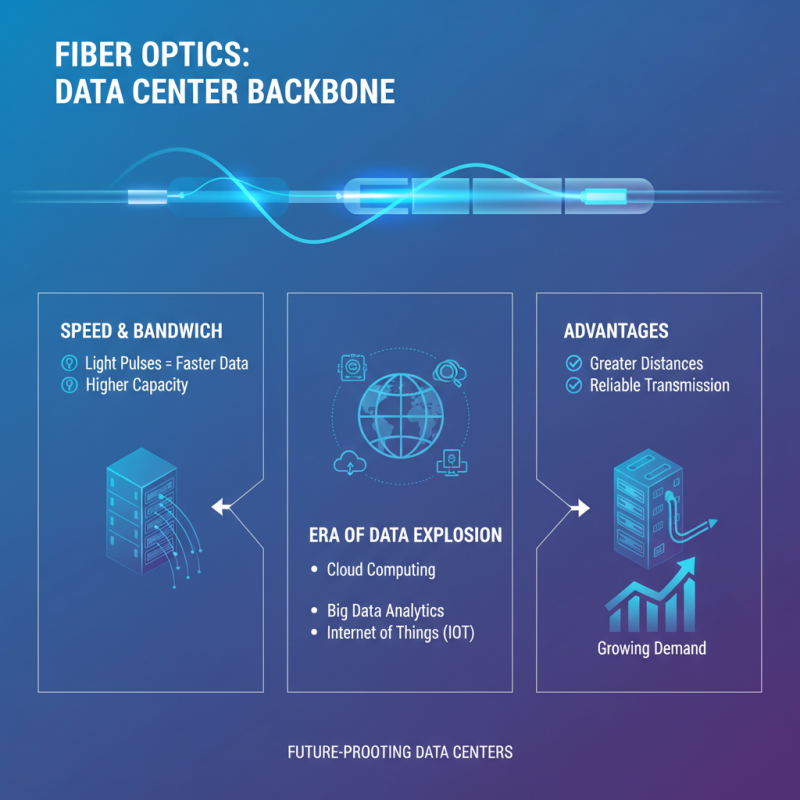
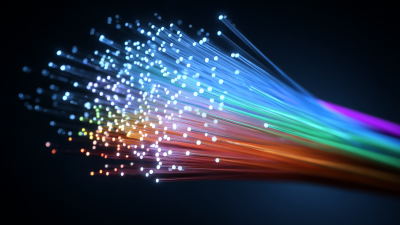
Fiber optic technology plays a critical role in modern data centers, serving as the backbone for high-speed connectivity. Unlike traditional copper cabling, fiber optics transmit data as pulses of light, allowing for significantly higher bandwidth and speeds over greater distances. This technology is particularly essential in an era where data consumption is skyrocketing, driven by cloud computing, big data analytics, and the Internet of Things (IoT). As data centers continue to expand and evolve, the demand for faster and more reliable data transmission forces enterprises to prioritize the adoption of fiber optics over conventional methods.
Moreover, the benefits of fiber optic technology extend beyond speed and bandwidth. Fiber is more resistant to electromagnetic interference, ensuring cleaner signal transmission and minimizing data loss, which is crucial for applications requiring high reliability. Additionally, the durability of fiber cables allows for smaller and more flexible installations, making them easier to manage within densely packed data center environments. As organizations strive for efficiency and superior performance in their technological infrastructure, embracing fiber optic solutions becomes not just advantageous but essential for sustaining competitive edge in the digital landscape.
Key Advantages of Fiber Optic Cables over Copper in Networking
Fiber optic cables have become an essential component of modern network connectivity, outpacing traditional copper cables in several key areas. The advantages of fiber optics start with their unparalleled speed and bandwidth capabilities, enabling higher data transfer rates over long distances without significant signal loss. This is particularly crucial for data centers that handle large volumes of information, ensuring efficient communication between servers and clients.
Another significant benefit of fiber optics is their immunity to electromagnetic interference. Unlike copper cables, which are susceptible to interference from nearby electrical equipment, fiber optics transmit data using light signals. This results in a more stable and reliable connection, which is vital for maintaining uninterrupted service in high-demand environments. Additionally, fiber cables are lighter and thinner, allowing for easier installation and management within data centers.
Tips: When considering a transition from copper to fiber optic cables, assess your organization's current and future bandwidth needs. Investing in fiber optics now can provide room for growth as data demands increase. Also, ensure that your network infrastructure is equipped to handle fiber connectivity; upgrading switches and routers may be necessary for optimal performance.
Advantages of Fiber Optic Cables over Copper in Networking
Role of Data Center Fiber in Supporting High-Speed Connectivity
In today’s fast-paced digital landscape,
high-speed connectivity is more crucial than ever, and
data center fiber plays a pivotal role in achieving this objective.
With the exponential growth in data traffic driven by cloud computing, streaming services, and Internet of Things (IoT) devices,
robust fiber optic networks are essential for ensuring that data can be transferred swiftly and reliably between various points of access.
This is especially vital for enterprises seeking to maintain competitive edges in their respective markets, where latency and bandwidth
can significantly impact performance and user experience.
Fiber optic technology supports high-speed connectivity by enabling greater bandwidth
compared to traditional copper cables. It allows for faster data transmission over longer distances without degradation, making it ideal for
data centers that need to handle massive amounts of information across their networks. Furthermore, advancements in fiber technology
have led to increased data rates and reduced latency, fostering the development of high-performance applications
such as real-time analytics, interactive gaming, and
high-definition video conferencing. By investing in high-quality fiber infrastructure,
organizations can optimize their network capabilities, ensuring that they meet the demands of modern applications and user expectations effectively.
Impact of Fiber Infrastructure on Network Reliability and Performance
The advancement of fiber infrastructure is a pivotal factor in enhancing network reliability and performance. Fiber optics significantly outperform traditional copper wire by providing higher bandwidth and greater data transmission speeds. As organizations increasingly depend on cloud services and data-intensive applications, the ability of a network to process vast amounts of information swiftly becomes critical. Fiber connections facilitate seamless communication between servers and users, ensuring minimal latency and high throughput, which are essential for modern applications such as video conferencing, online gaming, and e-commerce.
Moreover, the robustness of fiber optics contributes to improved network reliability. Unlike copper cables, fiber is less susceptible to electromagnetic interference and environmental factors, such as moisture or temperature fluctuations. This durability reduces the likelihood of signal degradation and outages, allowing businesses to maintain consistent operations. As cyber threats continue to evolve, enhancing the security of data transmission becomes essential. Fiber infrastructure offers built-in advantages, such as improved encryption capabilities and secure data layering, making it a preferred choice for safeguarding sensitive information. As businesses seek to establish resilient and high-performing networks, the integral role of fiber optic technology cannot be overstated.
Why Data Center Fiber Is Essential for Modern Network Connectivity
| Data Center Type |
Fiber Type |
Average Latency (ms) |
Throughput (Gbps) |
Redundancy Level |
Uptime Percentage |
| Tier 1 |
Single-Mode Fiber |
5 |
100 |
Basic |
99.9% |
| Tier 2 |
Multi-Mode Fiber |
10 |
40 |
Medium |
99.95% |
| Tier 3 |
Single-Mode Fiber |
3 |
400 |
High |
99.99% |
| Hyperscale |
Single-Mode Fiber |
2 |
800 |
Very High |
99.999% |
Future Trends in Data Center Fiber Deployment and Connectivity Solutions
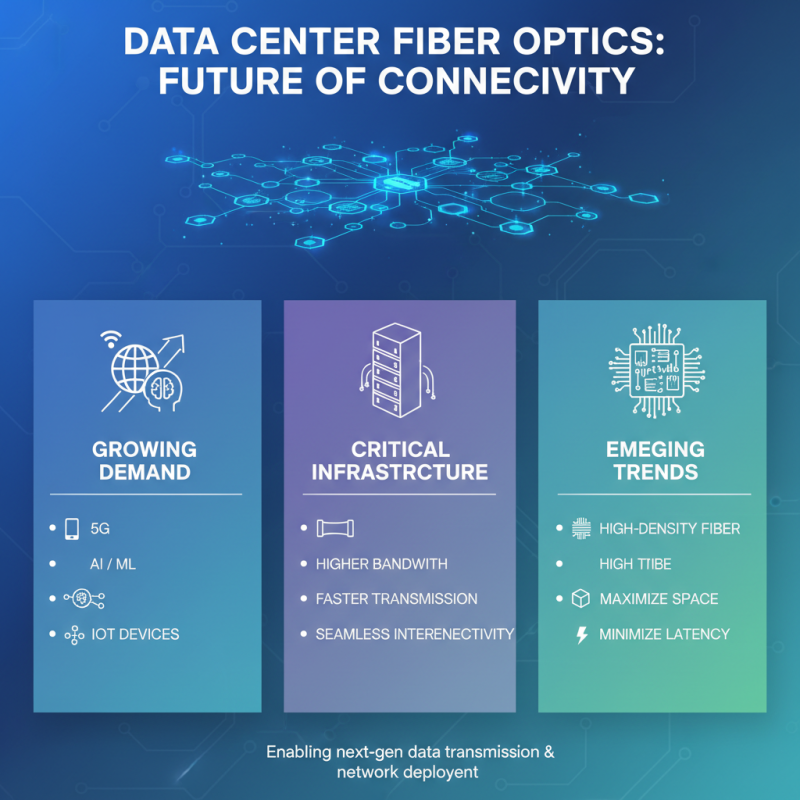
As the demand for higher bandwidth and faster connectivity grows, data center fiber optics becomes increasingly critical in shaping the future of network deployment. The advancement of technologies such as 5G, artificial intelligence, and the Internet of Things (IoT) necessitates robust fiber infrastructure to support efficient data transmission and interconnectivity. Emerging trends include the adoption of high-density fiber solutions, which maximize space utilization while minimizing latency. These innovations enable data centers to handle the escalating traffic demands and ensure seamless connectivity across various platforms.
Tip: When planning a data center upgrade, consider investing in modular fiber solutions that can easily scale as your bandwidth needs evolve. This adaptability not only reduces installation costs but also future-proofs your infrastructure.
Another notable trend is the increasing use of automation in fiber deployment. Automated fiber management systems enable data centers to optimize cable management and monitoring, streamlining operations and reducing the chance of human error. This shift towards automation not only enhances efficiency but also allows for real-time diagnostics and better resource allocation.
Tip: Implement a proactive maintenance strategy by utilizing monitoring tools that can predict cable performance issues before they disrupt connectivity. This approach helps maintain uninterrupted service and extends the life of your fiber infrastructure.