Industries
Get direct access to our extensive portfolio of optical products and specialist technical expertise.

Choosing the right Water Hose Connector in 2026 involves more than matching two thread sizes. A connector may look sturdy on a store shelf, yet leak after several days in sunlight. The best choice depends on hose material, water pressure, temperature, fitting type, and daily use. A garden tap, pressure washer, greenhouse line, and drinking-water system each require different considerations.
This guide examines practical details that are easy to overlook. We will compare brass, stainless steel, plastic, and quick-connect designs. We will also consider sealing washers, internal diameter, corrosion resistance, and compatibility with older outdoor faucets. Small differences matter. A loose gasket can waste water beneath a deck. A weak plastic thread can split during winter storage. Hands-on checking remains valuable, even when product specifications appear complete.
There is no perfect connector for every household. Even experienced buyers sometimes choose strength over convenience, then struggle with a fitting that is difficult to remove. I have made that mistake. A reliable selection should balance durability, safe materials, easy installation, and reasonable replacement cost. In 2026, repairability and water efficiency also deserve attention, not just appearance or advertised pressure ratings. This article will help you evaluate those factors clearly, while recognizing that manufacturer claims still require careful verification. Some recommendations may need adjustment for regional standards, unusual hose sizes, or harsh outdoor conditions. That uncertainty is worth acknowledging before purchase.
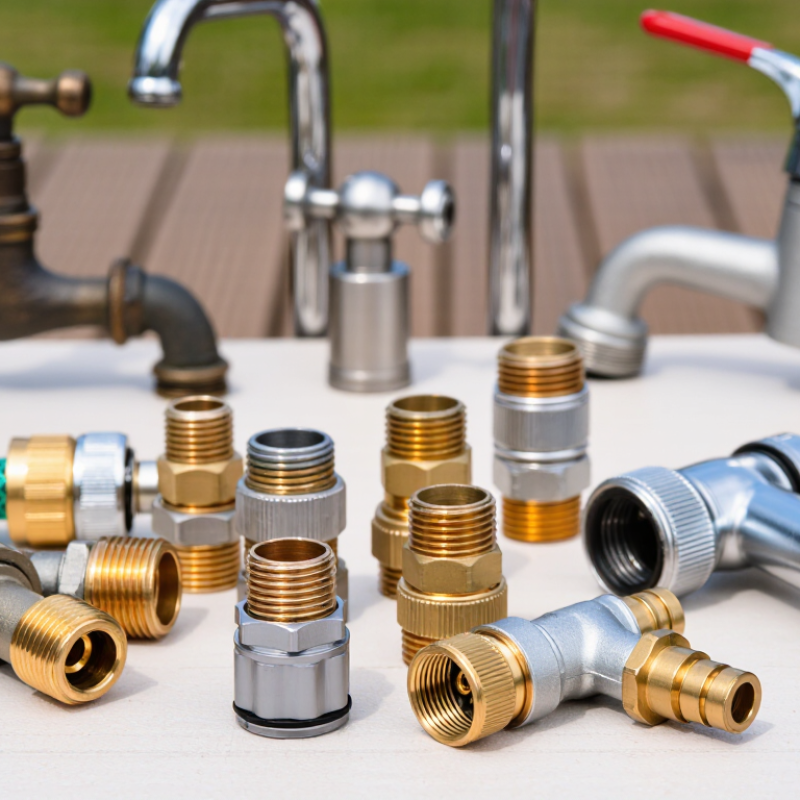
Choosing a connector starts with identifying the thread, not the hose diameter. A GHT 3/4-11.5 NH fitting uses a straight thread with 11.5 threads per inch. Its sealing washer sits against the mating face. Tightening the threads alone will not reliably stop water.
NPT is different. A 3/4-inch NPT fitting normally has tapered threads, often with 14 threads per inch. The threads create the seal as they tighten, usually with suitable sealing tape or compound. GHT and NPT may look similar at a glance. They are not interchangeable. Forcing them can damage the threads and create a slow leak that appears only under pressure.
Quick couplers use a plug-and-socket design for faster hose changes. Their sizes and internal valve styles vary, so matching the outside diameter is not enough. Check the coupler standard, working pressure, temperature range, and expected flow. A narrow coupler may reduce flow noticeably during irrigation or equipment washing.
I learned this the hard way. A connector felt tight but still leaked at the washer. The gasket was missing. Before installation, inspect the threads, clean grit from the sealing face, and confirm male-to-female compatibility. Hand-tighten first, then use a wrench carefully. Too much force can distort a washer or crack a plastic body. Water pressure changes the result, so test the connection under real operating conditions. This small check is easy to skip. It should not be.
Choosing a water hose connector in 2026 starts with three measurements: hose size, thread pitch, and flow capacity. Measure the hose’s inside diameter with calipers, not only its printed label. Common sizes include 1/2, 5/8, and 3/4 inch, but manufacturing tolerances can affect fit. A loose connector may leak around the washer. A tight one can damage the threads.
Check whether the connector uses garden hose thread or pipe thread. They are not automatically interchangeable. ASME B1.20.1 defines many pipe-thread dimensions, while ISO 228-1 covers parallel pipe threads. Measure pitch with a thread gauge, or count threads across one inch when identifying TPI. Do not rely on appearance alone. I once selected a fitting by diameter and ignored pitch; it looked correct, but failed under pressure.
Flow capacity depends on hose length, internal diameter, pressure, bends, and connector restriction. A narrow coupling can reduce flow even when the hose is large. The U.S. EPA WaterSense Annual Report states that labeled water-saving products have saved more than 8.7 trillion gallons since the program began. Use that perspective when sizing a connector: match capacity to the fixture, rather than choosing the largest fitting. EPA WaterSense criteria commonly use 2.0 gallons per minute as an efficient household-flow benchmark. Your outdoor supply may require more. Measure actual flow with a one-minute container test before final selection.
A suitable connector begins with water-service data, not appearance. Check the fluid, pressure, temperature, flow rate, and connection size before choosing materials. For clean water, reinforced polymer connectors can reduce weight and corrosion concerns. Brass and stainless steel offer greater mechanical strength, but they may add weight and cost. Seals also matter. EPDM suits many water applications, while other elastomers may soften or crack under heat, chemicals, or sunlight.
Never treat burst pressure as the normal operating limit. Select a connector with a working-pressure rating above the system’s maximum pressure, including pump surges. Temperature can reduce that margin. A connector rated for room-temperature water may perform differently near a heater or exposed pipeline. Review the manufacturer’s derating chart. Measure twice.
In field maintenance, I have seen leaks caused by mismatched threads rather than weak hose walls. Confirm thread type, diameter, gender, and sealing method. Do not force a pipe thread onto a hose fitting. For drinking-water systems, verify that the materials are approved for the intended service under applicable local requirements. Inspect the gasket for cuts, flattening, and hardening before installation. A hand-tight connection may be enough for some seals, but excessive force can distort them. I once overtightened a fitting and created a leak that appeared only during pressure changes. That mistake still influences my inspections. A small pressure test before regular use can reveal problems early.
How to Choose a Water Hose Connector in 2026?
A hose connector used for drinking water needs more than a tight fit. Check whether the product is certified to NSF/ANSI/CAN 61 for its intended application. This standard evaluates materials that contact drinking water and may affect health. Certification should cover the complete connector, not only one gasket or metal part. Ask for current documentation from the manufacturer or an accredited certification body. Dates matter. Older listings can remain online after specifications change.
Lead-free claims also need careful reading. In the United States, “lead-free” has a defined meaning for wetted components. However, wording can differ across markets. Potable-water compliance should identify the tested material, use conditions, and region. A connector for garden irrigation may not be suitable for a drinking-water line. I once assumed a stainless-looking surface proved safety. It did not. Appearance is weak evidence.
Tips: Match the connector to your hose size and water pressure. Inspect seals for cracks, odor, or discoloration before installation. Choose materials rated for repeated outdoor exposure and temperature changes. Keep the certificate, invoice, and product instructions together. If the seller cannot provide clear test information, pause before buying. This small delay is sensible, even when the connector seems inexpensive.
| Evaluation Dimension | What to Check | Why It Matters for Potable Water | Preferred Evidence or Specification | Practical Selection Guidance |
|---|---|---|---|---|
| Intended water use | Drinking water, food-contact rinsing, outdoor utility water, hot water, or non-potable service | A connector suitable for gardening or utility use is not automatically suitable for drinking water. | A clearly stated potable-water application and temperature range | Choose a connector specifically described for drinking-water service when water may be consumed. |
| NSF/ANSI/CAN 61 status | Whether the complete connector or the applicable wetted component is certified or otherwise accepted under NSF/ANSI/CAN 61 | This standard evaluates health effects from contaminants that may leach from drinking-water system components and materials. | A current certification listing, certificate, or compliance documentation identifying the exact product and conditions of use | Do not rely only on the words “food safe” or “non-toxic”; confirm the applicable certification scope. |
| Lead-free requirement | Lead content of wetted materials, including brass alloys, solder, and flux | In the United States, “lead-free” for wetted surfaces generally means a weighted average lead content of no more than 0.25%; solder and flux are subject to a 0.2% limit. | A written lead-free declaration, material disclosure, or certification applicable to the finished product | Avoid unspecified brass or unlabeled metal connectors for drinking-water applications. |
| NSF/ANSI 372 or equivalent lead-content verification | Whether the product has lead-content certification separate from or combined with health-effects certification | NSF/ANSI 372 addresses lead content; it does not by itself replace health-effects evaluation under NSF/ANSI/CAN 61. | Certification to NSF/ANSI 372 or a legally recognized equivalent, with the exact model covered | For the strongest documentation, look for both lead-content verification and drinking-water health-effects certification where required. |
| Wetted material | Material that directly contacts the water, including the body, insert, valve, spring, screen, and seal | Every wetted part can affect taste, odor, corrosion resistance, and contaminant migration. | Complete material list or regulated-material disclosure | Do not evaluate only the visible outer shell; internal metal parts and elastomers also matter. |
| Connector material options | Lead-free brass, stainless steel, engineered polymer, or a combination of materials | Material performance depends on alloy composition, water chemistry, temperature, pressure, and certification. | Material grade plus potable-water certification for the finished assembly | Stainless steel may offer strong corrosion resistance; polymers may reduce metal exposure; certified lead-free brass can provide conventional thread strength. |
| Seal and gasket material | Elastomer type, such as EPDM, silicone, or another documented potable-water compound | Seals remain in contact with water and can influence taste, odor, leakage, and chemical compatibility. | Potable-water approval for the specific seal compound and temperature range | Replace cracked, flattened, swollen, or hardened washers; use only seals rated for the application. |
| Temperature rating | Minimum and maximum operating temperature stated by the manufacturer | Heat can accelerate material aging and may change leaching or pressure performance. | A published temperature range for continuous and intermittent service | For hot-water use, verify the rating of the entire connector, including seals and plastic components. |
| Pressure and flow rating | Maximum working pressure, burst pressure where provided, and nominal flow path | A connector may be potable-water compliant but unsuitable for the system’s operating pressure or flow demand. | Manufacturer’s pressure rating at the intended temperature, with compatible hose and fittings | Use the lowest-rated component in the assembly as the practical system limit and avoid exceeding it. |
| Connection size and thread | Nominal hose diameter, thread type, gender, pitch, and regional connection standard | Correct compliance cannot compensate for mismatched threads, which can cause leaks or unsafe loading. | Dimensioned technical drawing and clearly identified thread specification | Confirm compatibility with the hose, tap, filter, tank, or appliance before purchase. |
| Backflow and stagnation considerations | Whether water can remain trapped in the connector or hose and whether a backflow device is required | Stagnant water can affect taste and water quality; backflow can introduce contaminants into the supply. | Installation instructions that address flushing, drainage, storage, and required backflow protection | Flush the assembly before first use and after extended storage; follow local plumbing requirements. |
| Country and jurisdictional requirements | Applicable national, state, provincial, municipal, or plumbing-code requirements | Potable-water acceptance and marking requirements can differ by market and installation type. | Documentation recognized by the authority having jurisdiction | Check local code requirements for permanent plumbing, RV systems, building services, and commercial food operations. |
| Traceability and labeling | Model number, certification mark, production information, installation limits, and care instructions | Traceable identification helps verify that the certification applies to the product being installed. | Permanent or durable product marking supported by current documentation | Treat missing model identification or unverifiable certification claims as a purchasing risk. |
| Final purchase decision | Certification, lead-free status, material disclosure, size, pressure, temperature, and installation compatibility | A connector is suitable only when health, mechanical, and installation requirements are satisfied together. | Product-specific technical documentation from a verifiable source | For drinking water, prioritize a connector with verified NSF/ANSI/CAN 61 coverage, lead-free compliance, correct dimensions, and ratings suitable for the intended service. |
Note: Certification requirements vary by country and installation type. NSF/ANSI/CAN 61 health-effects certification and NSF/ANSI 372 lead-content verification address different aspects of product suitability; neither should be assumed solely from a generic “potable water” or “lead-free” claim.
Choosing a water hose connector in 2026 starts with its seal design, not its appearance. A flat washer spreads pressure across the fitting face and suits many household taps. An O-ring seals inside a groove, often handling movement better during frequent connection changes. I have found that a soft rubber washer can stop a small leak quickly, but it may flatten after repeated tightening. Silicone seals tolerate wider temperature changes, although cheap versions can tear against rough threads. Look closely. The sealing surface should feel even, without cuts, bubbles, or hardened edges.
Durability ratings need careful reading because numbers rarely tell the whole story. Check stated pressure, temperature, ultraviolet, and corrosion resistance ratings. A connector used on a sunny balcony needs better UV resistance than one stored indoors. For gardening, a reinforced body and stainless steel spring can reduce cracking near the hose end. Still, a high pressure rating cannot rescue poor threads or a damaged washer. I once trusted the rating and ignored a slightly crooked tap. It leaked after the first cold night. That mistake was avoidable.
Installation requirements should match your tools and water source. Measure the tap thread before buying, then confirm whether an adapter is required. Clean grit from both mating surfaces with a damp cloth. Hand-tighten first, and use a wrench only for a small final turn. Too much force can distort the seal. Keep the hose straight for the first few inches, reducing side load on the connector. Turn water on slowly and inspect the joint with dry fingers. If moisture returns, replace the washer before tightening again.