Industries
Get direct access to our extensive portfolio of optical products and specialist technical expertise.
A Blue-Cut Lens is not one single product. Buyers will find clear filters, lightly tinted lenses, yellow-tinted options, prescription lenses, plano lenses, photochromic designs, anti-reflective coatings, clip-ons, gaming lenses, and lenses made with different materials. The labels can sound more decisive than the evidence. The details matter.
Dr. Rahul Khurana, an ophthalmologist and American Academy of Ophthalmology spokesperson, has said: “There is no scientific evidence that the light coming from computer screens is damaging to the eyes.” That caution belongs in any buyer’s guide. Blue-light filtering may suit personal comfort or a preferred screen appearance, but it should not be presented as proven protection from eye disease. Fit, prescription accuracy, coating durability, color distortion, and return policies are practical factors buyers can check. A yellow tint, for example, may alter how a white page looks under office lighting. A clear lens may preserve color better, yet feel no different during long screen sessions. Experiences vary.
This guide compares ten common types by construction, intended use, and trade-offs. It will help readers ask better questions at an optical shop, rather than trust a dramatic label. Some product claims are still difficult to compare across brands. That is worth admitting. Before choosing, buyers should consider their prescription, work environment, and comfort needs, and consult an eye-care professional about persistent symptoms. A lens is one choice, not a complete screen-health plan. Buyers should also compare written specifications with the lens they actually receive. That small step can prevent a costly mismatch.
Blue-cut lenses are best understood by their spectral transmission, not by a label alone. The 400–500 nm range covers much of the visible violet and blue light near the short-wavelength end of the spectrum. A lens may reduce transmission across part of this range, but that does not mean it blocks every wavelength equally. Its transmission curve shows how much light passes through at each wavelength.
For example, a lens might transmit 70 percent of light at 450 nm and more at 490 nm. Those figures describe that lens’s measured performance, not every blue-cut lens. Ask for a spectral report and check the test conditions, including the instrument and whether the measurement applies to the finished lens. Small differences matter. A yellow tint can suggest stronger attenuation in some bands, yet appearance alone cannot confirm the filtering level. Clear lenses may also reduce selected wavelengths while allowing most visible light through. The trade-off deserves attention: reducing transmission can alter color perception, especially when viewing a white screen or comparing color samples. The 400–500 nm range is a useful reference, but it does not tell the whole story. A single percentage can hide where transmission changes most, so buyers should read the curve rather than rely on a broad “blue-blocking” claim.
Blue-cut lenses differ less by label than by how they manage light. A clear-coated lens looks nearly untinted, making it practical for office screens and everyday wear. Its coating may reflect selected blue-violet wavelengths, but performance depends on the measured transmission curve, not the package wording. Ask for that data.
Some absorptive designs use lens material to filter part of the spectrum, often with a faint gray or brown cast. A discreet look has limits.
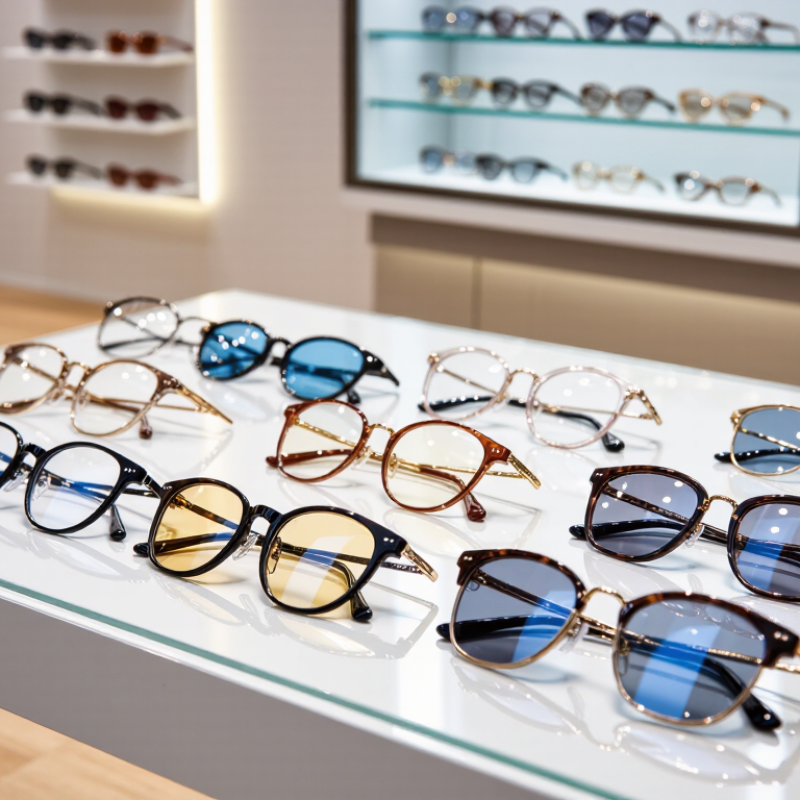
Yellow lenses create a warmer view, while amber versions usually filter more short-wavelength light and alter colors more noticeably. That tint may feel comfortable in a dim room, yet it can make white pages look cream and complicate color-sensitive tasks.
Photochromic lenses darken outdoors and clear indoors, though response varies with UV exposure, temperature, and lens construction. Behind a car windshield, some designs may darken only slightly. Not every pair behaves alike.
For a useful comparison, check the wavelength range, visible-light transmission, and prescription options. I would be cautious about treating a darker tint as proof of better eye protection; comfort and filtering are separate questions.
Top 10 Types of Blue Cut Lenses for Buyers
Blue-cut describes a filter, not a prescription or lens material. Prescription lenses correct refractive errors; plano lenses have no corrective power. Either type may include a blue-light-filtering coating or tint. The categories can overlap, which makes comparison less tidy than many product charts suggest. Fit matters.
Polarized lenses reduce reflected glare from surfaces such as wet roads and water. They are mainly useful outdoors, not a substitute for a screen-focused filter. A 2023 Cochrane review examined 17 randomized trials involving 619 adults. It found that blue-light-filtering lenses may make little or no difference to short-term digital eye strain. Evidence for sleep effects remained uncertain. That is worth remembering before paying extra for a strong filter.
Material affects comfort and durability. Polycarbonate is lightweight and impact-resistant, making it a practical choice for active wearers and children. High-index lenses can be thinner for stronger prescriptions, though they may show more reflections without an anti-reflective coating. Plano lenses suit people who want non-prescription eyewear, but they do not correct vision. I would compare the prescription, material, glare needs, and coating separately. “Blue-cut” alone tells you little about everyday performance.
How to read this chart: Refractive index is a property of the lens material, not a measure of blue-light filtering. Higher-index materials can help make prescription lenses thinner for the same prescription. Blue-violet filtering performance varies by lens and coating; plano, prescription, and polarized options may use different materials.
For buyers comparing blue-cut lens types, a percentage without a test method is hard to judge. ISO 8980-3:2022 sets transmittance specifications and test methods for uncut finished spectacle lenses. It does not certify every blue-light claim. Request a laboratory report showing the measured spectral transmission, wavelength range, instrument, and test conditions. A result for one narrow band cannot represent all visible blue light. Check whether the report covers the actual lens material and coating you plan to buy. Numbers matter.
Look for wavelength-by-wavelength data, not just phrases such as “blocks 90%.” The 2023 Cochrane review of blue-light-filtering spectacle lenses assessed 17 randomized trials involving 619 adults. It found that these lenses may not reduce short-term computer-related eye strain compared with standard lenses. That finding does not settle every question about comfort or individual needs, but it is a useful check against sweeping marketing claims. Ask sellers to separate measured transmission from promised benefits. Reports can be confusing, and even careful buyers may miss a small detail: a percentage is meaningful only when its wavelength range and calculation method are stated.
| # | Lens Type | Filtering Approach | Typical Appearance or Use | Buyer Verification |
|---|---|---|---|---|
| 1 | Clear absorptive-substrate lens | A filtering material incorporated into the lens substrate selectively reduces transmission in specified wavelength regions. | Usually appears clear or nearly clear; the amount of filtering depends on the material and product design. | Request the finished lens’s spectral-transmittance data and identify the wavelength range used for any stated reduction. |
| 2 | Clear filter-coated lens | A surface coating modifies spectral transmission while retaining a relatively clear appearance. | May show a colored reflection, but reflection color alone does not establish how much light is transmitted or filtered. | Ask for spectral-transmittance results for the finished lens, not just a coating description or reflection photograph. |
| 3 | Light-yellow tinted lens | A mild tint reduces transmission across part of the visible spectrum; the precise effect varies by tint and lens. | Has a noticeable warm or pale-yellow appearance and may alter color perception. | Compare measured spectral-transmittance data with the untinted reference lens and check the stated visible-light properties. |
| 4 | Amber or orange-tinted lens | A stronger warm tint reduces transmission in selected visible wavelengths; it is not necessarily a narrow-band filter. | Clearly colored; the tint can change the appearance of colors and is generally more noticeable than a clear filter. | Request wavelength-by-wavelength transmission data and confirm that the tint is suitable for the intended lighting conditions. |
| 5 | Brown-tinted lens | Broad visible-spectrum tinting can reduce overall light transmission; blue-region transmission depends on the specific lens. | Commonly used as a sunglass tint; the actual darkness and spectral profile vary between products. | Check spectral transmittance and the applicable sunglass category or use requirements separately from blue-filter marketing claims. |
| 6 | UV-protective lens with a blue-violet filter | Combines ultraviolet attenuation with a separate, claimed reduction in a specified portion of the visible spectrum. | May be clear or tinted; UV protection and visible blue-violet filtering are different transmission properties. | Check UV and visible spectral-transmittance results separately. Do not treat a UV-blocking claim as proof of visible blue-light filtering. |
| 7 | Anti-reflective lens with a blue-filter feature | An anti-reflective treatment reduces reflections; any additional blue-region filtering depends on the coating design and must be measured. | Often appears clear, sometimes with colored residual reflections. Appearance alone cannot quantify transmission. | Ask for the transmission spectrum of the completed lens and clarify whether the claim concerns transmitted light, reflected light, or both. |
| 8 | Photochromic lens with a blue-filter claim | The lens darkens in response to light exposure. Its transmission can change with activation, temperature, and test conditions. | Typically clearer indoors and darker outdoors, with performance dependent on the lens and exposure conditions. | Request transmission data in both clear and activated states, with test conditions stated; do not assume the two states have identical spectra. |
| 9 | Polarized tinted lens with a blue-filter claim | Polarization reduces certain reflected glare; it does not, by itself, specify blue-region spectral transmission. | Usually a sunglass lens. Tint, polarization, and spectral filtering are separate characteristics. | Verify polarization and spectral-transmittance claims independently, and check suitability for the intended outdoor use. |
| 10 | Prescription or plano lens with a blue-filter option | The same filtering options may be offered in prescription lenses or non-prescription (plano) lenses; prescription status does not determine filtering performance. | Available in different prescriptions, materials, tints, and coatings. | Request test results for the relevant finished lens configuration, including its material, tint, coating, and lens state. |
Testing note: ISO 8980-3:2022 addresses transmittance specifications and test methods for uncut finished spectacle lenses. When assessing a blue-light claim, ask for the measured spectral-transmittance curve, the wavelength interval and calculation basis behind the claimed percentage, and the test conditions. The standard should not be presented as setting one universal “blue cut” percentage for all products. The lens types above are practical product configurations and can overlap.
Blue-cut lenses differ in tint, filtering range, and intended setting. Common options include clear selective-filter lenses, amber lenses, yellow lenses, photochromic lenses, indoor computer lenses, outdoor lenses, prescription lenses, non-prescription lenses, anti-reflective blue-filter lenses, and task-specific occupational lenses. These categories can overlap, so the label alone does not tell you how a lens performs.
Choose by use. Clear lenses usually preserve screen and paper colors better, while amber or yellow tints can noticeably shift whites and blues. Color matters. For design work, photo editing, or reading color-coded charts, ask how much visible light passes through and whether the maker provides a spectral transmission curve.
For long screen sessions, compare glare control and comfort under the lighting you actually use. Small detail, big difference.
Do not assume blue-light filtering means UV protection. Ask for a separate UV transmission specification, especially for lenses used outdoors. Measured performance is more useful than vague terms such as “high protection”; check the tested wavelength range and test conditions. I would not treat a warmer tint as proof of better protection. Fit, clarity, and comfort still matter, and even a careful choice may not solve every cause of eye strain.