Top 10 Portable Power Stations for Global Buyers?
Portable power is moving from a camping accessory to a practical household resource. Fortune Business Insights valued the global Portable Power Station market at approximately USD 603 million in 2023. Its report projects growth to more than USD 1.1 billion by 2030. Grand View Research also identifies emergency backup, outdoor recreation, and remote work as major demand drivers.
The numbers are encouraging. They are not the whole story.
“Portable power should be simple, safe, and available when people need it,” says Steven Yang, founder and CEO of Anker Innovations. That principle matters when buyers compare products across continents. A 1,000Wh battery may run a refrigerator for several hours, but actual performance depends on startup loads, temperature, inverter efficiency, and battery age. Marketing claims often simplify these details.
This guide examines the Top 10 Portable Power Stations for Global Buyers. It considers usable capacity, continuous and surge output, charging speed, battery chemistry, solar compatibility, noise, warranty support, and regional plug standards. LiFePO4 batteries usually offer stronger cycle durability than older lithium chemistries. However, heavier construction can reduce portability.
Safety deserves attention. Look for certified components, clear thermal protection, transport guidance, and published test information. Certification names can differ by market, so buyers should verify local requirements before purchase.
There is no perfect model.
A station suited to a European apartment may disappoint during an African field project. A compact unit may charge phones beautifully but fail under a compressor load. Some comparisons also overlook service availability, which may matter more than peak wattage.
The ranking therefore balances specifications with real-world use, regional access, and honest limitations. Data changes quickly, and this list should be reviewed periodically.
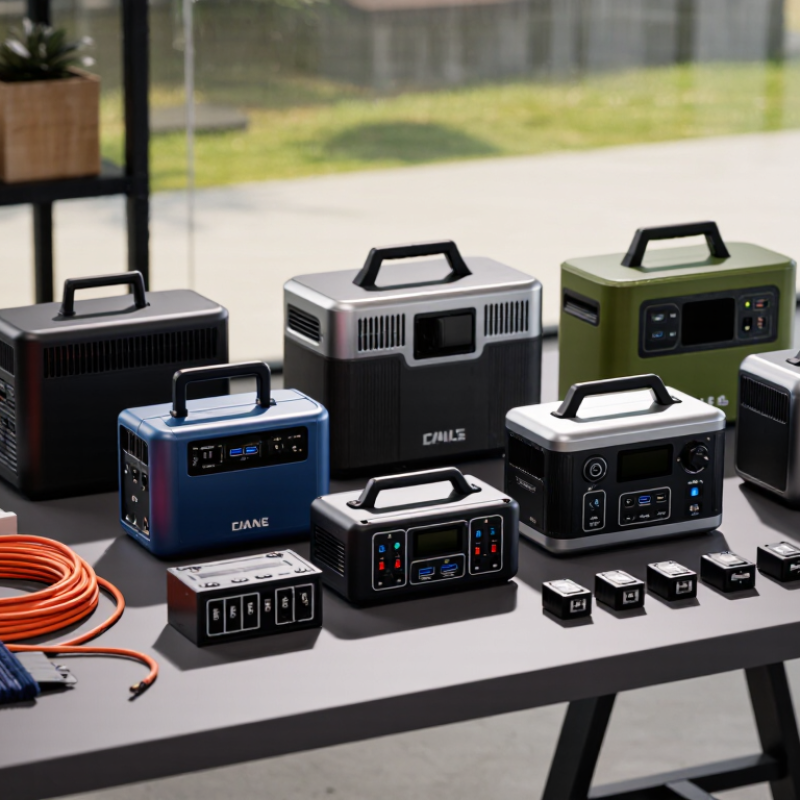
What Is a Portable Power Station and Who Needs One?
A portable power station is a rechargeable battery system with an inverter, outlets, and monitoring controls. It stores electricity in watt-hours, then supplies alternating or direct current without fuel combustion. That makes it useful during outages, road travel, field work, and temporary home energy needs. The U.S. Energy Information Administration reported that customers averaged 5.5 hours of power interruptions in 2022, with major events causing much of that duration. For mobile workers, the GSMA Mobile Economy 2024 report counted 4.6 billion mobile internet users worldwide in 2023. A charged station can keep a router, phone, laptop, or communication device running for several hours.
Who needs one? Households facing unstable grids may value backup lighting and refrigeration. Apartment residents often prefer quieter, indoor-friendly equipment. Campers, photographers, remote technicians, and emergency volunteers may need electricity away from wall outlets. The sizing process is messy. Do not trust the headline capacity alone. A 1,000-watt-hour unit will not deliver 1,000 watt-hours to an appliance. Inverter losses, temperature, battery age, and reserve limits reduce usable energy. That assumption is easy to make—and wrong. Check starting watts for refrigerators, pumps, and tools. Check voltage and plug compatibility when buying across borders. Medical equipment requires professional guidance and locally approved safety standards, not guesswork. Look for independent testing, clear battery specifications, overload protection, and published cycle-life data.
How to Compare Capacity, Output, Charging, and Portability
Top 10 Portable Power Stations for Global Buyers?
Capacity is measured in watt-hours, or Wh. It shows how much energy a station stores. A 500Wh model may provide about 400Wh after inverter losses. My first comparison mistake was focusing only on capacity. A refrigerator, laptop, and lamp need different power levels. Output matters just as much. Check continuous wattage, then check surge wattage for motors and compressors. A unit with strong output but limited battery capacity may fail during a long outage.
Tips: Write down each appliance’s wattage before buying. Add a safety margin of about 20 percent. Compare AC, USB-C, and DC ports separately. Check charging speed from a wall socket, vehicle, and solar panel. Solar charging depends on sunlight, temperature, and panel compatibility. Local plugs and voltage standards also matter, especially for international use. Never assume every input works everywhere.
Portability includes more than carrying weight. A compact case with a firm handle is easier on stairs. During a weekend test, I noticed that a heavier station felt manageable indoors but awkward beside a tent. Noise can also affect sleep. Look for measured fan noise, not vague claims. Screen accuracy, battery management, and warranty support reveal reliability. Still, specifications are not perfect. Real runtime changes with temperature, cable length, and battery age. Compare tested results when available, and leave room for those unknowns.
Top 10 Portable Power Stations for Different Global Use Cases
Portable power stations suit different global use cases, not one universal buyer. For camping, choose a compact unit with 300–700Wh capacity, USB-C output, and low fan noise. Remote workers may need 700–1,500Wh, especially for laptops, monitors, and routers. Emergency users should prioritize pure sine-wave output, clear battery indicators, and reliable recharge options. The World Bank’s Tracking SDG 7 report found that 685 million people lacked electricity access in 2022. That figure highlights the value of dependable small-scale power.
For photographers and field technicians, portability matters more than maximum capacity. A 500Wh station can theoretically run a 60W laptop for over eight hours. In practice, inverter losses reduce that figure to roughly six or seven hours. Battery temperature also changes performance. Grand View Research estimated the global portable power station market at about USD 545 million in 2023, with strong growth expected through 2030. Market estimates differ, though. Buyers should question dramatic claims. Bigger is not always better.
Tips: Match capacity to actual watt-hours, not advertised peak power. Check continuous output before connecting heating tools or pumps. For medical equipment, consult the device maker and maintain a tested backup plan. Recharge the station monthly during storage. Solar charging sounds attractive, but cloudy weather and panel placement can disappoint. I would test every setup before travel, because real conditions are less tidy than product specifications.
Top 10 Portable Power Stations for Different Global Use Cases
Recommended usable battery capacity by common portable-power application. Values are practical estimates based on typical device loads and overnight or short-duration use.
Higher-capacity stations are better suited to refrigeration, medical equipment, power tools, and short-duration household backup, while smaller units are sufficient for lighting, communications, and lightweight outdoor electronics.
How to Choose the Right Portable Power Station for Your Market
Top 10 Portable Power Stations for Global Buyers?
Choosing a portable power station requires market judgment, not only battery capacity. Commercial reports estimate the global market will grow steadily this decade. Fortune Business Insights valued it at about USD 603 million in 2023, while definitions differ between reports. Treat forecasts as direction, not certainty.
For hot markets, verify operating temperature, battery protection, and ventilation requirements. Lithium iron phosphate batteries usually offer strong cycle life and thermal stability. Check watt-hours, continuous output, surge output, charging time, and solar input separately. A 1,000Wh unit may run a refrigerator briefly, but startup surges can overload a weak inverter. Regional sockets, voltage, frequency, and certification requirements also matter. IEC 62133-2 provides a useful reference for portable lithium battery safety. Local conformity rules still require confirmation.
Tips: Match the product to real use. Ask distributors for three months of sales data, return reasons, and common loads. Test one refrigerator, lamp, router, and small medical-free device before ordering. Keep emergency claims conservative. I once overvalued capacity and ignored repair access; that mistake increased costs. A neat specification sheet can still hide poor field performance. Consider replaceable cables, multilingual manuals, warranty handling, and battery transport restrictions. The International Energy Agency reports rapidly expanding battery storage deployment, but portable products remain highly dependent on local infrastructure and user habits.