Industries
Get direct access to our extensive portfolio of optical products and specialist technical expertise.
Finding reliable China Top 304 Stainless Steel Plate Suppliers requires more than comparing prices. Buyers should examine production experience, material traceability, and export performance. A supplier may offer attractive quotations, yet inconsistent thickness can create serious problems during fabrication. The best companies usually provide clear specifications, mill test certificates, and responsive technical support.
This guide introduces practical ways to evaluate 304 Stainless Steel Plate manufacturers in China. It considers product quality, manufacturing capacity, surface finishes, dimensional accuracy, and international standards. Common references include ASTM, ASME, EN, and JIS requirements. Buyers should also confirm whether plates are hot rolled, cold rolled, polished, or cut to custom dimensions. Small details matter. A clean No. 4 finish should look uniform under direct warehouse lighting, without visible scratches or uneven polishing marks.
Supplier verification should include factory audits, sample testing, and documented inspection procedures. Experienced exporters can explain lead times, packaging methods, loading conditions, and corrosion resistance in real applications. However, no supplier should be trusted solely because of a polished website or a low initial offer. That assumption is risky. Independent testing may reveal differences in chemical composition, hardness, or surface quality.
The selection process is not perfectly simple. Even reputable suppliers can face delays, communication gaps, or production variations. This guide therefore encourages careful comparison rather than automatic ranking. It focuses on evidence, practical experience, and transparent communication. With the right questions, buyers can identify dependable Chinese suppliers and reduce costly surprises before placing a large order.
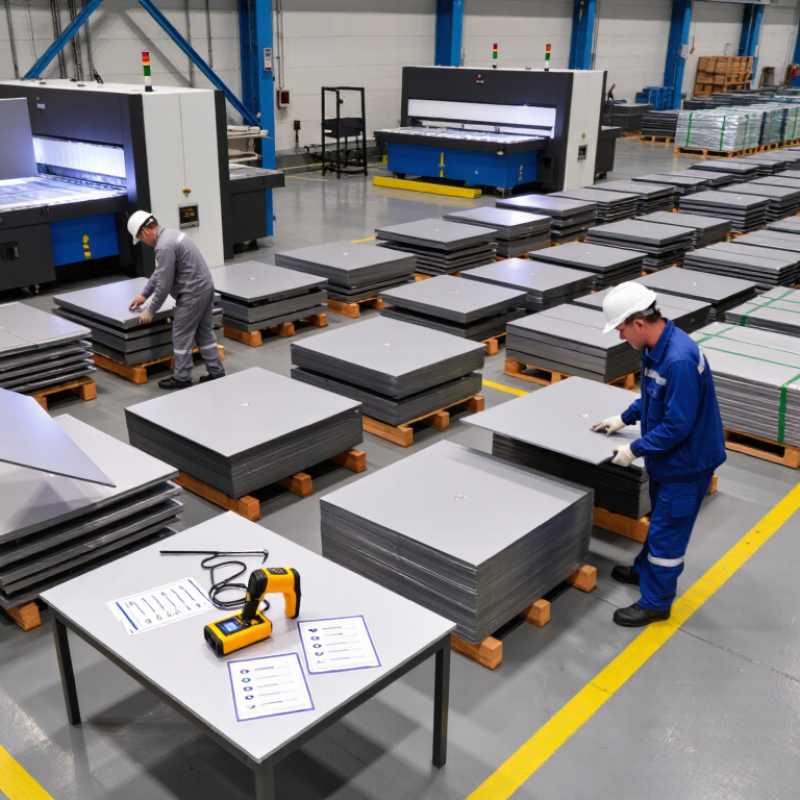
China Top 304 Stainless Steel Plate Suppliers?
304 stainless steel plate remains a practical choice for many industrial projects. It typically contains about 18% chromium and 8% nickel. This chemistry supports corrosion resistance, cleanability, and good forming performance. ASTM A240 commonly specifies minimum tensile strength near 515 MPa and yield strength near 205 MPa for Type 304 plate. Actual values depend on thickness, processing, and testing conditions.
There are useful grade differences. Standard 304 suits tanks, kitchen equipment, architectural panels, and general fabrication. 304L contains less carbon, reducing the risk of weld-related corrosion. 304H contains higher carbon and may support elevated-temperature service. EN 10088-2 and ASTM A240 provide widely used requirements, but buyers should verify the exact edition and mechanical values. A mill certificate matters. Surface appearance alone proves very little.
World Stainless reported approximately 58.4 million tonnes of global stainless crude steel production in 2023. That scale reflects strong demand, yet volume does not guarantee plate quality. Chinese suppliers should provide heat numbers, chemical analysis, dimensional inspection, and traceability records. I would also check flatness, edge condition, and surface finish under real lighting. Bright plate can hide scratches. It can happen. For chloride exposure or severe chemical service, 304 may be an optimistic selection; testing and engineering review should guide the final grade.
Choosing China’s 304 stainless steel plate suppliers requires more than comparing online prices. A polished website proves little. Request mill certificates, heat numbers, and recent inspection records. Check whether the certificate matches the delivered plate. The chemical report should confirm chromium and nickel ranges. Mechanical results should include tensile strength and elongation. Ask for surface finish, thickness tolerance, and flatness data. These details reveal a supplier’s technical discipline.
Tips: Order a small sample first. Measure thickness at several points. Inspect the surface under direct light. Ask for test reports from an independent laboratory when quality risk is high. Confirm packaging with photos before shipment. Wooden supports, waterproof paper, and edge protection can prevent avoidable damage.
Reliable suppliers communicate clearly before receiving payment. They should explain production schedules, minimum quantities, packing methods, and claim procedures. Check their experience with export documents and your required standards, such as ASTM A240 or EN specifications. Traceability matters when several coils or plates share one order. I once treated a low quotation as a strong advantage. That decision ignored inspection costs and delayed corrections. A cheaper plate can create expensive cutting and fabrication problems. Evaluate response speed, technical answers, and document consistency together. Supplier audits are useful, but they cannot replace physical inspection. Some decisions remain uncertain, and that uncertainty should be recorded rather than hidden.
| Evaluation Dimension | What to Verify | Reliable Benchmark or Acceptance Point | Recommended Evidence | Suggested Weight | Warning Signs |
|---|---|---|---|---|---|
| Material Grade and Designation | Confirm that the offered material is 304 stainless steel and identify equivalent designations used in the quotation. | Common equivalents include ASTM A240 Type 304, EN 1.4301, and JIS SUS304. The applicable standard must be stated on the purchase order. | Signed quotation, technical datasheet, purchase specification, and material test certificate. | 15% | The quotation only says “stainless steel” or “18/8” without naming a standard. |
| Chemical Composition | Check whether the heat analysis matches the selected material standard. | For ASTM A240 Type 304, typical maximum limits include C 0.07%, Mn 2.00%, Si 0.75%, P 0.045%, S 0.030%, and N 0.10%; Cr is commonly 17.5–19.5% and Ni 8.0–10.5%. Always apply the exact revision and standard specified in the contract. | Heat number, laboratory heat analysis, and a certificate traceable to the supplied plates. | 15% | A certificate gives only nominal “18% Cr / 8% Ni” values or has no heat number. |
| Mechanical Properties | Verify tensile strength, yield strength, elongation, and hardness requirements for the selected standard and product condition. | ASTM A240 Type 304 commonly specifies minimum tensile strength of 515 MPa, minimum yield strength of 205 MPa, and minimum elongation of 40% for the referenced product form; confirm the current standard and thickness applicability. | Mill test certificate, test method, specimen direction, thickness range, and laboratory identification. | 12% | Mechanical values are copied without test conditions or are unrelated to the actual heat. |
| Dimensional Accuracy | Assess thickness, width, length, flatness, squareness, and edge condition against the ordered tolerance. | Tolerances must be controlled according to the agreed product standard, nominal dimensions, rolling condition, and cutting method. No universal tolerance should be accepted without a referenced standard. | Inspection report containing actual readings, calibrated instruments, sampling plan, and applicable tolerance table. | 12% | The supplier guarantees only nominal dimensions or does not provide actual measurement records. |
| Surface Finish and Appearance | Match the finish, protective film, surface cleanliness, and defect limits to the end use. | Typical finishes include 2B, BA, No. 1, and No. 4. Finish terminology should be linked to a recognized standard or an approved physical sample. | Surface-finish specification, approved sample, photographs, and pre-shipment inspection report. | 10% | The finish is described only as “bright” or “polished” with no number, sample, or defect criteria. |
| Certification and Traceability | Determine whether every shipment can be traced from the plate to the original heat and production records. | A material certificate issued according to EN 10204 Type 3.1 provides inspection results for the supplied product. Type 3.2 may be required when third-party or purchaser-appointed inspection is contractually specified. | EN 10204 certificate, heat number marking, packing list, production record, and certificate-to-product reconciliation. | 12% | Certificates are unsigned, unrelated to the heat number, or issued only as generic templates. |
| Quality Management | Review the supplier’s production controls, inspection procedures, nonconformity handling, and corrective-action process. | An ISO 9001 certificate should be valid, issued by an accredited certification body, and cover the relevant manufacturing or trading activity. Certification alone does not replace product inspection. | Valid certificate, scope statement, process-control plan, calibration records, and recent corrective-action example. | 8% | The certificate is expired, has an unrelated scope, or cannot be independently verified. |
| Testing Capability | Check the ability to perform or arrange chemical, mechanical, dimensional, surface, and optional corrosion-related tests. | Testing must use documented methods and calibrated equipment. PMI, tensile testing, hardness testing, and dimensional inspection should be available when required by the specification. | Equipment list, calibration certificates, sample reports, laboratory accreditation, and test-method references. | 6% | The supplier cannot explain the test method, sampling frequency, or laboratory responsibility. |
| Production and Supply Capacity | Evaluate whether the supplier can consistently deliver the required thickness range, dimensions, finish, quantity, and schedule. | Capacity should be assessed using confirmed production slots, rolling or processing route, inventory status, and realistic lead time rather than a general monthly claim. | Capacity statement, production schedule, stock list, lead-time commitment, and previous shipment records with confidential details removed. | 5% | The supplier promises every specification immediately without confirming stock, processing, or production dates. |
| Packaging and Export Protection | Assess protection against moisture, corrosion, abrasion, deformation, and marking loss during inland and sea transport. | Packaging should be agreed according to plate dimensions, transport route, lifting method, storage period, and destination climate; wooden packaging should meet applicable import requirements. | Packing specification, loading photographs, weight and dimension list, marking layout, and container-loading plan. | 3% | No moisture protection, edge protection, lifting plan, or package identification is specified. |
| Commercial and Contract Control | Compare total delivered cost, payment terms, inspection rights, claims procedure, and responsibility for specification deviations. | The contract should define grade, standard, dimensions, finish, tolerances, quantity tolerance, inspection, documentation, Incoterm, delivery point, and remedy for nonconforming goods. | Formal quotation, pro forma invoice, technical annex, inspection clause, and approved purchase order. | 2% | The lowest price is offered without a complete specification or written quality and claims terms. |
China’s top 304 stainless steel plate suppliers usually fall into three groups: integrated mills, processing centers, and specialized stockists. Integrated mills control melting, casting, hot rolling, annealing, and pickling. This deeper control can improve batch consistency and production planning. Processing centers buy coils or plates, then provide leveling, cutting, edge trimming, and surface finishing. Stockists focus on fast delivery and standard sizes.
Manufacturing strength matters more than a large warehouse. Experienced suppliers can explain their melting route, thickness tolerance, surface condition, and testing process. A reliable plate may arrive with a heat number, chemical analysis, mechanical test results, and inspection records. Look for practical details. Ask how plates are protected during loading. Check whether wooden supports prevent bending. Confirm if laser or plasma cutting will affect the final edge.
Some suppliers claim complete traceability, but their documents may come from different facilities. That deserves careful review. Request recent production samples, not only old certificates. A site visit can reveal whether equipment is modern or heavily worn. Independent testing is useful for critical projects. Even experienced buyers can overlook moisture damage after shipment. Small misunderstandings about tolerances can create expensive rework. Clear drawings, agreed inspection points, and written packaging requirements reduce that risk. Supplier capability should match the application, not merely the quoted price.
When evaluating China’s 304 stainless steel plate suppliers, begin with applicable standards. ASTM A240, EN 10088, and GB/T 3280 commonly define chemical, mechanical, and dimensional requirements. Confirm the exact grade, thickness tolerance, surface finish, and delivery condition. A supplier’s ISO 9001 certificate supports process control, but it does not prove every plate meets your order.
Request a material test certificate for each heat number. It should show chemical composition, tensile strength, yield strength, elongation, and heat-treatment information. Check whether the certificate matches the plate markings and packing list. In supplier audits, I have found mismatched heat numbers that looked minor but created serious traceability problems. A certificate alone is not proof. Independent verification remains valuable.
Tips: Ask for random PMI testing, thickness measurements, flatness checks, and visual inspection under strong, even lighting. Use ultrasonic testing when internal laminations could affect fabrication. For large orders, arrange third-party sampling before shipment. Check the inspector’s accreditation and report photographs. Do not rely only on polished samples; production plates may show scratches, edge cracks, or uneven finishing. I once treated surface appearance as sufficient evidence. That was a poor assumption. Verify results against the purchase specification, not vague claims such as “premium quality.”
Price should never stand alone. A 304 stainless steel plate quote depends on thickness, width, surface finish, tolerances, order volume, and nickel market movements.
The World Stainless Association reported approximately 58 million tonnes of global crude stainless steel production in 2023. China contributed more than 60 percent, which supports broad production capacity but also creates major quality differences.
Customization matters in real projects. Suppliers should confirm ASTM A240 or EN 10088 compliance, plate dimensions, edge condition, heat treatment, and surface finish.
Request a material test certificate with chemical composition and mechanical results. Laser cutting, polishing, drilling, and protective film may reduce local processing costs.
However, customization can extend lead times.
Small details matter.
Export service is equally important. Reliable suppliers explain Incoterms, seaworthy packing, container loading, insurance options, and document preparation.
Ask for heat numbers, packing lists, certificates of origin, and shipment photos. Stainless steel trade data from UN Comtrade can help compare destination-market import values, but reported prices are not direct supplier quotes.
That distinction is easy to miss.
A practical supplier review should include factory capability, inspection procedures, traceability, payment terms, and claim handling.
Independent inspection is useful for large orders. A cheap quotation may hide thinner tolerances or weaker packing.
I would compare at least three detailed offers, not three headline prices. That approach is slower, but safer.