Industries
Get direct access to our extensive portfolio of optical products and specialist technical expertise.

The search for top Containerized Energy Storage System suppliers is no longer about battery size alone. Developers now examine safety design, cycle life, software control, delivery records, and long-term service support. A steel container may look simple outside. Inside, it can combine battery racks, power conversion systems, thermal controls, fire suppression, and monitoring equipment.
Dr. Imre Gyuk, a respected energy-storage specialist and former U.S. Department of Energy program director, stated, “Energy storage is a critical component of the grid of the future.” His view remains practical. Renewable power can rise and fall within minutes, while commercial facilities often need stable electricity during peak demand. A well-designed Containerized Energy Storage System can respond quickly, reduce grid pressure, and support renewable integration.
Yet supplier comparisons are rarely perfect. A strong warranty may hide restrictive operating conditions. A low purchase price may exclude commissioning, replacement parts, or software updates. Some suppliers publish impressive capacity figures, but usable energy declines with temperature, aging, and operating strategy. That matters.
This overview examines leading suppliers through an evidence-based lens. It considers technology maturity, manufacturing experience, project references, safety practices, integration capability, and after-sales performance. Field conditions matter too. A system installed beside a dusty substation needs different protection than one serving a climate-controlled data center. No supplier fits every project. The most reliable choice depends on site conditions, grid requirements, budget discipline, and transparent technical evidence.
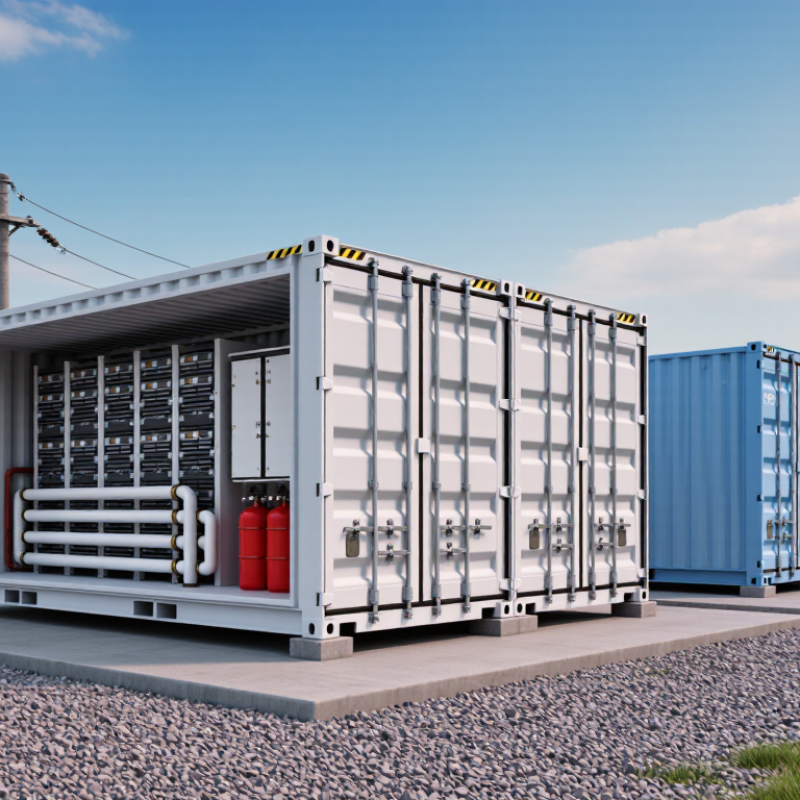
A containerized energy storage system is a large battery installation built inside a standard shipping-style enclosure. It combines battery racks, a battery management system, power conversion equipment, cooling, fire detection, and control software. The container arrives as a coordinated unit, reducing construction work at the project site. It can store solar power during bright hours and release electricity when demand rises.
The enclosure also creates a controlled operating environment. Sensors track cell temperature, voltage, smoke, and humidity continuously. Cooling equipment may run beside a dusty road or under strong summer heat, so site planning matters. Technicians need clear access around the doors and enough space for safe maintenance. In field installations, forgotten drainage paths and undersized cable trenches often cause avoidable delays.
Performance depends on more than battery capacity. The power converter determines how quickly energy enters or leaves the system. Software controls charging limits, grid response, and protection events. A reliable design also considers noise, emergency procedures, replacement access, and local electrical requirements. Containerized does not mean maintenance-free. Cooling consumes energy, filters collect dust, and battery performance slowly changes over time. I have found that early layouts often look efficient on paper but feel cramped during inspection. That gap deserves honest review before equipment arrives.
A containerized energy storage system is a battery plant assembled inside a steel enclosure. Battery cells form modules, modules fill racks, and racks connect to a power conversion system. The converter changes direct current into grid-ready alternating current. An energy management system schedules charging and discharging. Sensors track temperature, voltage, insulation, and smoke. Cooling equipment removes heat. Fire detection and suppression add another safety layer. It looks compact. The engineering is not simple.
When solar output rises, the energy management system directs electricity into battery racks. During evening peaks, the converter reverses direction and exports power. NREL’s 2024 Annual Technology Baseline commonly models lithium-ion storage near 85% round-trip efficiency. Some energy becomes heat. The IEA’s Batteries and Secure Energy Transitions report says global battery storage additions reached about 42 GW in 2023, nearly double 2022. Demand is accelerating. Yet efficiency varies with temperature, load, aging, and auxiliary consumption.
The container also needs a transformer, switchgear, communications, and site controls. A four-hour system may deliver rated power for four hours, but usable capacity declines over time. Operators reserve headroom for degradation. Real projects are less tidy. Dust, humidity, uneven foundations, and delayed grid data can reduce performance. Supplier comparisons should examine thermal design, warranty assumptions, response time, and test records. A low purchase price can hide higher cooling or replacement costs. That is where early estimates become optimistic.
Containerized energy storage system suppliers now serve utilities, factories, and renewable projects. Their solutions combine battery racks, thermal management, fire protection, and control software inside standardized enclosures. The International Energy Agency reported that power-sector battery storage additions reached about 42 GW in 2023, increasing by more than 90% year on year. This growth raises demand for suppliers with proven field experience, not only attractive specifications.
Leading suppliers usually provide complete system integration, testing, commissioning, and long-term service. Buyers should examine round-trip efficiency, usable capacity, degradation guarantees, response time, and replacement procedures. Independent testing under standards such as IEC 62933 and UL 9540A can strengthen technical confidence. Wood Mackenzie’s recent market analysis also shows strong growth in grid-scale storage deployments, but reported figures vary by region and project definition. That inconsistency deserves attention. No supplier is perfect. Some systems perform well in mild climates but lose efficiency under desert heat or repeated cycling.
Tips: Compare total lifecycle cost, not container price alone. Request operating data from similar sites. Check how quickly spare parts arrive. Review software access, emergency procedures, and warranty exclusions. A smaller supplier may offer flexibility, while a larger integrator may provide stronger financing and service coverage. The right choice depends on project duration, grid rules, climate, and maintenance skill. Supplier claims still need independent verification.
Comparing Top Containerized Energy Storage System Suppliers
A serious comparison starts with operating evidence, not attractive specifications. Check usable energy, round-trip efficiency, cycle life, and response time under realistic temperatures. A container may perform differently at 40°C than in a controlled laboratory. Ask for independent test reports, safety certifications, and clear explanations of fire protection and thermal management.
Supplier experience also matters. Review completed projects with similar capacity, climate, grid conditions, and duty cycles. Examine warranty terms carefully. Some warranties limit performance through annual throughput, operating temperature, or required maintenance. Confirm spare-parts availability, software support, installation training, and response times. Total cost includes transport, commissioning, auxiliary power, inspections, replacements, and eventual disposal. A low purchase price can become expensive later.
Tips: Request a sample performance guarantee and a detailed service schedule. Visit an operating site when possible. Speak with technical users, not only sales representatives. Compare measured data, not promises. One weakness in many comparisons is overconfidence in early estimates. Weather, network congestion, and changing load patterns can reduce expected returns. Leave room for uncertainty. Also check whether the supplier documents firmware updates, cybersecurity controls, and emergency procedures in language your operators understand. Capability should be visible in records, testing, and support—not just in a polished presentation.
The chart shows a practical procurement weighting for comparing containerized energy storage suppliers. These criteria reflect commonly evaluated requirements for utility-scale and commercial battery energy storage projects.
Higher percentages indicate greater influence on supplier selection. Safety, lifecycle performance, and system integration are typically assessed alongside price and delivery capability.
How to Select the Right Containerized Energy Storage Supplier
The right supplier must fit your site, not only your budget. According to the IEA’s Batteries and Secure Energy Transitions report, global battery storage capacity must reach about 1,200 GW by 2030. This growth increases pressure on safety, delivery, and long-term service.
Ask suppliers for verified data on cycle life, round-trip efficiency, thermal control, and usable capacity. Check whether the container includes the battery system, power conversion equipment, energy management software, fire protection, and auxiliary systems. NREL’s 2024 Annual Technology Baseline evaluates storage costs through duration, efficiency, replacement timing, and operating assumptions. Request the same details. Otherwise, price comparisons become misleading. A low quote can hide frequent component replacement.
Field experience matters. Visit an operating project, if possible. Inspect cable routing, ventilation, alarm records, and maintenance access. Confirm independent testing, warranty exclusions, spare-part plans, and local response times. I would not rely on a long warranty alone. A warranty is weak without measurable availability terms and clear degradation limits. Hot climates and dusty sites may expose design weaknesses earlier than laboratory tests.
Tips: Compare total cost over ten years, not only price per kilowatt-hour. Request three-year performance records. Test software interoperability before signing. Keep liquidated damages specific. Ask who owns operational data. Simple questions often reveal complicated gaps.
| Evaluation Dimension | Common Reference Range or Requirement | Why It Matters | What to Verify with the Supplier |
|---|---|---|---|
| Container Size and Energy Capacity | Standard 20-foot and 40-foot container formats; many commercial systems are configured from approximately 1 MWh to more than 5 MWh per container. | Determines transport requirements, site footprint, installation cost, and the amount of energy available for the intended application. | Usable versus nominal capacity, dimensional drawings, total shipping weight, module layout, and expansion options. |
| Battery Chemistry | Lithium iron phosphate is widely used in stationary storage because of its thermal stability and cycle-life characteristics; other lithium chemistries may be selected for specific power or energy requirements. | Chemistry affects safety behavior, energy density, operating temperature, degradation, and total cost of ownership. | Cell chemistry, cell manufacturer, independent test results, degradation model, and end-of-life capacity definition. |
| Power Rating and Duration | Common systems range from a few hundred kilowatts to several megawatts, with durations often specified from 1 to 4 hours. | A system designed for frequency regulation has different power and duration needs from one designed for peak shaving or renewable-energy shifting. | Continuous power, short-term overload capability, charge/discharge duration, auxiliary-load assumptions, and performance at partial load. |
| Round-Trip Efficiency | Approximately 85% to 95% at the system level is a commonly stated range, depending on operating conditions and whether auxiliary consumption is included. | Higher efficiency reduces energy losses and improves operating economics over the project lifetime. | Test conditions, AC- or DC-side calculation method, temperature assumptions, auxiliary consumption, and guaranteed efficiency. |
| Cycle Life and Degradation | Cycle-life claims commonly depend on depth of discharge, temperature, charge/discharge rate, and end-of-life capacity; stationary-system warranties often define 70% to 80% remaining capacity at the warranty endpoint. | Degradation directly affects available energy, revenue potential, augmentation requirements, and lifetime cost. | Guaranteed capacity curve, annual throughput limit, depth-of-discharge assumptions, augmentation plan, and warranty remedies. |
| Thermal Management | Air cooling and liquid cooling are both used; liquid cooling is often selected for higher energy density and tighter temperature control. | Uniform cell temperature can improve safety, performance, and battery life. | Cooling architecture, HVAC energy use, temperature uniformity, refrigerant or coolant requirements, and maintenance intervals. |
| Fire Detection and Suppression | A complete design may include smoke, heat, and off-gas detection, alarms, emergency shutdown, ventilation, and an application-specific suppression strategy. | Thermal-event detection and mitigation are essential for personnel safety, asset protection, and permitting. | Detection locations, alarm sequence, gas-management method, suppression agent, thermal-runaway test evidence, and emergency-response procedures. |
| Electrical and Safety Compliance | Depending on the market, projects may require standards or certifications such as UL 9540, UL 9540A testing, NFPA 855, IEC 62619, IEC 62933, and local grid codes. | Compliance supports permitting, grid interconnection, insurance review, and safe operation. | Current certificates, test reports, scope of certification, applicable local standards, and responsibility for authority approvals. |
| Ingress Protection and Environmental Rating | Outdoor enclosures are commonly specified at IP54 or higher, with the exact rating depending on the enclosure, climate, and installation design. | Protection against dust and water ingress is important for outdoor reliability and maintenance planning. | IP rating, corrosion protection, salt-mist testing, humidity limits, seismic requirements, altitude derating, and wind-load data. |
| Operating Temperature | Many systems are designed for an ambient range near -20°C to 50°C, subject to power derating and HVAC operation. | Temperature affects available power, efficiency, degradation, and the suitability of the system for local weather conditions. | Guaranteed operating range, derating curve, cold-start behavior, HVAC backup, and performance under extreme-weather conditions. |
| Response Time and Grid Services | Battery inverters can typically respond in milliseconds to seconds, depending on controls, interconnection equipment, and operating mode. | Fast response is valuable for frequency regulation, voltage support, ramp-rate control, and renewable integration. | Step-response test results, ramp-rate limits, reactive-power capability, grid-forming or grid-following mode, and utility requirements. |
| Energy Management and Communications | Common interfaces include Modbus TCP, Modbus RTU, and standardized supervisory-control connections; the exact protocol depends on the project. | Reliable controls and data access are required for dispatch, monitoring, cybersecurity, and integration with plant-level systems. | SCADA interface, API availability, remote-access controls, data ownership, cybersecurity measures, and local or cloud operating options. |
| Warranty and Service Support | Product warranties are often structured around approximately 5 to 10 years, with separate terms for capacity, equipment, and availability. | Service quality influences uptime, repair time, spare-parts availability, and financial risk throughout the project. | Response-time commitments, spare-parts strategy, local technicians, remote diagnostics, warranty exclusions, and guaranteed availability. |
| Delivery and Commissioning | Schedule depends on cell availability, customization, shipping regulations, permitting, site preparation, and grid-connection approval. | A technically suitable system can still fail commercially if delivery, installation, or commissioning is delayed. | Manufacturing lead time, factory acceptance testing, shipping plan, installation responsibilities, commissioning protocol, and delay provisions. |
| Total Cost of Ownership | Evaluate capital cost together with installation, HVAC consumption, augmentation, maintenance, insurance, replacement parts, energy losses, and end-of-life handling. | The lowest purchase price does not necessarily provide the lowest lifetime cost or the highest project return. | Use a common financial model with identical assumptions for usable capacity, degradation, efficiency, operating profile, service life, and recycling obligations. |