Top 10 Corrugated Steel Pipe Manufacturers for Global Buyers
Selecting a Corrugated Steel Pipe manufacturer is not just a price comparison. Global buyers must match pipe design, coating, and production capacity to real project conditions. A drainage line beneath a rural road, for example, faces different loads and installation constraints than a large culvert near an industrial site. Small details matter.
This guide introduces ten manufacturers for buyers evaluating supply options across regions. It considers product range, documented quality controls, customization, delivery capability, and the availability of technical support. These factors can help narrow a shortlist, but they do not replace project-specific checks. Confirm dimensions, steel grade, protective coating, connection details, and applicable local specifications directly with each supplier. Ask for current product documents and clarify how inspection and packaging are handled.
A polished catalog is not proof of consistent performance. Look for clear answers, traceable information, and realistic lead times. Not every manufacturer will suit every project, and a strong reputation in one market may not guarantee convenient service in another. That is worth remembering. The comparisons ahead are intended as a practical starting point, not a universal ranking. Buyers should weigh total delivered cost alongside technical fit, support, and the risks of long-distance procurement.
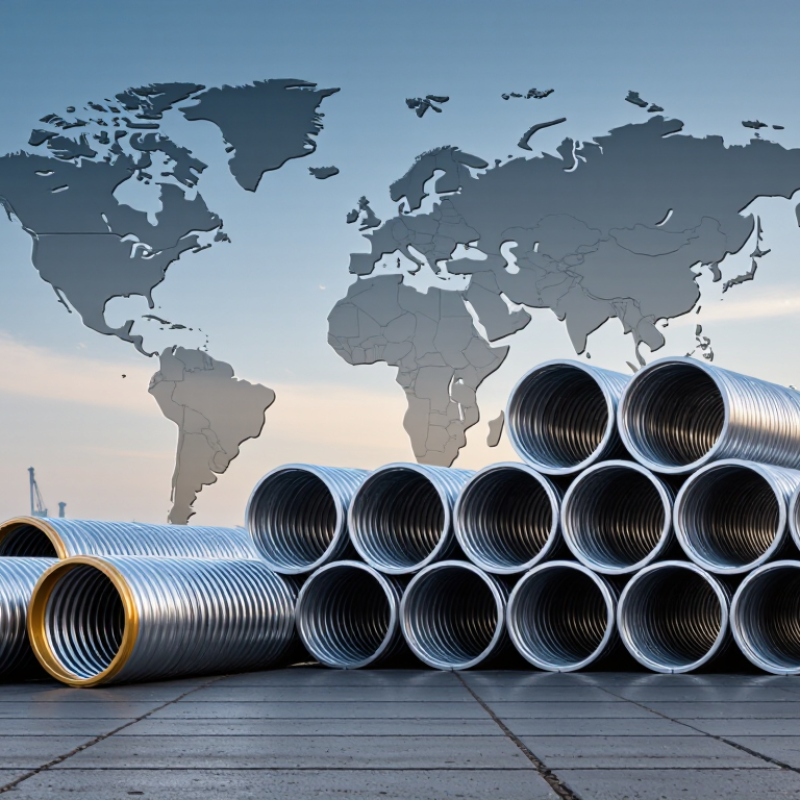
What Corrugated Steel Pipes Are and Where They Are Used
Corrugated steel pipe is a formed metal conduit. Its repeating ridges and valleys add stiffness without requiring a thick, solid wall. The profile also lets the pipe flex slightly under soil movement, provided it is installed with suitable bedding and compacted backfill. This interaction matters: the pipe and surrounding soil work together to carry loads.
Common uses include road culverts, stormwater drainage, farm field drains, and water crossings beneath access roads. A contractor may place a section under a gravel road to guide runoff while keeping the surface usable. Larger pipes can form underpasses or drainage channels, depending on engineering design and site conditions. Some projects use them as protective conduits for utilities. Details vary.
Material protection deserves attention. Galvanized or otherwise coated steel may suit many environments, but soil chemistry, water exposure, and abrasion affect service life. A designer should review site conditions and project specifications before selecting a coating or pipe thickness. During installation, check that joints align and that backfill is placed evenly on both sides. Uneven compaction can distort the pipe. This step is easy to rush, and it can be hard to correct once the road surface is finished.
How to Assess Corrugated Steel Pipe Manufacturers
A dependable corrugated steel pipe manufacturer should show how its products are made, tested, and documented. Ask for steel grade certificates, coating details, dimensional tolerances, and inspection records tied to production batches. Then compare these documents with your project drawings. A polished brochure is useful, but it cannot confirm that a pipe’s corrugation depth or joint fit matches your needs.
Look closely at quality controls for sheet thickness, seam integrity, and protective coatings. Request sample reports from recent production, not only a blank test form. If possible, inspect a sample section and check its dimensions with basic measuring tools. Ask how the factory handles rejected parts and changes in raw-material supply. Clear answers matter. Vague promises do not. A remote review may miss small workshop issues, so leave room for follow-up questions; no checklist catches everything.
Tips: Confirm production capacity against your delivery schedule, and ask how packing protects pipe ends during transport. Check whether the manufacturer can provide installation guidance and technical support in your time zone. References from comparable projects can help, but verify their scope and pipe conditions. One detail is easy to overlook: a capable supplier may still be a poor fit if communication is slow or drawings are misunderstood. Keep a written record of agreed specifications, revisions, and inspection points before placing an order.
Ten Manufacturers Serving Corrugated Steel Pipe Buyers Worldwide
Ten manufacturers serving corrugated steel pipe buyers worldwide may offer similar products, but their capabilities can differ sharply. Some focus on large-diameter drainage systems, while others specialize in culverts, irrigation, or highway applications. Buyers should compare more than quoted price. Ask about available pipe diameters, corrugation profiles, steel thicknesses, and protective coatings. A clear product range makes early planning easier.
Practical experience shows that small details affect installation. Confirm whether pipe sections arrive with compatible couplings, and check the dimensions against project drawings. For coastal or wet environments, discuss coating options and expected maintenance needs. Request material certificates and inspection records, then clarify how the supplier handles production tolerances. Documentation matters. It is also worth asking about packing methods; damaged coating during transport can create avoidable site work.
Manufacturers serving international buyers may differ in export experience, lead times, and technical support. Ask how they protect pipe ends and bundles during shipping, and whether they can provide drawings before production. Compare responses using the same specifications, not broad catalog descriptions. A supplier may have an impressive range but limited availability for a particular size. That happens. Buyers should also be candid about uncertainty: soil conditions, traffic loads, and installation methods may change the right selection. A short technical review with the project team can reveal gaps before an order is placed.
Steelmaking Context for Corrugated Steel Pipe Buyers
Top 10 steel-producing countries by crude steel output in 2023 (million metric tons)
Crude steel output indicates the scale of national steelmaking, not corrugated steel pipe production or individual manufacturer output. Figures are from the World Steel Association’s 2023 country data.
Comparing Product Ranges, Standards, and Export Capabilities
A useful comparison of corrugated steel pipe manufacturers starts with the product range, not the catalog cover. Check available diameters, wall thicknesses, corrugation profiles, coatings, and connection options. A drainage project under a rural road may need different pipe and end treatments than a culvert carrying heavy traffic. Ask whether the quoted configuration is standard stock or made to order. Small details matter.
Standards need careful reading. Manufacturers may reference ASTM, AASHTO, or EN specifications, but the edition, test method, and required tolerances should match the project documents. Confirm coating type and thickness, steel grade, and quality inspection records in writing. A certificate alone may not answer every technical question. Datasheets are useful, but they rarely show how clearly a supplier handles a design change.
Export capability is more than shipping to a port. Compare packing methods, corrosion protection during transit, document support, production capacity, and realistic lead times. Ask how pipe ends and loose fittings are secured; damaged edges can complicate installation. A sample shipment plan can reveal practical gaps. Price comparisons are imperfect, especially when specifications differ, so align the scope before judging value.
How to Shortlist and Verify Suppliers for Global Projects
For global projects, shortlist corrugated steel pipe manufacturers against the job, not just the catalogue. Check available diameters, wall thicknesses, coatings, joint systems, and production capacity against drawings and delivery dates. The World Steel Association reported 1,888.2 million tonnes of crude steel production in 2023, but industry scale alone says little about an individual supplier’s consistency. Ask for recent project references and traceable material test certificates.
Verify that quality documents match the actual plant and product. The ISO Survey 2022 recorded more than 1.2 million ISO 9001 certificates worldwide; certification is a useful screening signal, not proof that a specific pipe meets project requirements. Request inspection records, coating-thickness readings, dimensional checks, and test methods tied to the applicable specification. Confirm export packing, port handling, lead times, and who resolves damage or nonconformities. A polished brochure is not evidence. Review a sample document set before placing a large order; gaps are easier to fix early.
Tips: Ask for a live video tour of the production line. Compare certificates with pipe markings and purchase-order details. Contact references directly. If a supplier cannot explain a test result clearly, pause and investigate.
