Industries
Get direct access to our extensive portfolio of optical products and specialist technical expertise.

The global transition toward electrified transport, renewable storage, and high-density data infrastructure is reshaping demand for the Dc Power Circuit Breaker. These devices protect battery banks, photovoltaic systems, charging stations, and industrial DC buses where fault currents can rise rapidly without natural current zero-crossing.
Industry forecasts show strong momentum. Grand View Research estimates that the global circuit breaker market reached approximately USD 7.6 billion in 2023, with continued growth through 2030. MarketsandMarkets also identifies renewable integration, electric vehicles, and data-center expansion as major demand drivers. The International Energy Agency’s Electricity 2024 report adds useful context: data-center electricity consumption could more than double by 2026. That growth requires compact, selective, and dependable DC protection.
Power-electronics authority Dr. Bimal K. Bose described the field as “the technology of efficient conversion, control, and conditioning of electric power.” His observation explains why breaker design cannot be judged by interrupting capacity alone. Arc extinction, thermal endurance, remote monitoring, and coordination matter inside a real cabinet.
A practical comparison must examine rated voltage, continuous current, short-circuit interruption, polarity, trip technology, and certification scope. Installation temperature matters too. A breaker tested at 25°C may behave differently inside a sealed enclosure at 50°C.
The market is not perfectly transparent. Report estimates differ, and some supplier rankings rely on revenue rather than DC-specific evidence. That weakness deserves attention. Our Top 10 DC Power Circuit Breaker Suppliers Worldwide overview therefore considers technical portfolios, field experience, documented standards, service capability, and application fit—not marketing visibility alone.
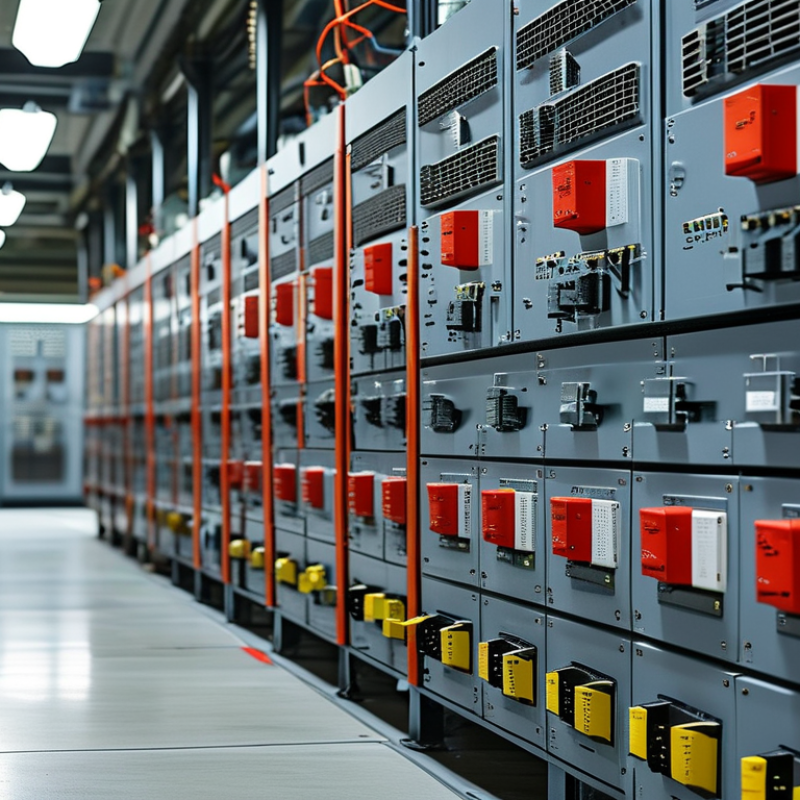
DC power circuit breakers protect direct-current systems from overloads, short circuits, and dangerous fault currents. Unlike AC breakers, they cannot rely on natural current zero-crossing to extinguish an arc. This makes interruption more demanding, especially in battery storage, solar equipment, data centers, and electric transport systems.
A DC breaker typically combines fixed contacts, moving contacts, an operating mechanism, arc chutes, and a trip unit. Magnetic protection reacts quickly to high fault currents. Thermal protection responds to sustained overloads. Some advanced designs use electronic sensing for adjustable trip settings and improved monitoring.
The arc chute stretches, cools, and divides the arc before it damages the enclosure. Insulation distance also matters, particularly at higher voltage levels.
Reliable suppliers should document voltage ratings, interruption capacity, temperature limits, and tested operating cycles. Installation experience shows that cable size and ambient heat can change real performance. A breaker rated for 1,000 volts DC may not suit every battery configuration. Polarity, grounding method, and reverse-current behavior require careful review. No design is perfect. Dust, loose terminals, and poor ventilation still create avoidable failures. Engineers should verify coordination between the breaker and upstream protection, rather than trusting a catalog value alone. Physical inspection and trip testing remain useful, even in systems with continuous digital monitoring.
When evaluating global DC circuit breaker suppliers, begin with application data, not catalog claims. Confirm the system voltage, continuous current, fault level, polarity, and ambient temperature. A 1,000-volt breaker is not automatically suitable for every 1,000-volt installation. DC arcs behave differently from AC arcs, especially inside battery storage and solar equipment.
Request independent test reports and certificates that match the exact product series. Check interrupting capacity, insulation performance, temperature rise, endurance cycles, and arc-extinguishing design. Ask whether testing covers the intended operating altitude and enclosure conditions. Reliable suppliers provide serial-level traceability, clear drawings, and change notifications. Vague answers deserve caution.
Supplier experience appears in practical details. Can engineers review a protection study? Do they explain coordination with fuses, contactors, and monitoring systems? Ask for samples, installation instructions, spare-part availability, and realistic lead times. Review references from similar voltage and current ranges, not merely large customer lists. A polished brochure can still hide weak after-sales support. I once overlooked response time during supplier screening; the product passed inspection, but commissioning support arrived too late. That mistake changed my checklist.
Price needs context. Compare warranty terms, failure analysis procedures, replacement timelines, and field training. Inspect packaging for moisture protection and terminal damage risks. Suppliers serving multiple regions should understand local certification requirements and provide consistent documentation. Still, documentation is not proof of every field condition. Pilot testing under representative load remains worthwhile, even when the supplier appears highly qualified.
The first supplier profile centers on high-voltage railway protection, with breakers tested against vibration, dust, and repeated switching. The second serves solar storage projects, offering compact units for battery racks and combiner cabinets. A third focuses on marine systems, where corrosion resistance and manual override are essential. Field data matters.
The fourth supplier develops molded-case breakers for industrial distribution panels. The fifth specializes in fast electronic trip units, helping limit fault energy in battery systems. The sixth supports data centers with selective coordination studies and adjustable protection settings. The seventh supplies breakers for mining equipment, emphasizing shock resistance and clear status indicators. The eighth concentrates on low-voltage control cabinets, where narrow mounting space affects installation time. Documentation can fail.
The ninth profile covers custom-engineered breakers for harsh environments, including high altitude and extreme temperature operation. The tenth provides regional stock, replacement parts, and technician training, which can reduce downtime after commissioning. Across these profiles, reliable suppliers publish interrupting ratings, derating curves, terminal torque values, and verified test conditions. I would not treat a polished datasheet as proof. Buyers should compare actual test reports, certification scope, warranty terms, and service response times. A breaker may carry the correct current rating yet trip poorly under cold-start conditions. Installation quality also matters; loose connections can create heat, nuisance trips, or premature contact wear. My assessment remains cautious because field performance often differs from laboratory results.
Top 10 DC Power Circuit Breaker Suppliers Worldwide
Product Comparison by Ratings, Applications, and Technologies
A credible top-ten comparison should begin with ratings, not catalogue size. The IEA’s Electricity 2024 report expects global electricity demand to grow by about 4% annually through 2026. This growth increases demand for dependable DC protection in solar arrays, battery storage, rail systems, and data centers. Suppliers should therefore be assessed by voltage range, continuous current, and DC breaking capacity. Typical products cover 250–1,500 V DC, 6–6,300 A, and interruption ratings from several kA to above 100 kA. These figures vary significantly by design.
Applications reveal practical differences. Compact thermal-magnetic breakers suit branch circuits and small photovoltaic combiner boxes. Electronic-trip units offer adjustable protection for industrial DC distribution and high-current battery systems. Hybrid and solid-state technologies react faster, reducing arc energy, but they often cost more and require careful thermal management. The IEA’s Renewables 2024 report forecasts more than 5,500 GW of renewable capacity additions between 2024 and 2030. That expansion makes coordination, remote monitoring, and bidirectional protection increasingly important.
A neat ranking is tempting, but it can mislead. Field testing should examine endurance, temperature rise, polarity behavior, auxiliary contacts, and service support. IEC 60947-2 and UL 489 compliance provide useful baselines, not automatic proof of suitability. I would also question unusually high interruption claims without independent test evidence. Installation conditions matter more than brochures. Even a well-rated breaker can fail when cable length, battery fault current, or enclosure heat is underestimated.
| Rank | Anonymous Supplier Profile | Representative DC Voltage Range | Representative Current Range | Interrupting Capacity | Primary Applications | Breaker Technology | Trip and Protection Functions | Typical Standards and Certifications | Best-Fit Segment |
|---|---|---|---|---|---|---|---|---|---|
| 1 | Profile A — High-Voltage DC Specialist | 750–1,500 V DC | 400–6,300 A | 50–150 kA at rated voltage | Utility-scale solar, battery energy storage, traction substations, industrial DC distribution | Air circuit breaker, molded-case breaker, current-limiting design | Long-time, short-time, instantaneous, ground-fault and undervoltage protection | IEC 60947-2, IEC 61439, UL 489, UL 1066, CE-related conformity | Utility and heavy industry |
| 2 | Profile B — Energy Storage Protection Supplier | 500–1,500 V DC | 100–2,000 A | 20–100 kA at rated voltage | Lithium-ion battery racks, containerized BESS, renewable-energy combiner systems | Electronic-trip MCCB, high-speed DC breaker and coordinated fuse-breaker systems | Adjustable overcurrent, short-circuit, thermal monitoring and remote trip | IEC 60947-2, IEC 62619 system integration, UL 489, UL 9540A project requirements | BESS and renewables |
| 3 | Profile C — Industrial DC Distribution Supplier | 125–1,000 V DC | 63–1,600 A | 10–100 kA at rated voltage | Factory automation, process control, rectifier output, telecom power and UPS systems | Thermal-magnetic and electronic molded-case circuit breakers | Fixed or adjustable thermal and magnetic protection; optional shunt trip | IEC 60947-2, IEC 60947-1, UL 489, CSA C22.2 No. 5 | Industrial equipment |
| 4 | Profile D — Railway and Traction Supplier | 750–3,000 V DC | 250–4,000 A | 25–100 kA at rated voltage | Metro systems, electric locomotives, rail substations and auxiliary traction circuits | High-speed electromagnetic, air-break and hybrid DC circuit breaker | Fast fault clearing, overcurrent, undervoltage, isolation and mechanical interlocking | IEC 60077, EN 50123, IEC 61373, IEC 60571 and applicable railway rules | Rail transportation |
| 5 | Profile E — Marine and Offshore Supplier | 24–1,000 V DC | 100–3,200 A | 10–100 kA at rated voltage | Shipboard distribution, offshore platforms, propulsion auxiliaries and marine batteries | Magnetic-hydraulic, thermal-magnetic and electronic-trip breakers | Overload, short-circuit, reverse-current, shunt-trip and remote status indication | IEC 60947-2, IEC 60092, IACS requirements and marine type approval where applicable | Marine systems |
| 6 | Profile F — Commercial and Telecom DC Supplier | 24–750 V DC | 1–800 A | 5–50 kA at rated voltage | Telecom sites, data centers, battery rooms, control panels and distributed power systems | Hydraulic-magnetic, miniature, molded-case and rack-mounted DC breakers | Overload, short-circuit, auxiliary contact, alarm contact and remote reset options | IEC 60947-2, IEC 60898-2, UL 489 and applicable telecom equipment requirements | Telecom and data centers |
| 7 | Profile G — Renewable Energy Combiner Supplier | 150–1,500 V DC | 10–630 A | 5–50 kA at rated voltage | PV string combiner boxes, inverter inputs, solar farms and DC collection systems | Polarized or non-polarized thermal-magnetic DC breaker and fuse-breaker coordination | Overload, short-circuit, disconnect and optional surge-protection coordination | IEC 60947-2, IEC 60947-3, IEC 60269, UL 489 and PV installation requirements | Solar installations |
| 8 | Profile H — Automotive and Electric Mobility Supplier | 48–1,000 V DC | 50–1,000 A | 5–50 kA at rated voltage | Electric vehicles, charging stations, battery packs, mobile equipment and fleet systems | High-voltage contactor, pyro-fuse coordination and compact DC breaker assemblies | Short-circuit interruption, pre-charge control, auxiliary monitoring and isolation | ISO 26262 design processes, IEC 61851, ISO 6469 and vehicle-specific approvals | E-mobility |
| 9 | Profile I — Modular DIN-Rail DC Supplier | 12–500 V DC | 1–125 A | 3–20 kA at rated voltage | Control cabinets, instrumentation, building automation, machinery and small battery systems | Miniature circuit breaker, supplementary protector and compact electronic breaker | Thermal-magnetic overcurrent protection, auxiliary signaling and selective coordination | IEC 60898-2, IEC 60947-2, UL 1077, UL 489 and DIN-rail installation practices | Control panels |
| 10 | Profile J — Solid-State and Hybrid DC Supplier | 48–1,500 V DC | 100–2,500 A | Application-dependent; up to 100 kA system fault duty | Microgrids, fast-charging infrastructure, data centers and battery energy storage | Hybrid mechanical-solid-state breaker using IGBT, MOSFET or thyristor switching paths | Ultra-fast fault detection, current limiting, remote control and digital monitoring | IEC 60947-2 application framework, IEC 62477-1 and project-specific functional testing | Advanced DC grids |
Note: Ratings shown are representative market ranges for the stated product categories. Actual voltage, current, interrupting capacity, certification scope and derating requirements must be verified against the selected device datasheet and installation conditions.
DC protection is moving beyond simple interruption. Electric vehicles, battery storage, solar arrays, and data centers now demand faster fault isolation. In a storage cabinet, a short circuit can release dangerous energy within milliseconds. Arc energy remains unforgiving. Field experience shows that interrupting capacity, temperature rise, and coordination matter more than a low purchase price. Leading suppliers increasingly design breakers for higher direct-current voltages, compact enclosures, and repeated switching cycles.
Global buyers are also requesting measurable reliability. They examine test records, conformity with relevant international standards, service capability, and replacement availability. Digital monitoring is becoming common, with sensors tracking current, contact wear, and abnormal heating. This data helps maintenance teams identify a loose connection before it damages a busbar. However, communication features can create new failure points. More electronics do not automatically mean better protection.
Future products may combine mechanical interruption with solid-state assistance, reducing response time and equipment damage. Recyclable materials and lower-loss designs will receive greater attention as energy policies tighten. Supply chains may become more regional, especially for critical components and technical support. No forecast is perfect. I may be wrong about how quickly hybrid breakers become affordable. Yet suppliers that publish transparent test evidence, train installers, and respond clearly to field failures will earn stronger trust. That practical credibility will shape global competition.