Industries
Get direct access to our extensive portfolio of optical products and specialist technical expertise.
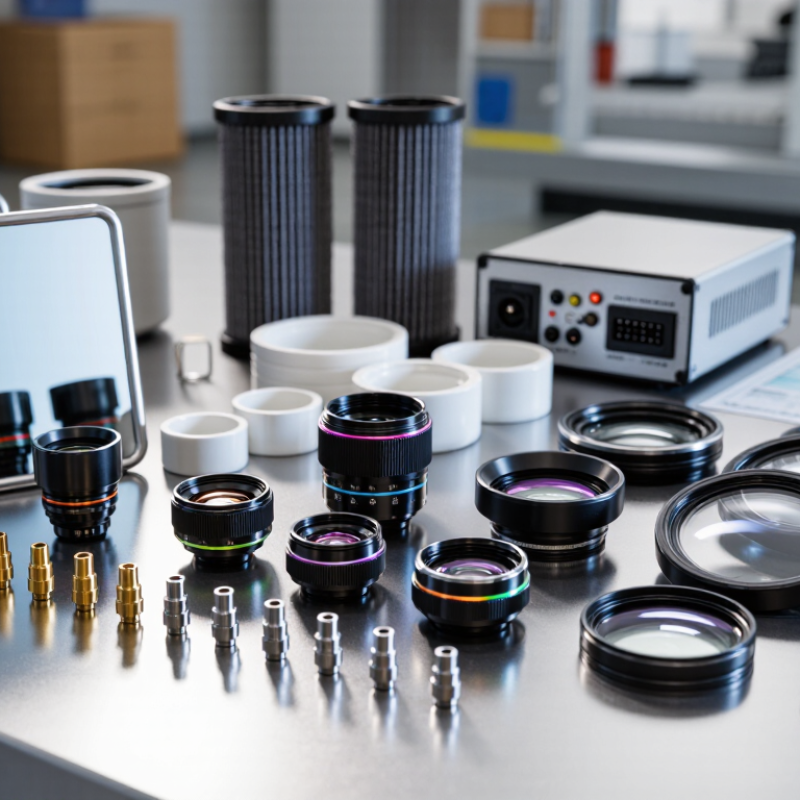
Choosing the top laser parts suppliers worldwide requires more than comparing catalog size or search visibility. Laser Parts can include focusing lenses, protective windows, mirrors, nozzles, ceramic rings, filters, and power-control components. Each item affects beam quality, cutting accuracy, maintenance time, and operator safety. A low-priced lens may look attractive, yet poor coating uniformity can create heat spots within hours. That detail matters.
This guide examines suppliers through practical and technical evidence. It considers material specifications, dimensional tolerance, coating data, quality-control procedures, delivery reliability, and after-sales support. Suppliers with traceable manufacturing records and responsive engineering teams deserve closer attention. Certifications can help, but they do not replace verified performance in real equipment. A supplier should explain compatibility clearly, including wavelength range, thread size, focal length, and operating limits. Vague product pages are warning signs.
The strongest companies often serve manufacturers, repair centers, research laboratories, and industrial users across several regions. Their experience appears in consistent packaging, clean optical surfaces, accurate drawings, and replacement parts that fit without forced adjustments. Customer feedback is useful, although it is not always complete or independent. No ranking is perfect. Regional stock, customs delays, and machine-specific requirements can change the best choice. Readers should confirm specifications with the supplier and their equipment manufacturer before ordering. This careful approach creates a more reliable comparison of global Laser Parts suppliers, while recognizing that performance depends on both component quality and proper installation.
Laser parts should be defined by wavelength before supplier location. At 193 nm, deep-ultraviolet systems need calcium-fluoride optics, radiation-resistant coatings, and sealed beam paths. At 266 nm and 355 nm, nonlinear crystals, low-absorption lenses, and contamination control become critical. These parts support lithography, micromachining, and precision inspection.
At 532 nm and 633 nm, visible alignment optics, mirrors, filters, and photodiodes are common. Near 1030–1064 nm, fiber-coupled sources, isolators, galvanometer mirrors, and focusing assemblies serve cutting and marking systems. Around 1550 nm, detectors and fiber components must match telecom-band performance. From 2 to 5 µm, thermal imaging and spectroscopy demand different windows and detector materials. At 10.6 µm, carbon-dioxide laser systems require infrared-transparent optics, reflective metals, and durable beam-delivery tubes.
The 2024 Photonics Industry Report identified beam quality, coating durability, and delivery efficiency as major purchasing criteria across industrial laser projects. Another 2024 laser market assessment estimated that industrial applications represented more than half of global laser revenue. These figures help explain why functional compatibility matters more than a long catalog.
In practice, I check absorption data, damage thresholds, surface quality, and cooling requirements together. A clean wavelength label is not enough. The weak point is often the coating, not the laser source. Some specifications remain incomplete, especially for high-duty-cycle use. That deserves careful verification before purchasing.
What Are the Top Laser Parts Suppliers Worldwide?
A reliable ranking should measure evidence, not advertising claims. IEC 60825-1 checks laser safety classification, labeling, and accessible emission limits. ISO 11146 evaluates beam width, divergence, and beam-quality measurements. ISO 10110 controls optical drawings, tolerances, surface defects, and coating details. Suppliers providing traceable test reports should rank above those offering only datasheets. This matters because a small angular error can shift a focused beam by millimeters.
I would rank suppliers in three groups: verified, conditionally verified, and documentation-limited. Verified suppliers show calibrated measurement records, lot identification, and controlled drawings. Conditional suppliers meet most requirements but lack recent independent verification. Documentation-limited suppliers may perform well, yet their evidence remains incomplete. According to Mordor Intelligence’s 2024 laser technology market analysis, the market is projected to grow at roughly 9% annually through 2029. That expansion increases the need for comparable quality records. SPIE industry reports also continue to highlight beam quality, reliability, and thermal management as major purchasing concerns. Numbers help, but they do not replace inspection.
My scoring model assigns 40% to standards compliance, 25% to measurement traceability, 20% to manufacturing consistency, and 15% to technical support. No ranking is flawless. ISO 11146 results can vary with setup, aperture, and detector calibration. That weakness deserves disclosure. Buyers should request raw data, not polished claims. A supplier with slower replies but complete evidence may be the safer choice. The best performers make uncertainty visible.
Standards-based weighting for comparing worldwide laser-part suppliers without displaying company or brand data
The evaluation model gives equal importance to the three referenced standards: IEC 60825-1 for laser product safety and classification, ISO 11146 for laser-beam measurement including beam widths, divergence and M², and ISO 10110 for optical drawing specifications and tolerances. The percentages represent the assessment framework allocation, not market share or certification results.
Choosing a laser parts supplier depends on application, not reputation alone. In practical lab purchasing, the strongest industrial supplier usually offers rugged modules, stable output, and dependable production support. This matters for cutting, marking, and high-duty manufacturing systems. However, industrial strength can mean higher costs and less flexibility for small research setups.
The scientific-component supplier often provides broad wavelength options, mirrors, mounts, detectors, and fiber accessories. Its catalog may suit prototype work and university laboratories. Another supplier stands out for modular optomechanics, clear drawings, and fast integration with optical tables. A measurement-focused supplier can be useful when testing beam diameter, power, or spectral response. The final supplier typically appeals to education, imaging, and general photonics because its selection is accessible and easy to compare.
Check more than product variety. Review damage thresholds, coating ranges, connector types, calibration records, and published tolerances. Confirm whether specifications apply to continuous-wave or pulsed operation. Ask about replacement parts and realistic lead times. These details often matter more than a polished website.
No supplier wins every category. That is the uncomfortable part. A low-cost optic may perform well initially but create alignment problems later. Even experienced buyers can overlook compatibility between mounts, coatings, and laser power. I would compare datasheets, request application advice, and test a sample before placing a large order.
| Comparison Criterion | Supplier A | Supplier B | Supplier C | Supplier D | Supplier E |
|---|---|---|---|---|---|
| Primary market position | Industrial laser systems and high-power sources | Industrial laser processing equipment and sources | Research-grade photonics components and instrumentation | Optical components, motion systems, and measurement equipment | Optics, imaging products, and laboratory components |
| Typical customer groups | Automotive, aerospace, electronics, medical-device, and manufacturing companies | Automotive, sheet-metal, electronics, additive-manufacturing, and industrial users | Universities, research laboratories, OEMs, and photonics engineers | Universities, industrial laboratories, OEMs, and precision-manufacturing users | Imaging, life-science, education, laboratory, and industrial customers |
| Common laser-related products | Laser sources, processing heads, beam-delivery modules, and power-control systems | Laser sources, cutting heads, welding optics, scanners, and processing modules | Diode lasers, mirrors, lenses, waveplates, mounts, detectors, and controllers | Mirrors, lenses, mounts, stages, detectors, power meters, and beam-analysis tools | Optical lenses, mirrors, filters, windows, mounts, imaging assemblies, and test accessories |
| Typical wavelength coverage | Ultraviolet through infrared, with strong coverage in industrial near-infrared bands | Visible, near-infrared, and selected ultraviolet and infrared industrial bands | Approximately 200 nm to 12 μm across catalog components | Approximately 190 nm to 20 μm across optical and detector product families | Approximately 200 nm to 15 μm across catalog optics and coatings |
| Product customization | High Application-specific systems and production integration | High Process-specific configurations and machine integration | Medium–High Custom coatings, assemblies, mounts, and OEM configurations | Medium–High Custom optics, stages, detectors, and integrated subsystems | Medium Custom optical assemblies and coating options for qualified projects |
| Optical coating choices | Process-specific coatings for high-power industrial wavelengths | High-power, antireflection, and process-window coating options | Broad range of antireflection, dielectric, metallic, and specialty coatings | Broad range of UV, visible, near-infrared, and infrared coatings | Standard and custom antireflection, metallic, dielectric, and protective coatings |
| High-power suitability | Very strong for industrial laser processing | Very strong for cutting, welding, and manufacturing applications | Strong for laboratory and selected OEM applications; verify power limits by part | Strong for laboratory, OEM, and beam-delivery applications; verify coating and aperture limits | Suitable for many laboratory and imaging applications; high-power specifications must be confirmed |
| Motion and positioning capability | Integrated industrial machine axes and process positioning | Integrated machine motion, scanners, and automated processing platforms | Manual and motorized mounts, stages, translation systems, and positioners | Broad range of precision stages, actuators, controllers, and positioning platforms | Limited compared with dedicated motion-system suppliers; mainly optical positioning accessories |
| Measurement and diagnostics | Industrial process monitoring and laser-performance diagnostics | Process monitoring, alignment, and production-quality control tools | Photodiodes, power sensors, detectors, cameras, and laboratory measurement accessories | Power meters, energy sensors, beam profilers, wavefront tools, and optical diagnostics | Optical test components, imaging accessories, filters, and selected measurement tools |
| Documentation and technical data | Strong application documentation and system-level specifications | Strong process documentation and machine-level specifications | Detailed component drawings, datasheets, CAD files, and optical specifications | Detailed datasheets, CAD models, performance curves, and application notes | Broad catalog documentation, optical drawings, coating data, and product specifications |
| Best suited for | Production environments requiring integrated, high-throughput laser processing | Industrial manufacturing lines requiring robust laser-machine integration | Flexible laboratory setups, prototyping, and photonics research | Precision optical experiments, automation, and measurement-intensive applications | General-purpose optics, imaging assemblies, education, and laboratory sourcing |
| Important purchasing checks | Laser power, duty cycle, beam quality, process speed, cooling, and service coverage | Material thickness, spot size, process gas, duty cycle, automation, and maintenance support | Wavelength, aperture, damage threshold, surface quality, thread standard, and connector type | Wavelength, power range, repeatability, travel range, detector type, and software compatibility | Wavelength band, coating angle, clear aperture, surface quality, tolerances, and minimum order quantity |
| Specifications are representative catalog and application ranges rather than guarantees for every product. Actual wavelength limits, laser-damage thresholds, tolerances, availability, and lead times should be confirmed against the selected part number and current technical documentation. | |||||
Choosing the right laser parts supplier requires more than comparing prices or catalog images. The useful benchmark is measurable performance under stated test conditions. Ask for M² data at the operating wavelength, beam power, and output aperture. An M² value near 1 indicates strong beam quality, but alignment and thermal lensing can change it during operation.
Power stability should be reported over a defined period, not as a single attractive percentage. Check short-term noise, long-term drift, sampling rate, and ambient temperature. For pulsed components, compare pulse energy at the required repetition rate and pulse width. A high energy rating may fall sharply when the system runs continuously. Small details matter.
Damage threshold data needs even stricter review. Values in J/cm² should identify wavelength, pulse duration, beam diameter, repetition rate, and test standard. A threshold measured with one pulse cannot represent millions of pulses. Suppliers with reliable engineering practices provide test reports, calibration dates, uncertainty ranges, and clear acceptance criteria. I have seen specifications that looked precise but omitted the beam profile. That omission weakens the comparison. A practical evaluation should also include thermal behavior, coating quality, packaging protection, and replacement lead time. Laboratory results are useful. Real operating evidence is better.
Global laser parts sourcing is rarely decided by unit price alone. Grand View Research’s 2024 laser technology market report projects continued market expansion, increasing demand for stable optical and electronic components. However, quotations can hide real costs. A low-priced diode may require custom alignment, export paperwork, or expensive minimum orders. In practical sourcing reviews, standard lenses often ship within two to four weeks, while coated optics, drivers, and precision mounts may take six to twelve weeks.
Suppliers should provide current RoHS declarations, REACH substance statements, and material composition records. The European Chemicals Agency regularly updates its Candidate List, so an old compliance letter may not be sufficient. The EU’s RoHS framework also restricts hazardous substances in electrical and electronic equipment.
Ask for lot traceability, revision dates, and test methods.
A PDF without a matching part number creates doubt. This is where many purchasing teams become too optimistic.
Pricing should be compared with landed cost, not catalog price. The World Bank’s Logistics Performance Index shows that customs efficiency and shipment reliability vary substantially across trading regions. Therefore, a supplier with a slightly higher quotation may reduce production interruptions.
Technical support matters equally. Before approval, test response time with a real question about coating damage, beam divergence, or connector tolerance. Fast, precise answers are useful evidence.
Still, support promises can weaken after the first order. Build service levels into the purchase agreement.