Industries
Get direct access to our extensive portfolio of optical products and specialist technical expertise.

A boat depends on electricity for much more than starting its engine. Navigation lights, radios, pumps, fish finders, and emergency equipment all need dependable power. This is why Marine Batteries are designed for demanding water conditions, not simply adapted from automotive batteries.
Marine batteries face constant vibration, moisture, temperature changes, and repeated charging cycles. A starting battery delivers a powerful burst to crank an engine. A deep-cycle battery supplies steady energy for hours. Some boats use dual-purpose batteries, but that compromise is not always ideal. The right choice depends on the vessel’s size, electrical load, engine, and cruising habits.
Nigel Calder, a respected marine electrical author, has said, “A boat’s batteries are the heart of its electrical system.” His point is practical. When a battery fails offshore, the problem can become serious within minutes. A dead battery may silence a radio, stop a bilge pump, or leave an engine unable to restart.
Good installation matters too. Cable size, ventilation, terminals, charging systems, and corrosion protection all affect performance. Even the best battery can fail early when connections remain loose or saltwater reaches the terminals. That detail is easy to overlook.
There is no universal battery for every boat. Lithium batteries offer impressive weight savings, yet they require compatible charging equipment and careful monitoring. Lead-acid batteries remain heavier, but they are familiar and widely supported. The honest answer is less exciting: battery selection requires trade-offs. Understanding those trade-offs helps boat owners choose Marine Batteries that support safer, more predictable time on the water.
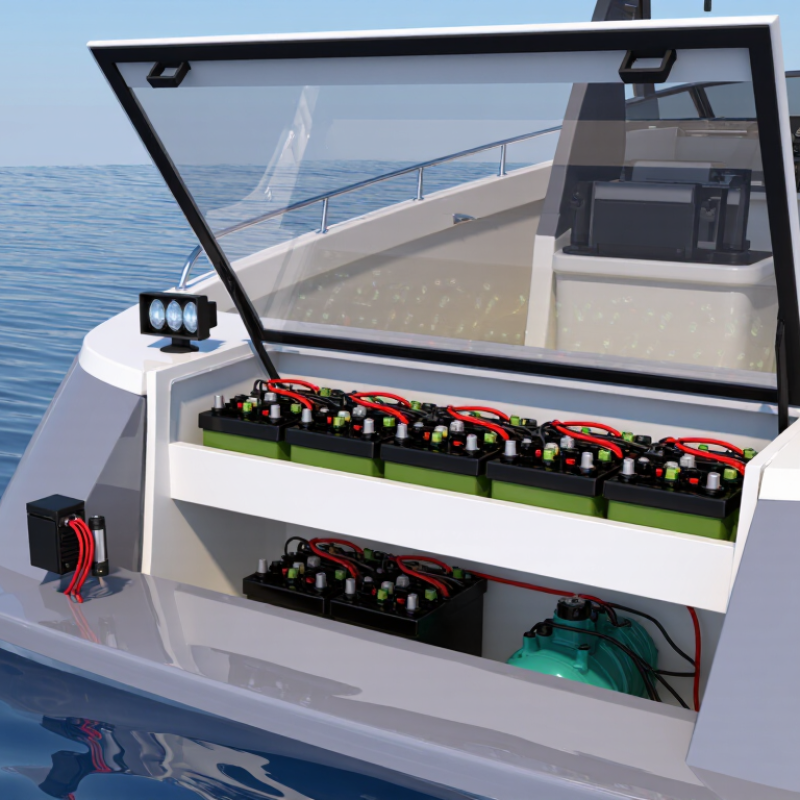
A car battery is built to deliver a brief, powerful burst to start an engine. A marine battery may also power electronics, lights, pumps, and navigation equipment while the engine is off. That difference matters. A deep-cycle marine battery is designed to provide steadier power over longer periods, while a starting battery is optimized for short bursts. Dual-purpose batteries combine both roles, though they involve a compromise.
Battery ratings help explain the distinction. The Battery Council International’s technical guidance describes reserve capacity as the number of minutes a battery can supply 25 amps at 80°F before voltage falls below its specified limit. Marine batteries commonly display this rating alongside marine cranking amps, tested at 32°F; car batteries often emphasize cold-cranking amps, tested at 0°F. These figures describe different conditions, so comparing the numbers alone can mislead. A damp locker, repeated vibration, and overnight electronics draw all affect real-world performance.
Tips: Match the battery to the boat’s engine and equipment load. Check the manufacturer’s recommended chemistry and charging profile before replacing it. Keep terminals clean, secure the battery against movement, and avoid routinely draining a starting battery to run onboard accessories. Even a “deep-cycle” label does not make every battery suitable for every boat.
A boat’s battery supports more than engine starting. It can power navigation lights, a VHF radio, chartplotter, depth sounder, and cabin lights when the engine is off. Small systems, big responsibility. A working radio helps crews communicate, while reliable navigation lights make a boat visible after sunset. On many boats, the battery also runs bilge pumps, which may need to operate when nobody is aboard.
Comfort and convenience can draw substantial power, too. Refrigerators, freshwater pumps, fans, and entertainment equipment may run from a house battery bank. A starter battery is typically designed to deliver a brief burst of current, while house batteries are better suited to steady use. The exact setup varies by boat, and the distinction is not always clear on older vessels. That deserves a closer look.
Battery capacity should match the equipment, expected runtime, and charging options. A pump’s label may show modest consumption, yet repeated cycling can drain power over time. Check connections for corrosion, secure batteries against movement, and monitor charge levels. Even a new battery can disappoint if it is undersized or poorly maintained.
Marine batteries support two different electrical jobs on a boat. Starting batteries deliver a short, powerful burst to turn the engine starter. Their plate design provides high cranking current, especially during cold mornings or repeated starts. After the engine runs, the alternator replaces that energy. The process is quick.
Deep-cycle batteries work differently. They release power steadily for lights, pumps, navigation electronics, and trolling equipment. Their thicker plates tolerate repeated discharge and recharge cycles better than starting batteries. A dual-purpose battery combines both functions, but it may sacrifice peak starting power or long-term deep-cycle performance. The right choice depends on engine size, onboard loads, charging equipment, and trip length.
Tips: Keep terminals tight, clean, and dry. Check resting voltage, but do not trust it alone. A battery can look healthy and still fail under load. A professional load test offers better evidence. Avoid draining a deep-cycle battery completely; repeated over-discharge shortens its life. It is also easy to overestimate charging capacity. Review the charger’s output and the battery’s rated specifications together. In practice, many battery problems begin with poor connections, not the battery itself. A careful inspection can reveal loose cables, corrosion, or an undersized conductor before the boat leaves the dock.
Marine batteries become essential when water, vibration, and unreliable weather create serious electrical demands. A boat’s battery must start the engine, power navigation lights, run communication equipment, and support bilge pumps when the operator is away.
Automotive batteries may not tolerate repeated discharge, constant movement, or damp storage. Safety depends on dependable power.
Cold mornings expose weak starting performance. Salt spray accelerates corrosion around terminals and cables. Long periods of idling can leave a battery undercharged, especially when electronics draw power continuously.
At anchor, a failed battery can disable lights and pumps at the wrong moment. It can also prevent an engine restart after a short trip.
During routine checks, I look for swelling, cracked cases, loose connections, and white or green corrosion. I also test voltage under load, because a resting reading can look healthy while capacity has faded.
Small details matter. Clean terminals help, but they do not repair an aging battery. The correct marine battery depends on engine size, electrical load, charging system, and boating pattern.
A starting battery suits brief, high-current engine starts, while a deep-cycle battery handles longer accessory use. Some vessels need separate battery banks.
I have learned not to trust appearance alone. A battery that worked last weekend may fail after one cold night.
Choosing the right marine battery begins with the boat’s actual electrical demands. Starting batteries deliver brief, powerful bursts for engine ignition. Deep-cycle batteries support trolling motors, lights, pumps, and electronics for longer periods. A dual-purpose battery can serve both roles, but it may compromise performance in demanding systems. Check the engine’s required cold-cranking amps, the equipment’s amp-hour needs, and the battery compartment’s size. Terminal placement and hold-down security matter too.
In my experience, many owners focus on capacity and overlook charging compatibility. That mistake can shorten battery life. Match the battery with the boat’s alternator, charger, and electrical system. Use the specifications in the owner’s manual, not guesswork. Keep connections tight and apply suitable corrosion protection. Inspect the case for swelling, cracks, or leaks before every trip. A damaged battery should not remain in service. Ventilation is also important, especially in enclosed compartments. Small details prevent serious trouble.
Tips: Rinse salt residue from terminals with fresh water, then dry them carefully. Charge the battery soon after use, rather than leaving it deeply discharged. During storage, disconnect unnecessary loads and check the charge periodically. A battery monitor can reveal gradual capacity loss. Do not rely only on voltage readings; a weak battery may show normal voltage at rest. If performance seems inconsistent, arrange a professional load test. I used to assume a fully charged reading meant everything was fine. It does not. Test under demand.
| Topic | Why It Matters | Practical Guidance | Maintenance or Safety Check |
|---|---|---|---|
| Starting the engine | A battery supplies a short, high-current burst to crank an engine. | Choose a starting battery that meets or exceeds the engine maker’s specified cranking-amp requirements. Check the rating standard and temperature conditions when comparing specifications. | Keep terminals clean and secure, and have the battery tested if starting becomes slow or unreliable. |
| Running onboard equipment | Lights, pumps, electronics, and other loads may draw power while the engine is off. | A deep-cycle battery is designed to deliver power over a longer period. Estimate daily energy use and select capacity with an appropriate reserve. | Avoid routinely discharging lead-acid batteries deeply; follow the battery maker’s guidance for usable capacity. |
| Starting and house-power needs | Some boats use separate batteries for engine starting and onboard loads; others use a dual-purpose battery. | Separate batteries can help keep house loads from using the engine-starting reserve. A dual-purpose battery may suit some smaller or simpler setups when its ratings meet both needs. | Use suitable switching or charging equipment so the starting battery remains available when needed. |
| Choosing a chemistry | Battery chemistry affects weight, cost, charging requirements, and usable capacity. | Flooded lead-acid batteries need ventilation and periodic checks; sealed AGM batteries are spill-resistant; lithium iron phosphate batteries are lighter and can offer more usable capacity but require compatible charging and protection equipment. | Never assume different chemistries can share the same charger settings. Follow the battery and equipment manufacturers’ instructions. |
| Matching voltage | The battery bank must match the boat’s electrical system and connected equipment. | Common nominal marine system voltages include 12 V, 24 V, and 36 V. Confirm the system voltage and wiring design before selecting batteries or connecting them in series or parallel. | Use correctly sized cables, suitable overcurrent protection, and properly made connections. |
| Estimating capacity | Insufficient capacity can leave essential equipment without power before a trip ends. | Add the expected energy use of onboard loads over the planned time away from charging. Compare capacity ratings under the same rating conditions, and include a safety margin for real-world use. | Battery capacity can vary with discharge rate, temperature, age, and chemistry. Check the rating method in the product specifications. |
| Considering reserve capacity | Reserve capacity can help indicate how long a lead-acid battery can sustain a defined load. | Use reserve-capacity information as one comparison point, not as a complete substitute for calculating the boat’s actual energy needs. | Confirm that the compared values use the same test standard and conditions. |
| Charging correctly | Incorrect charging can shorten battery life or create a safety hazard. | Use a charger or charging system compatible with the battery’s chemistry and voltage. Follow the specified charging profile and temperature limits. | Inspect charging cables and connections periodically. Stop using damaged equipment and investigate repeated undercharging or overcharging. |
| Routine inspection | Vibration, moisture, and corrosion can cause poor connections or physical damage. | Secure the battery in a suitable marine-rated tray or compartment and protect terminals from accidental short circuits. | Check for loose connections, corrosion, cracks, swelling, leaks, or unusual heat. For serviceable flooded batteries, check electrolyte only as directed by the manufacturer. |
| Storage and downtime | Leaving a battery discharged for a long period can reduce its service life. | Before storage, follow the chemistry-specific instructions for charging, isolation, and temperature. Use an appropriate maintenance charger when recommended. | Keep batteries in a dry, ventilated area and check their condition at the intervals recommended by the manufacturer. |
| Ventilation and handling | Some batteries can release gas during charging, and all battery types can deliver hazardous short-circuit current. | Follow compartment ventilation requirements and keep sparks, flames, and metal objects away from battery terminals. | Wear suitable eye and hand protection when handling batteries. Follow local rules for recycling and disposal. |
Note: Battery specifications, charging limits, and installation requirements vary by model and chemistry. Always follow the battery, engine, charger, and boat manufacturers’ instructions.