Who Are the Top Active Optical Cable Manufacturers in China?
China has become an important source of connectivity products, but identifying its top active optical cable manufacturers takes more than comparing company names. Buyers need to understand what each supplier actually makes, where its products are used, and how clearly it documents performance.
The cable itself matters. An active optical cable converts electrical signals to optical signals within its connectors, helping carry high-speed data over longer distances than many copper alternatives. Yet specifications vary. Check supported data rates, connector types, cable length, power requirements, and compatibility with the equipment already installed. Small details can cause real headaches.
This guide looks at manufacturers through practical criteria: product range, published technical information, quality-control processes, production capacity, and customer support. Where available, datasheets, test reports, certifications, and sample evaluations can help verify supplier claims. A polished catalogue is useful, but it is not proof of consistent production. Ask specific questions.
No shortlist is perfect. Rankings may change as product lines, capabilities, and customer needs evolve, and public information can be incomplete. A manufacturer serving data centers may not be the best fit for industrial systems or a specialized installation. This guide therefore aims to help readers compare candidates, not declare one supplier universally superior. Look closely at the evidence, confirm the details directly, and match each manufacturer to the project’s actual requirements.
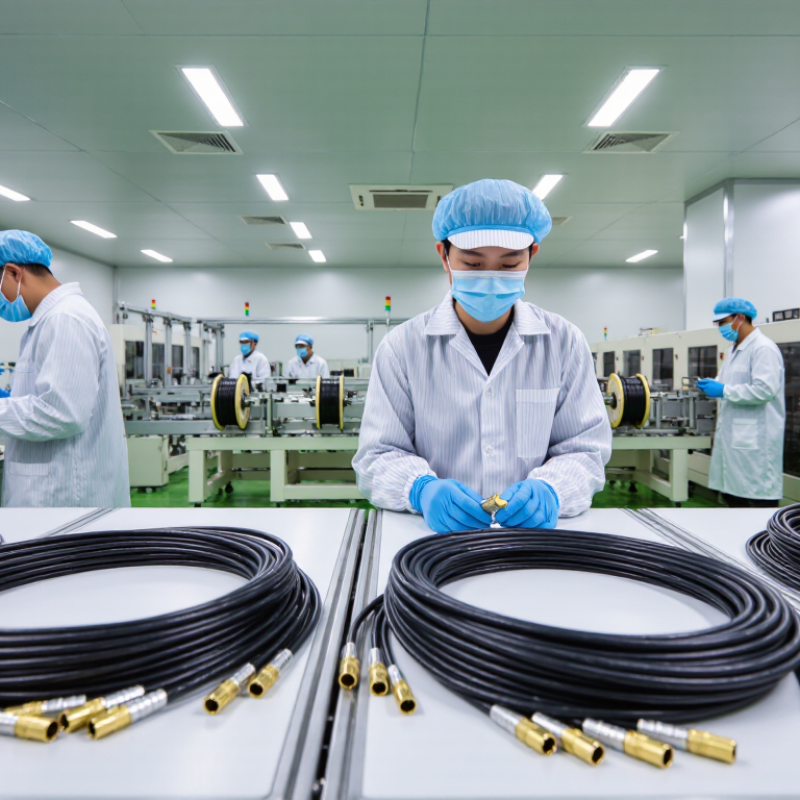
What Active Optical Cables Are and How They Work
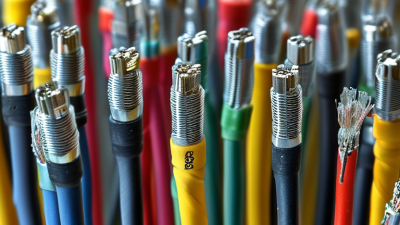
An active optical cable, or AOC, combines fiber strands with optical-to-electrical conversion electronics at both ends. One plug connects to each device; inside, a transmitter converts electrical data into light pulses. The pulses travel through thin glass or plastic fibers, then a receiver turns them back into electrical signals. Tiny components. Many designs use laser emitters and photodetectors, though the exact implementation depends on cable type and speed.
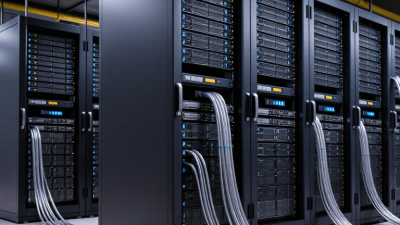
This conversion lets AOCs carry high-speed data over longer distances than typical passive copper cables, with less weight and no electrical interference along the fiber. Picture a rack connection spanning several meters: the cable can bend through cable guides without adding bulky transceivers at each device. Cisco’s Annual Internet Report forecast global data-center traffic would reach 20.6 zettabytes per year by 2021, up from 6.8 zettabytes in 2016. That forecast illustrates why dense, high-bandwidth links matter, though it is not a current measurement.
AOCs are factory-terminated, so their reach and connector options are fixed. They can be convenient, but a damaged end usually means replacing the whole cable. That trade-off is easy to overlook. For installation, check the equipment’s supported speed, connector type, and cable length; matching only the plug shape is not enough. Some products also specify minimum bend radii, and tight turns can impair performance.
How to Assess Leading Active Optical Cable Manufacturers in China
Assessing active optical cable manufacturers in China starts with verifiable engineering evidence, not catalog claims. Request test results for the exact Ethernet or InfiniBand rate and cable length you plan to deploy. Check bit-error-rate measurements, power consumption, and host-device compatibility. Ask whether thermal cycling and repeated bending within specified limits are tested. Photos are not proof.
Cisco’s 2018 Global Cloud Index projected global data-center IP traffic would reach 20.6 zettabytes annually by 2021. This was a forecast, not a current measurement, but it highlights why high-speed link reliability deserves attention. Ask suppliers for sample-level test records and production-lot traceability. Check connector coding and interoperability with your intended switches, rather than assuming that matching connector types guarantees compatibility.
A limitation: one successful sample may not represent routine production. Request records from several lots and compare the results. Small details matter. Ask how failures are logged, how design changes are communicated, and how quickly replacement units can be supplied. Supplier claims about field reliability carry more weight when they include the deployment period, sample size, and failure definition. Without those details, comparisons are difficult.
Key Chinese Manufacturers and Their AOC Product Portfolios
Chinese active optical cable manufacturers commonly build portfolios around data-center and high-performance computing links.
Offerings may include 10G, 25G, 100G, and higher-speed AOCs, with exact rates varying by supplier. These cables combine fiber with optical conversion components at both ends, creating a ready-to-connect assembly.
Details matter.
Buyers can compare supported link speeds, available lengths, connector types, power draw, and operating temperature.
Some suppliers also provide breakout cables for connecting higher-speed switches to multiple lower-speed ports. Others focus on longer reaches or dense rack connections.
A product sheet should state compatibility conditions and test procedures, not just headline bandwidth. Ask for sample test reports and confirm the cable works with the intended equipment.
AOC ends are generally integrated, so replacement flexibility may be limited. One portfolio table rarely tells the whole story. Clear documentation and consistent quality checks help distinguish a broad catalogue from products suited to a real installation.
Industries and Applications Served by Chinese AOC Suppliers
Chinese active optical cable (AOC) suppliers serve data centers, high-performance computing, telecom networks, and enterprise systems. Their cables suit short, high-speed links between servers, switches, and accelerator racks. They are light to route through dense cabinets and resist electromagnetic interference. That matters in crowded rooms.
Synergy Research Group counted 1,136 hyperscale data centers worldwide at the end of 2024. IDC’s Data Age 2025 study projected 163 zettabytes of global data creation by 2025.
These figures help explain demand for fast connections, though they do not measure AOC sales directly.
In AI and research clusters, AOCs can link compute trays across a rack or nearby racks. Telecom operators may use them in equipment rooms, while broadcasters and medical-imaging teams can use them for high-resolution video links. Industrial applications include machine-vision systems, where cables connect cameras and processing units near electrically noisy machinery.
Distance, bandwidth, and connector compatibility still shape each choice. This is not a perfect map: AOC use varies by system design, and not every short link needs fiber. Teams should test cable length, airflow, and service access before deployment.
Factors to Compare When Choosing an AOC Manufacturer
Choosing an active optical cable manufacturer requires more than comparing quoted prices. Match the cable’s data rate, length, connector type, and host interface to the switches or servers it will connect. The Ethernet Alliance’s 2024 Ethernet Roadmap covers 800GbE and 1.6TbE technologies, showing why buyers should check both current requirements and upgrade plans. Higher rates do not guarantee compatibility. Ask for documented interoperability results with your specific equipment.
Test the practical details. AOC cables convert electrical signals to optical signals inside the cable ends, so power draw and heat matter in crowded racks. Request power and temperature data at the intended operating rate. Check bend-radius guidance, cable lengths, and diagnostic support. Then test sample units under real traffic, watching for link drops and error counts. Small details count.
Evidence matters. Ask for test reports covering bit-error rate, temperature range, and relevant standards, plus serial-level traceability and warranty terms. Compare these records across suppliers, not just their product sheets. A stated reach may sound reassuring, but performance can depend on the host and installation. I would not treat a polished datasheet as proof. Supplier responses can be imperfect; note unclear answers and resolve them before ordering.
Who Are the Top Active Optical Cable Manufacturers in China?
Common Ethernet Link Rates to Consider When Choosing an AOC Manufacturer
These are nominal Ethernet link rates, not manufacturer performance scores. When comparing AOC suppliers, confirm support for your required rate and equipment, along with cable reach, interoperability testing, power consumption, and warranty terms.